Ankle mobility limiting your depth? Back pain stopping you from loading your legs? Heavy back squats build incredible leg strength, but they come at a cost: massive spinal compression. If your lower back gives out before your legs do, you need a smarter alternative.
Learning how to use belt squat machine correctly allows you to load your lower body with maximum weight while completely removing axial loading from your spine. Whether you are recovering from a back injury, looking to isolate your quads, or adding serious leg volume, this guide breaks down everything you need to know about setup, technique, and optimal gear.
What is a Belt Squat Machine?
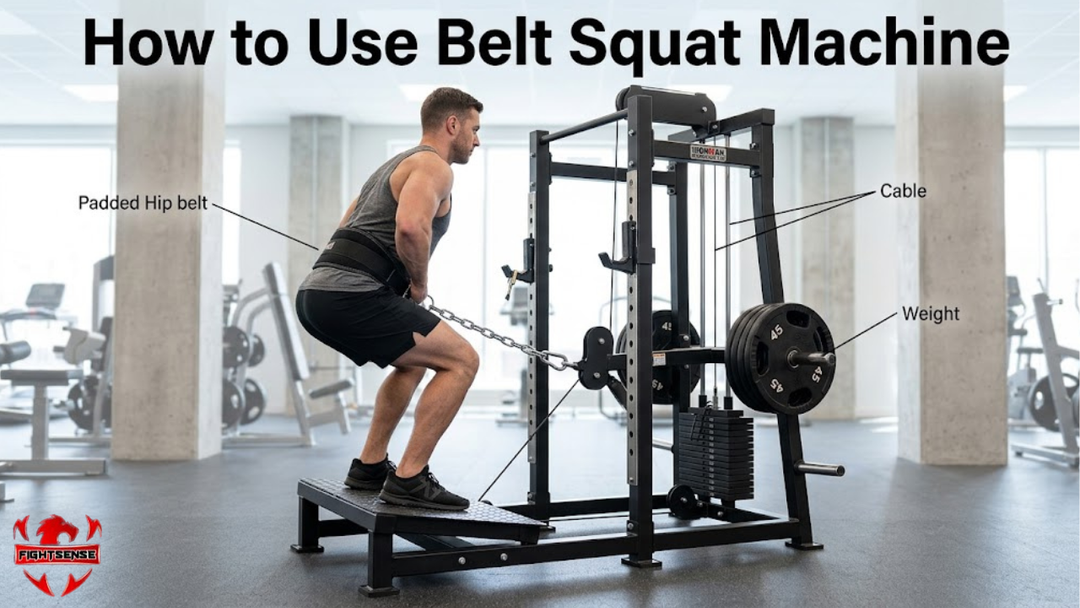
A belt squat machine is a specialized piece of strength training equipment designed to target the lower body—specifically the quadriceps, glutes, and hamstrings—without loading weight onto your shoulders or spine.
Instead of resting a barbell across your upper back, a weighted cable or lever arm attaches directly to a specialized hip belt. This shifts the center of gravity directly under your hips, allowing your legs to take 100% of the load while leaving your upper body free from compression.
Key Benefits of Belt Squats
- Zero Spinal Compression: Ideal for lifters dealing with lower back injuries, herniated discs, or spinal fatigue.
- Pure Quad Isolation: Because your torso remains more upright, the movement shifts tension directly onto the quads.
- Upper Body Independence: You can perform heavy squats even if you have shoulder, wrist, or elbow mobility issues that prevent you from holding a barbell.
- Safer to Failure: Unlike barbell squats, failing a rep on a belt squat machine poses minimal risk. You simply lower yourself back onto the safety catch.
Essential Gear You Need Before Starting
To get the most out of every rep and ensure maximum comfort during heavy sets, having the right gear is critical:
- Sturdy Lifting Shoes or Flat Shoes: Hard-soled lifting shoes help maintain heel stability and improve ankle range of motion.
- Heavy-Duty Dip Belt / Belt Squat Belt: Machine pads are great, but if you practice free-weight or landmine belt squats, a high-quality belt is non-negotiable. FightSense Dip Belts feature reinforced steel chains and heavy-duty neoprene padding to handle heavy plate loading comfortably without digging into your hips.
- Supportive Weightlifting Belt: Even though the machine removes axial loading, maintaining strong intra-abdominal pressure is crucial for core stability. Wearing a FightSense Lever Belt or classic leather weightlifting belt helps you brace harder, keeping your pelvis neutral and protecting your core during heavy sets.
How to Use Belt Squat Machine: Step-by-Step Guide
Follow this step-by-step breakdown to set up and execute the belt squat with picture-perfect form.
Step 1: Adjust the Cable and Footing
Place the footplates or platform to match your stance width (typically shoulder-width apart). Adjust the chain length on the machine hook so that there is slight tension on the belt when you stand fully upright.
Step 2: Secure the Belt Around Your Hips
Wrap the padded belt around your waist, positioning it slightly lower than a standard weightlifting belt—right over your hip crest and glutes. Clip the carabiner securely into the central cable loop.
Step 3: Stand Up and Unhook the Safety Catch
Drive through your feet to stand up completely. This lifts the weight off the safety pins. Pull or push the machine's safety lever to disengage the lock, freeing the lever arm for movement.
Step 4: Lower Into a Deep Squat
Initiate the squat by bending at the knees and hips simultaneously. Keep your chest up, head neutral, and push your knees out in line with your toes. Lower down until your thighs break parallel with the platform.
Step 5: Drive Upward to Lockout
Push firmly through your mid-foot and heels to drive back up to the starting position. Squeeze your glutes at the top without hyperextending your lower back. Re-engage the safety latch when your set is complete.
Belt Squat vs. Traditional Back Squat
|
Feature
|
Back Squat
|
Belt Squat
|
|
Spinal Stress
|
High axial compression
|
Zero back stress
|
|
Muscle Target
|
Full body & core
|
Pure quad & glute
|
|
Placement
|
Main heavy lift
|
Finisher or rehab
|
How to Do Belt Squats Without a Machine
If your commercial or garage gym lacks a dedicated belt squat machine, you can replicate the movement easily using two plyo boxes and a landmine setup or weight plates.
- Set up two wooden plyo boxes side-by-side with a gap in the middle.
- Strap on a FightSense Heavy-Duty Dip Belt and attach weight plates or a landmine handle to the center chain.
- Stand with one foot on each box, allowing the weight to hang freely in the gap between them.
- Squat down deep, letting the plates pass between the boxes, then drive back up.
Common Mistakes to Avoid
- Belt Placed Too High: Placing the belt around your waist like a standard lifting belt reduces leverage and causes discomfort. Fix: Position the belt lower around your hips and gluteal fold for optimal pull.
- Hanging on Handles: Pulling excessively on the machine handles shifts the load away from your legs onto your upper body. Fix: Use the handles only for light balance and let your legs lift the weight.
- Rounding the Lower Back: Poor core bracing at the bottom position leads to spinal flexion.
- Shallow Depth: Setting the chain or cable length too long limits your range of motion. Fix: Shorten the chain clip so the weight stays suspended at full depth without touching the bottom.
Safer Squats, Stronger Results—Discover the power of belt squats
Get Yours Now!
FAQs
Is the belt squat machine good for beginners?
Yes. It is exceptionally user-friendly because the machine guides the path of movement and removes the danger of dropping a loaded barbell.
Do belt squats build big quads?
Absolutely. Because the torso stays vertical and the spine remains unloaded, lifters can push quads to absolute muscular failure safely.
Can barbell squats be replaced with belt squats?
Yes. For lifters with chronic lower back pain, shoulder mobility limitations, or spine issues, belt squats serve as an ideal primary exercise replacement.
Where should the belt sit during a belt squat?
The belt should rest lower than a standard lifting belt—wrapping across the top of the glutes and pelvic crest for optimal leverage.
Should a lifting belt be worn on a belt squat machine?
While not strictly required, wearing a FightSense Lever Belt helps maintain core bracing and stabilizes the pelvis during heavy loading.
What causes hip pain during belt squats?
Hip discomfort usually results from unpadded belts or incorrect placement. Using a belt with thick padding positioned securely below the waistline prevents pinching.
Are belt squats safe for knee rehab?
Yes. Lifters can control the depth and angle easily, making it popular in physical therapy settings for quad re-strengthening.
Can belt squats be performed with a landmine attachment?
Yes. Attaching a dip belt chain to a landmine barbell is one of the most effective DIY belt squat alternatives.
Conclusion:
Mastering how to use belt squat machine is one of the best ways to overload your legs without frying your lower back. By loading the hips directly, you eliminate spinal fatigue while driving maximum hypertrophy to your quads and glutes.
Note:
Consult a qualified trainer or healthcare professional before starting any new exercise program, especially if you have injuries or health conditions.