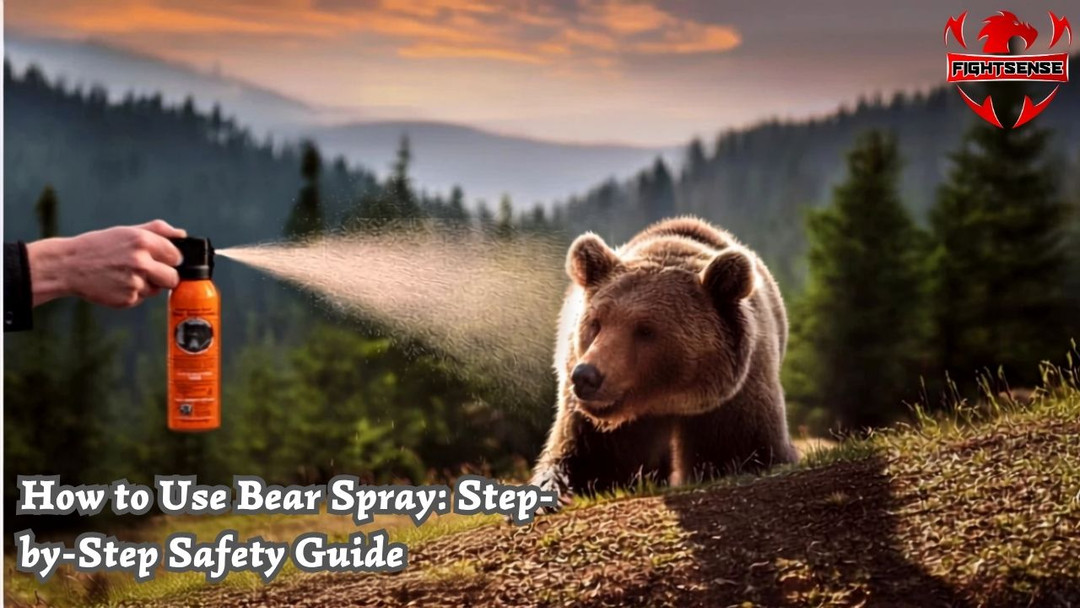
How to Use Bear Spray: Step-by-Step Safety Guide
Exploring bear country requires preparation. Carrying Wildlife Deterrent Spray can provide an important last line of defense, but simply having a canister is not enough—you also need to know how to access and use it quickly.
Non-lethal deterrent designed specifically for aggressive bears. Unlike personal-defense pepper sprays, such as those offered by brands like Fightsense, animal repellent aerosol creates a wider cloud to help form a barrier between you and an approaching bear.
This guide explains how to use bear spray, when to deploy it, how wind and weather can affect it, and how to prepare before entering bear country.
What Is an Aggressive-animal deterrent?
An aggressive-animal deterrent is an aerosol deterrent designed primarily to dissuade aggressive bear behavior. This is meant as a final line of defense, not as a substitute for avoiding confrontations and observing conventional bear-safety practices.
In the United States, the National Park Service recommends picking an aggressive-animal deterrent product created and registered expressly for repelling bear assaults. Eco-defense sprays that are registered with the EPA are so labeled and have precise ingredient, range, duration, and canister size criteria.
Understanding Your Eco-defense Spray Canister
Before you go outside, take a few minutes to learn about your particular canister.
Usually important parts are:
- Safety clip or safety device: Helps avoid accidental firing.
- Trigger or actuator: Pressing the trigger releases the spray.
- Nozzle: Directs the aerosol cloud away from the canister.
- Expiration date – Check that the product is not past its shelf life.
- Manufacturer instructions: Check them before your journey, as operating instructions can vary by product.
Keep the safety on until you are ready to deploy the spray against an angry or charging bear.
When Should You Use Nature Defense Aerosol?
Nature Defense Aerosol is for a serious defense situation, like an aggressive, charging, or attacking bear. Just because you see a bear doesn’t mean you should spray it.
If you see a bear, don’t get too close, and give the bear space. The National Park Service recommends staying a good distance away from bears, and never getting close for photos or any other reason.
If a bear grows hostile or charges, be ready with your spray and use as directed on your product.
How to Use Bear Spray
Step 1:
Have Your Eco-defense Spray Ready. Get your Eco-defense spray into your hand as soon as you think a situation might become dangerous. That’s why accessibility is so important. The canister should be carried in a waist holster, chest holster, or elsewhere that allows for instant access – not buried within a backpack.
Step 2:
Take Out the Safety Mechanism: When you are about to discharge the spray, remove or disengage the safety clip according to the manufacturer’s recommendations. Practice this exercise before you go into bear country. Inert training canisters can be beneficial in practicing the draw and safety-removal motion without discharging an active product.
Step 3:
Angle the Nozzle Down Slightly. If the bear charges, aim the nozzle at the approaching bear and slightly downward. You aren’t trying to aim for a spot; you are trying to make a cloud of it or a wall between you and the bear.
Step 4:
Make Wind Adjustments. Wind may impact the direction and distance of spray. If possible, position yourself so that the spray is not likely to blow back at you. You may also need to modify your aim if there are crosswinds. Spray performance can be affected by rain, snow, cold temperatures, and other factors.
Step 5:
Spray Deployment: The distance for deployment will depend on the product and the situation. Advice from the National Park Service for charging bears often includes forming a spray barrier within the effective range of the product. Some park advice suggests deploying the Aggressive-animal deterrent at about 30 to 60 feet, depending on the conditions. To ensure success, always review instructions on how to use bear spray printed on your particular canister. Continue spraying if the bear continues to approach and continue following directions for your particular product.
Step 6:
Get out of the Area Safely If the bear changes direction or the encounter is over, exit the area as quickly and safely as possible. Don’t run. Continue to check your surroundings and leave the area.
How Wind and Weather Affect Long-range Wildlife Spray
Environmental variables can affect long-range wildlife spray performance.
Wind.
Strong gusts could blow the spray cloud off course or back at the user. If possible, you might want to adjust your posture and aim.
Rain & Snow
Wet circumstances may alter the spray cloud and effective travel distance.
Cold weather
Cold weather can affect spray performance. See manufacturer’s instructions for operating conditions of a specific product.
Conditions vary, and Long-range wildlife spray should always be used according to its label and manufacturer recommendations.
Long-range wildlife spray vs. Personal Pepper Spray
Although both products may contain capsaicin-based irritants, they are designed for different situations.
|
Feature |
Long-range wildlife spray |
Personal Pepper Spray |
|
Primary purpose |
Deterring aggressive bears |
Personal defense |
|
Spray pattern |
Designed to create a large aerosol cloud |
|
|
Typical use environment |
Outdoor bear country |
Personal protection |
|
Canister size |
Generally larger |
|
|
Range |
Designed for greater distance |
Often shorter-range |
Fightsense offers personal-defense pepper spray and other self-defense tools for everyday protection. When in bear country, however, it is important to choose a product specifically designed and labeled for bear deterrence.
Common Mistakes to Avoid
- Carrying Backcountry Deterrent in Your Backpack: Fauna Defense aerosol should be in a waist or chest holster so you can get to it quickly.
- Removing the Safety Too Soon: Leave the safety on until you’re ready to use the spray.
- Spraying Gear or Clothing: Do not spray Outdoor Safety Spray on your body, clothes, backpack or other gear.
- Don’t Ignore the Expiration Date: Check the expiration date before each journey and replace any expired canisters.
- Long-range wildlife spray is a last line of protection. Be vigilant, stay away, and observe local bear safety guidelines.
Expert Tips for Carrying Bear Spray
Keep It Immediately Accessible
Carry bear spray on your body, preferably in a waist or chest holster where you can reach it quickly.
Practice Before Your Trip
Practice drawing the canister and locating the safety mechanism. If available, use an inert training canister to build familiarity without releasing active spray.
Check Local Rules
Backcountry deterrent may not be recommended or permitted in every park or protected area. Check the regulations and wildlife guidance for your destination before traveling.
Each Person Should Be Prepared
When traveling as a group, it is generally safer for each person to have immediate access to a high-capacity pepper spray canister rather than depending on a single canister carried by someone else.
High-capacity pepper spray Storage Tips
Store outdoor safety spray according to the manufacturer's directions.
Never leave the canister in a hot car or near any major heat source. Bear spray canisters can become harmful when exposed to high heat, according to National Park Service advice.
Also:
- Keep the safety on.
- Check the expiration date often.
- Avoid children’s access to the canister.
- Do not deliberately damage or puncture the canister.
- Dispose of in accordance with local regulations.
FAQs:
What is the effective distance of a wildlife deterrent canister?
Range varies by formulation and weather, though most approved deterrents project 30 to 40 feet. Always check the specific container label.
At what moment should an animal repellent aerosol be discharged?
It serves exclusively as a final resort during critical encounters involving charging or hostile predators, never for routine wildlife sightings.
Does a wilderness deterrent spray cause permanent injury to large predators?
No, it creates temporary irritation across the respiratory system and mucous membranes to halt aggression without lasting physical damage.
In what ways do outdoor defense sprays differ from compact personal protection formulas?
Wildlife deterrents generate a wide fog cloud for long-range outdoor threats, whereas urban sprays utilize a narrow stream for close quarters.
Are compressed aerosol deterrents permitted inside commercial airline baggage?
No, hazardous materials regulations strictly prohibit packing pressurized wildlife defense canisters in either carry-on or checked luggage.
What procedure should be followed during an accidental chemical exposure?
Move to fresh air immediately, flush eyes and skin with cool water without rubbing, and follow the safety instructions on the container.
Will a large-animal deterrent work effectively against both grizzly and black predators?
Yes, field testing confirms that properly formulated and applied EPA-registered deterrents successfully repel both species.
Can an expired wildlife defense canister still provide reliable protection?
No, degraded propellant pressure and diminished chemical potency render expired containers unreliable, requiring timely replacement.
Conclusion:
Knowing how to use bear spray before entering bear country will make you more effective when faced with a risky wildlife encounter. Have your canister nearby, be familiar with the safety device, verify the expiration date, and follow the instructions on the package.
Remember, bear spray is your last defense. Whether it's for regular personal safety or prepping for the outdoors, knowing what type of protection is appropriate for the situation is vital. Fightsense is one brand that offers personal-defense items such as pepper spray. Bear country needs a product for confrontations with wildlife.
Disclaimer:
This blog is for informational purposes only; always follow local regulations and use safety tools responsibly.