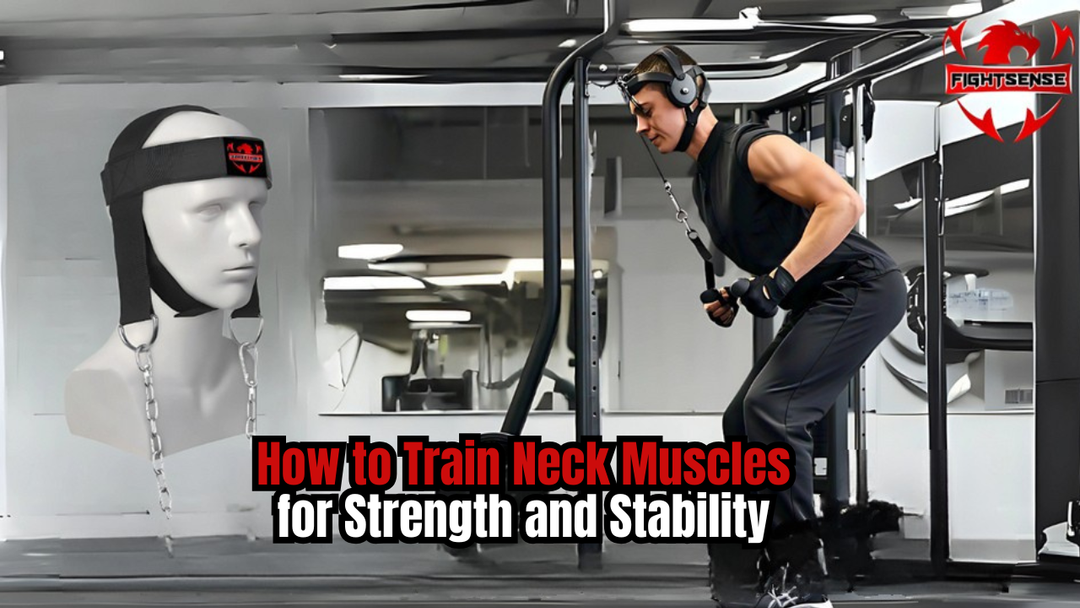
How to Train Neck Muscles for Strength and Stability
A strong neck improves posture, prevents injuries, and supports overall upper body strength. Learning how to train neck muscles safely helps you stay active and reduce the risk of strain during workouts or daily activities.
This guide covers everything, from key exercises to the best tools, including the innovative FightSense neck harness designed for all experience levels.
Keynotes
- Wear the Fightsense neck harness for slow strength building.
- Work always in all four directions, bending, stretching, and turning.
- Start with a little load and gradually add more to prevent injuring yourself.
- Consistent training of your neck is more crucial than force.
- Work both strength and mobility concurrently for the optimal neck performance.
Why Knowing How to Train the Neck Is Essential
Knowing how to correctly train the neck helps one avoid long-term pain, neck stiffness, and muscular imbalances. Weakness in your neck can affect your posture, cause tiredness, and induce tension headaches.
To obtain actual upper-body strength, you must work out your neck like you would your chest or legs. By means of controlled motions with the Fightsense neck harness, all the muscles in the neck can be strengthened over time.
Effective Techniques: How to Train Neck Muscles Properly
Should you be ready to begin neck training, begin with simple motions and progressively increase tension.
You must pay attention to form, range of motion, and increasing greater weight over time if you are safely training your neck.
One might begin simply as follows:
- Neck Flexion & Extension: These strengthen the muscles in front and back of the neck by extension and flexion.
- Side-to-Side Movements: Balance and steadiness on the sides depend on side to side movement.
- Isometric Holds: These help the deep neck muscles be worked out without excessively stressing the joints.
- Harness Workouts: Use the Fightsense neck harness to apply controlled pressure to your workouts if you want best results.
Warm up constantly starting softly. Never miss activities that enable you to move and bend when you are learning how to train neck muscles.
Top Exercises: How to Train the Neck Using Resistance
Resistance training promotes development on both sides and accelerates effects. Using basic gear, these are some of the best neck-training programs available:
- Weighted Neck Flexion (3 sets of 15 reps)
- Neck Extension with Harness (3 sets of 12 reps)
- Side Tilts with Band or Harness (3 sets per side)
- Isometric Presses (4 sets, hold for 20 seconds)
- Neck Rotation Drills (3 sets, full range)
The Fightsense neck harness offers easy, scalable assistance for developing power over time for all of these tasks. Go slowly and under control to prevent jerky motions and stress overload.
Why Neck Strength & Stability Are Important
- Helps reduce neck pain and tension headaches.
- Supports proper posture and reduces forward head strain.
- Enhances performance in sports, lifting, and daily physical tasks.
- Prevents injuries from sudden movements or accidents and improves resilience.
What to Keep in Mind When Learning How to Train Neck Muscles
-
Train in all directions: forward (flexion), backward (extension), side-to-side (lateral flexion), and rotation. Imbalance leads to strain or injury.
-
Start light & controlled: Use minimal resistance at first, focus on form, full range of motion, and avoid jerky movements.
-
Progress gradually: Increase resistance, hold duration, or reps over time. Too much too soon causes overuse.
-
Include mobility & recovery: Stretching, rest, and gentle movement help support strength training and reduce stiffness.
-
Warm up before heavy work: Neck warm-ups, light movements, or dynamic stretches should come first to avoid injury.
Weekly Neck Training Routine: How to Train Neck Muscles with Structure
You must remain constant if you wish to learn how to train neck muscles. This is one of a weekly split that prevents overtraining:
Day 1: Strength Focus
- Strengthening pays attention to harnessing flexibility.
- The Isometric Rest
- Side Slights
Day 2: Recovery + Mobility
- Rest and Mobility Neck Circles
- Band Resistance: Soft
- Using a light harness, work
Day 3: Power & Endurance
- Neck extension aimed at durability and strength
- Shrugging and rotation
- Contains the opposition
This balanced structure makes it more flexible, sturdy, and stable. During every training session, the Fightsense neck harness lets you safely advance and vary in tension level.
How Often Should You Train Your Neck?
For most people, 2–3 sessions per week is ideal. Each workout should last about 15–20 minutes. Start light, focus on technique, and gradually increase intensity with the FightSense harness or light weights.
Over time, you’ll notice:
- Improved muscle definition
- Stronger posture
- Reduced neck tension
- Greater resistance to fatigue
Common Mistakes to Avoid
- Using heavy weights before mastering form.
- Neglecting backward (extension) or side movements, one-direction training causes imbalance.
- Overtraining without rest or ignoring soreness.
- Jerky movements or bouncing during exercises.
- Holding breath, or poor posture during non-neck work contributing to neck stress.
Balanced Development: How to Train the Neck Without Imbalance
When one simply trains forward speed, one makes a major error. You must perform neck exercises that work in all directions forward, backward, laterally, and rotational to actually learn how to train neck muscles. Ignoring any direction could cause unbalance and possibly damage.
The Fightsense neck harness ensures that every angle of your neck is engaged by let you exercise in more than one direction. In real life, training in several forms improves appearance and performance.
Tips for Safe Neck Training
- Always warm up before exercises to prepare muscles
- Start with low intensity and gradually increase resistance
- Focus on controlled movements and proper form
- Pair neck exercises with back and shoulder workouts for balanced strength
- Rest when needed and listen to your body to avoid strain
Conclusion
Knowing how to train neck muscles properly helps you build strength, prevent injuries, and improve posture. By combining simple exercises with the FightSense neck harness, you can safely build muscle, reduce pain, and increase stability over time.
Remember, training your neck is not about power alone. It’s about precision, balance, and long-term care. With consistency and the right gear, your neck can become one of your strongest assets.
Disclaimer
This blog exists just for teaching purposes. Always see a licensed medical or fitness professional before beginning any new exercise programme, especially one involving your neck.
FAQs
Q1. Why should I train my neck ?
Neck training strengthens muscles, improves posture, and prevents injury
Q2. How often should I train my neck ?
Two to three times per week is sufficient for most people
Q3. Can neck exercises reduce headaches ?
Yes strengthening and stretching the neck can relieve tension headaches
Q4. Do I need weights for neck training ?
No bodyweight and light resistance exercises are safe and effective
Q5. When should I see a doctor ?
If you feel sharp pain, numbness, or persistent discomfort