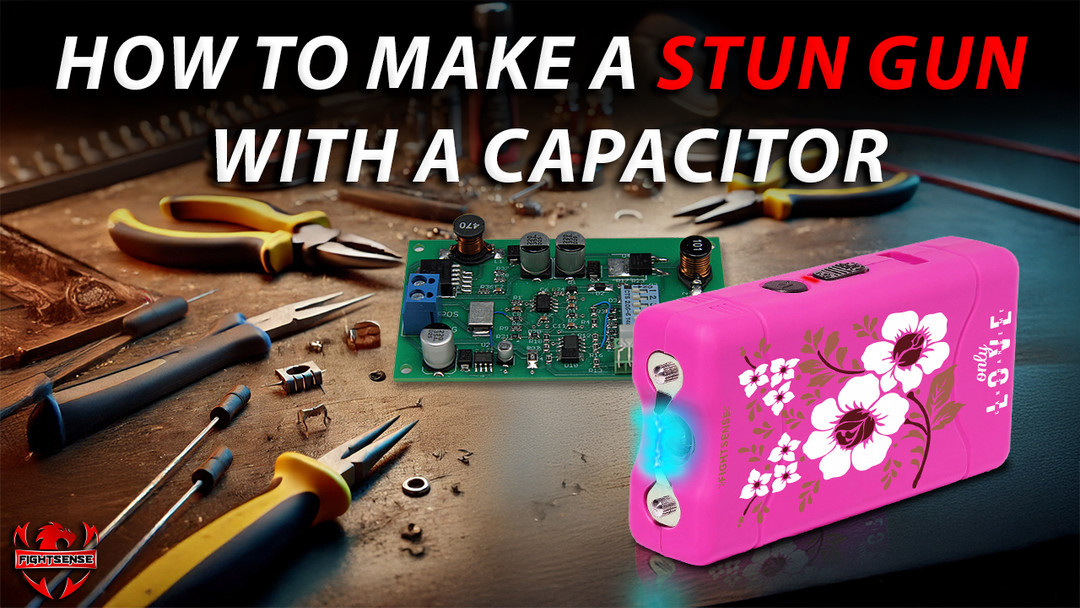
How to Make a Stun Gun with a Capacitor?
Ever wondered how high-voltage electronics actually work behind the scenes? If you have been searching for how to make a stun gun with a capacitor, you are likely curious about the intersection of basic physics, electrical engineering, and circuit design. Capacitors play a fascinating role in storing and discharging electrical energy rapidly. However, building high-voltage devices at home involves serious safety risks.
In this comprehensive guide, we will break down the science of capacitor-based circuits, examine how these systems operate, and look at why many people ultimately choose ready-to-use, professional personal protection options like FightSense self-defense tools instead of risky DIY experiments.
The Science Behind How to Make a Stun Gun with a Capacitor
A capacitor is an electronic component designed to store electrical energy temporarily in an electrostatic field. Unlike chemical batteries that release energy slowly over time, a capacitor can dump its entire stored charge in a fraction of a second.
In theoretical circuit design, understanding how energy accumulates and discharges is a fundamental physics concept. When applied to high-voltage theory, capacitors act as the primary reservoir that accumulates a low voltage and releases a sharp, high-voltage pulse when triggered.
The Core Components of a High-Voltage Circuit
Building or analyzing any improvised discharge circuit requires specific electronic parts. While hobbyists study these layouts for educational purposes, handling them incorrectly can cause severe electrical shock.
- Low-Voltage Power Source: Usually a 3V to 9V DC battery to supply the initial current.
- Oscillator / Inverter Circuit: Converts DC power into alternating current so it can pass through a transformer.
- Step-Up Transformer: Multiplies the voltage level significantly.
- High-Voltage Capacitor: Stores the stepped-up energy until a discharge path opens.
- Spark Gap / Electrodes: The output terminals where the charge releases.
Step-by-Step Guide: How a Stun Circuit Operates
Note: This breakdown is for educational and theoretical understanding of electrical engineering principles.
- Power Influx: Connect the low-voltage DC power source to the oscillator circuit to initiate current flow.
- Voltage Elevation: Route the current through a step-up transformer to raise the voltage level from a few volts to hundreds or thousands of volts.
- Energy Accumulation: Direct the high-voltage output into a specialized capacitor, allowing it to charge completely.
- Trigger and Discharge: Complete the circuit via a switch or spark gap, forcing the capacitor to dump its stored energy instantly through the output electrodes.
DIY Circuits vs. Professional Self-Defense Gear
When evaluating personal safety tools, understanding the gap between experimental electronics and manufactured safety devices is vital.
|
Feature |
DIY Capacitor Circuit |
FightSense Stun Gun |
|
Reliability |
Experimental; prone to component failure. |
|
|
Safety Features |
None; exposed wiring and risk of misfire. |
Built-in safety switches, anti-grab strips, and caps. |
|
Portability |
Bulky, fragile breadboards or custom housing. |
Ergonomic, pocket-friendly, and durable casing. |
|
Additional Tools |
None. |
Common Mistakes in High-Voltage DIY Projects
Attempting to build electronics without professional oversight often leads to critical errors.
- Ignoring Insulation Standards: Using standard wires instead of high-voltage-rated insulation can cause dangerous short circuits.
- Overcharging Capacitors: Exceeding a capacitor's voltage rating causes physical rupture or explosive failure.
- Neglecting Grounding: Failing to safely bleed remaining charge from a capacitor after powering down leaves dangerous residual current trapped in the system.
- Skipping Protective Gear: Working without insulated tools or safety glasses exposes the builder to sudden electrical arcs.
Expert Safety Tips
- Discharge Before Touching: Always use a high-value resistor to safely drain capacitors before performing maintenance on any circuit.
- Prioritize Certified Alternatives: For real-world personal protection, rely on lab-tested solutions. Brands like FightSense engineer consumer devices with precise safety controls that eliminate wiring hazards.
- Treat Electricity with Respect: Even small batteries combined with step-up coils can deliver harmful current. Never test circuits on wet surfaces or near flammable materials.
Get Yours Now!
FAQs:
Is it legal to build a DIY stun gun?
Laws regarding homemade electronic weapons vary significantly by region. In many jurisdictions, manufacturing unregulated self-defense devices is strictly prohibited.
Why do people prefer manufactured stun guns over DIY projects?
Manufactured devices undergo rigorous quality control, feature reliable safety mechanisms against accidental discharge, and offer legal compliance for personal carry.
Can a camera flash capacitor be used for high-voltage projects?
Camera flash circuits use high-voltage capacitors, which is why hobbyists often look at them. However, misusing them carries extreme shock hazards.
How do FightSense stun guns differ from homemade circuits?
FightSense products are purpose-built for self-defense, featuring robust polymer casings, ergonomic grips, built-in safety switches, and dependable rechargeable batteries.
What voltage do standard self-defense devices output?
Commercial units are designed to deliver high voltage paired with very low amperage to immobilize a threat temporarily without causing permanent harm.
Are pepper sprays a good alternative to stun guns?
Yes, pepper sprays offer a safe, ranged alternative for self-defense, and brands like FightSense provide dual-option security gear for everyday carry.
How should personal safety tools be stored?
Always keep safety devices in designated holsters, out of reach of children, and check the battery charge status monthly.
Conclusion:
Exploring how electronic components like capacitors store and release energy is a fascinating journey into physics, especially when researching how to make a stun gun with a capacitor. However, translating theoretical circuit designs into practical self-defense tools at home introduces immense technical risks and safety hazards. When your security is on the line, experimenting with raw wiring is never worth the danger. Equip yourself with reliable, field-tested protection from FightSense to ensure peace of mind without the uncertainty of DIY electronics.
Disclaimer:
This guide is for educational purposes only and emphasizes the importance of following safety guidelines, checking local laws, and avoiding illegal or unsafe use of homemade stun guns.