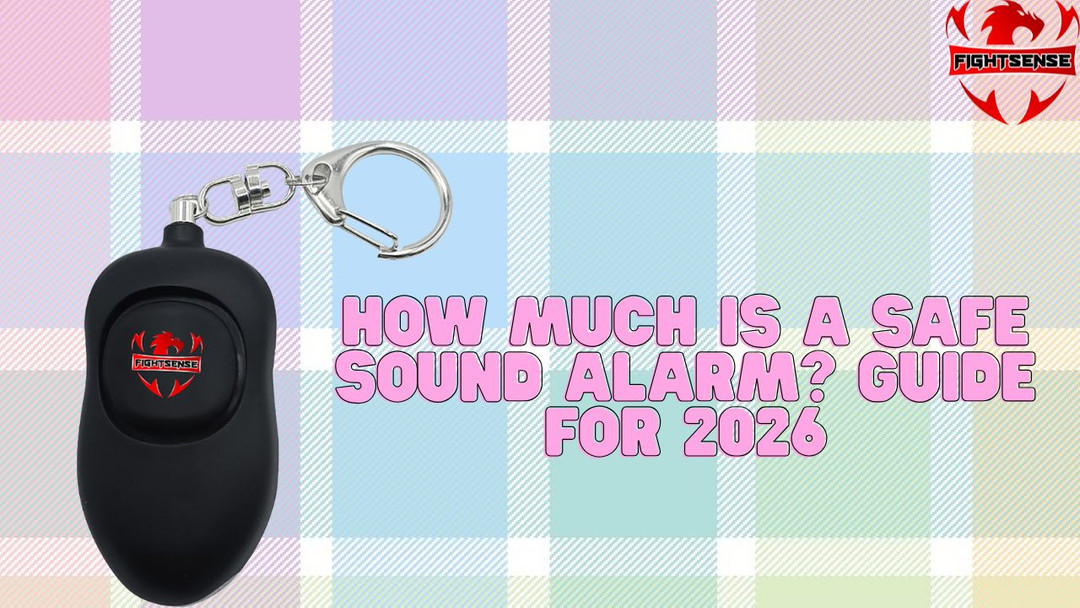
How Much Is a Safe Sound Alarm? Guide for 2026
Personal safety has become a bigger priority for many Americans in recent years. Whether you're walking through a parking garage after work, heading back to a college dorm, or traveling alone, having a simple way to attract attention during an emergency can provide peace of mind.
One question buyers often ask is: how much is a safe sound alarm?
While cost is an important factor, focusing only on the price can cause you to overlook what really matters—reliability, ease of use, and performance when you need help the most.
In this guide, we'll look beyond the price tag and explore what makes a personal safety alarm worth carrying in 2026.
Key Takeaways
- Personal safety alarms are designed to attract attention during emergencies.
- Sound output and reliability matter more than price alone.
- Different users have different safety needs.
- A quality alarm should be easy to activate under stress.
- Everyday carry convenience plays a major role in effectiveness.
What Exactly Is a Safe Sound Alarm?
A safe sound alarm—commonly known as a personal safety alarm or panic alarm—is a small, handheld electronic device that emits an extremely loud siren (typically between 120 and 140 decibels) when activated. Designed to draw immediate attention in emergency situations, these devices disorient attackers and alert bystanders from hundreds of feet away.
Unlike pepper spray or physical weapons, personal alarms require no special training, cannot be used against you, and are completely legal to carry everywhere, including schools and airplanes.
Why Are More People Searching "How Much Is a Safe Sound Alarm"?
The growing interest in personal safety tools isn't surprising.
Many people want protection options that don't require extensive training and can be carried during daily activities. Students, commuters, travelers, runners, and older adults are increasingly looking for simple safety solutions that fit into their everyday lives.
As a result, searches for terms like how much is a safe sound alarm, personal safety alarms, emergency alarms, and portable protection devices continue to grow.
The appeal is simple: these devices are lightweight, easy to carry, and designed to create a loud alert that may help attract nearby attention during an emergency.
The Real Question Isn't Just Cost—It's Value
When researching safety tools, many shoppers start by comparing prices.
However, a better question is:
What am I actually getting for my money?
A quality personal safety alarm typically provides:
- Consistent sound performance
- Quick activation
- Durable construction
- Long-lasting battery life
- Easy portability
An alarm that fails to activate during a stressful moment isn't much help, regardless of how affordable it was.
Factors That Influence the Cost of Personal Safety Alarms
Not all personal alarms are created equal. Several key factors dictate why some models cost under $10 while others approach $50:
1. Decibel (dB) Output and Sound Quality
Louder sirens require better speaker technology and more powerful internal batteries. Alarms reaching 130dB–140dB generally command a higher price than basic 110dB models.
2. Power Source: Disposable vs. Rechargeable
Older or ultra-budget models rely on replaceable alkaline button-cell batteries. Modern, slightly pricier units utilize built-in lithium-ion batteries with USB-C rechargeable ports, offering better long-term value.
3. Build Quality and Durability
Water resistance, drop-proof polymer casings, and heavy-duty metal attachment clips increase manufacturing costs but ensure the device works reliably when dropped or exposed to bad weather.
4. Additional Features
Built-in flashlights, strobe modes, emergency whistles, and dual-activation buttons add utility and impact the final retail price.
Real-Life Experience: A Common Situation in the U.S. College Campus
Imagine a college student walking back to her dorm after an evening study session at a large university in the United States.
The pathway is well-lit, but foot traffic has decreased as the night progresses.
Feeling uncomfortable after noticing someone repeatedly walking nearby, she activates her personal safety alarm. The sudden loud sound immediately draws attention from other students in the area.
Within moments, several people turn to see what is happening, and campus security personnel nearby become aware of the situation.
The important takeaway isn't that the alarm "solved" the problem. Rather, it helped create awareness, which may have contributed to a safer outcome.
This illustrates why many people choose personal safety alarms as part of their broader safety strategy.
Situations Where a Safe Sound Alarm Can Be Useful
Walking to Your Vehicle After Dark
Large parking lots and garages can feel isolated, especially late at night.
A portable alarm offers an additional layer of preparedness.
Traveling Alone
Whether visiting a new city or navigating an unfamiliar airport, travelers often value compact safety tools that fit easily into carry bags.
Running or Walking Outdoors
Morning joggers and evening walkers frequently prefer lightweight safety devices that don't interfere with movement.
Public Transportation
Bus stations, train platforms, and transit centers can become crowded or unpredictable.
A personal alarm can be a practical addition to an overall safety plan.
Warning Signs of a Low-Quality Safety Alarm
Not every alarm on the market delivers dependable performance.
Watch for these common warning signs.
Weak Sound Performance
An emergency alarm should be noticeable in real-world environments.
Poor sound output may limit effectiveness.
Cheap Construction
Low-quality materials can affect durability and long-term reliability.
Difficult Activation
Complex designs can slow reaction time during emergencies.
Poor Battery Reliability
A safety device is only useful if it functions when needed.
Battery quality should never be overlooked.
Safe Sound Alarms vs. Traditional Self-Defense Tools
Choosing the right personal protection gear depends on your comfort level, environment, and lifestyle needs.
| Feature | Safe Sound Alarm | Pepper Spray | Belt Buckle Self Defense |
| Average Cost | $10 – $30 | $10 – $25 | $20 – $45 |
| Ease of Use | Extremely high (pull pin/press button) | Moderate (aim and spray) | Moderate (discreet deployment) |
| Legal Restrictions | None (legal everywhere) | Varies by state/country | Varies by jurisdiction |
| Risk of Blowback | None | High (wind factor) | Moderate (requires proximity) |
| Primary Goal | Attract attention / Deter | Neutralize / Escape | Physical deterrence |
The Biggest Mistake Buyers Make
Many shoppers become focused on one question:
"How much is a safe sound alarm?"
The more important question is:
"Will this alarm work when I actually need it?"
Price matters, but functionality matters more.
A dependable alarm that is easy to carry and activate can provide significantly greater value than a cheaper option that sacrifices reliability.
Is a Safe Sound Alarm Enough on Its Own?
A personal safety alarm should be viewed as one part of a broader personal safety strategy.
Good safety habits still matter:
- Staying aware of your surroundings
- Avoiding isolated areas when possible
- Sharing travel plans with trusted contacts
- Keeping your phone charged
- Knowing emergency contact numbers
The most effective approach combines preparation, awareness, and appropriate safety tools.
How to Choose the Right Safety Alarm in 2026
Prioritize Reliability
Look for products designed for consistent performance.
Choose Easy Activation
Simple activation methods are often best.
Consider Everyday Carry
The device should fit naturally into your routine.
Evaluate Durability
A sturdy design can improve long-term value.
Buy From a Trusted Brand
Reputable safety-focused companies often provide better product quality and support.
Expert Tips for Maximizing Device Effectiveness
-
Keep It Accessible: Never bury your alarm inside a zipped pocket or deep inside a backpack. Clip it directly to your outer belt loop, wristband, or the outside of your bag.
-
Test It Monthly: Press or pull the test button briefly in an open outdoor space to confirm the battery and speaker are fully functional.
-
Pair with Awareness: A safety alarm is a tool, not a replacement for situational awareness. Keep your head up and avoid wearing noise-canceling headphones in isolated areas.
Why Personal Safety Alarms Are Becoming Everyday Carry Essentials
Many people now carry four items every day:
- Phone
- Wallet
- Keys
- Personal Safety Alarm
As awareness around personal preparedness grows, safety alarms are becoming a common addition to everyday carry setups.
Their convenience and simplicity make them appealing for a wide range of users.
How FightSense Supports Personal Safety
At FightSense, we believe personal safety starts with preparation and awareness. Whether you're a student, traveler, commuter, or outdoor enthusiast, choosing reliable safety tools can help you feel more confident in everyday situations.
Explore FightSense's collection of personal safety solutions designed to support your safety goals while fitting naturally into your daily routine.
Quick Recap
Understand the value beyond the price
Focus on reliability and usability
Consider real-world emergency situations
Choose a device that's easy to carry
Combine safety tools with situational awareness
Conclusion
When asking "how much is a safe sound alarm," it's important to look beyond the cost alone. The real value comes from reliability, portability, and the ability to quickly attract attention during an emergency.
A quality personal safety alarm can be a practical addition to your everyday carry setup, helping you feel more prepared wherever life takes you. By choosing a dependable device and maintaining strong safety habits, you'll be better equipped to navigate daily situations with confidence.
FAQs
How much is a safe sound alarm typically?
Prices vary depending on features, build quality, battery type, and overall design. However, value and reliability should be considered alongside cost.
Is a personal safety alarm worth carrying?
Many people find personal safety alarms useful because they are lightweight, easy to carry, and designed to attract attention during emergencies.
Can a safety alarm replace personal awareness?
No. Safety tools work best when combined with good situational awareness and preparation.
Who should carry a personal safety alarm?
Students, travelers, runners, commuters, and older adults often benefit from carrying a portable safety alarm.
How often should a safety alarm be tested?
Regular testing helps ensure the device remains functional and ready for use.
What is the most important feature in a safety alarm?
Reliability and ease of activation are among the most important factors.