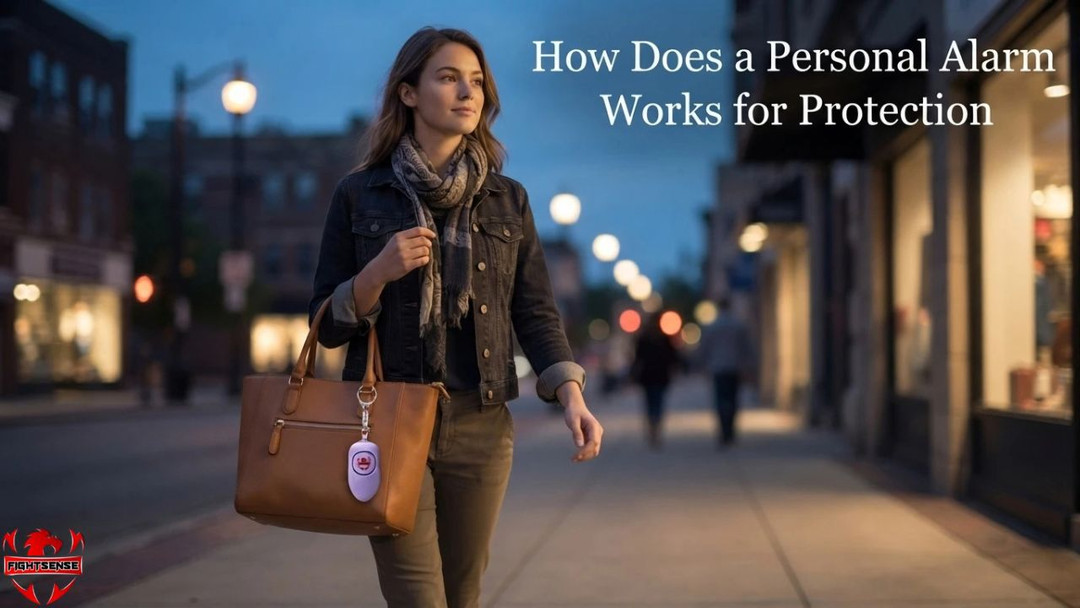
How Does a Personal Alarm Works for Protection
Walking down a dimly lit street or jogging through a quiet park at dusk can instantly trigger a sense of vulnerability. When seconds matter, having a reliable way to call for help is crucial for personal safety. Many individuals wonder, how does a personal alarm work without causing physical harm or requiring complex physical training?
Unlike heavy sprays or tactical gear, modern safety devices offer instant deterrence at the pull of a pin. Brands like FightSense engineer compact, high-decibel tools designed to instantly shatter the silence, draw immediate attention, and deter potential attackers. In this guide, we will explore the engineering, mechanics, and practical benefits of these life-saving gadgets.
What Is a Personal Safety Alarm?
A personal safety alarm is a compact, lightweight electronic device that is meant to produce an ear-piercing siren when activated. These palm-sized devices are often attached to key chains, bags or belt loops for easy access for students, late night workers, runners and elderly.
A personal defense alarm utilizes acoustic shock and high-frequency sound waves to scare offenders and notify nearby pedestrians or law police rather than physical fighting skills.
How Does a Personal Alarm Work? The Mechanics Behind the Sound
Knowing how does a personal alarm works internally explains why they are so good . Basically, there are three essential mechanical steps to a personal alarm: activation, completion of the electrical circuit and sound amplification.
- Device Activation: Most models use a contact pin attached to a lanyard or a quick-release pull tab. Pull on the lanyard and the metal pin will pop out of the case.
- Circuit Closure: When the pin is removed it releases an internal spring loaded switch that completes an electrical circuit, connecting the internal lithium or alkaline batteries to the circuit board.
- Siren Generation: The active circuit powers a microchip driver and a piezoelectric buzzer or speaker to convert electrical energy to high-decibel sound.
Decoding Decibels: Why Loudness Matters in Emergencies
The strength of an emergency siren is measured in sound pressure level (dB). Normal human speech is roughly 60 dB while a jet engine is about 140 decibels.
High-end safety equipment, such as a FightSense personal alarm, are typically 130 dB. At this extreme loudness the sound wave induces rapid aural distress, severe disorientation and panic in an attacker, while compelling anyone within a block radius to turn their head and investigate the sounds.
Key Components Inside a Modern Panic Alarm
Beneath the sleek outer shell of a portable safety device lies a precise arrangement of electronic components.
- Piezoelectric Transducer: Generates the sharp, piercing high-frequency screech that cuts through ambient city noise.
- Battery Power Source: Long-lasting button cell or rechargeable batteries that maintain a standby charge for months without draining.
- Casing & Ergonomic Housing: Durable ABS thermoplastic housing designed to withstand drops, weather elements, and impact.
- Auxiliary LED Flashlight: Many models integrate a bright LED strobe light to blind attackers temporarily or illuminate dark doorsteps.
Who Needs a Personal Alarm Most? Real-World Safety Scenarios
While it might be useful for anyone to have an extra layer of protection, some lifestyles and habits require active precautions:
- College Students & Teens: Walking late at night between dorms and libraries, or in crowded campus walkways.
- Fitness Enthusiasts: Runners and joggers who go in the early morning or late at night and typically use headphones and require an immediate deterrent against stray dogs or questionable persons.
- Frequent Travelers & Commuters: Unknown transport stations, dark hotel corridors, unlit parking garages.
- Senior Citizens Peace of mind on daily walks or fast trips to the grocery store with a simple gadget that requires no hard lifting or aiming.
Personal Alarms vs. Traditional Self-Defense Tools
Choosing the right safety equipment depends on legality, ease of use, and personal comfort. The comparison table below highlights how does a personal alarm work against alternative options.
|
Feature |
FightSense Personal Alarm |
Pepper Spray / Gel |
Stun Guns |
|
Primary Mechanism |
130dB acoustic siren |
Chemical irritant |
High-voltage electric shock |
|
Legal Restrictions |
None (TSA approved, school-friendly) |
Regulated in certain states/countries |
Highly restricted or banned in many areas |
|
Skill Required |
Pulling a pin (zero training) |
Aiming accurately under stress |
Close-contact positioning |
|
Accidental Risk |
Low (requires intentional pull) |
Wind blowback risk |
Accidental self-shock risk |
|
Reusability |
Infinite (re-insert pin to stop) |
Limited by canister capacity |
Dependent on battery charge |
Step-by-Step Guide: How to Properly Use a FightSense Alarm
Having a safety item is only half the battle; understanding how to employ it automatically under stress is key. For maximum readiness, do the following:
- Secure Attachment: Instead of burying your gadget deep in your purse, clip it to anything easily accessible, such as the zipper of an outer jacket, a handbag strap or a jogging belt.
- Find the Lanyard: Know exactly where the pull pin is with your fingers, so you can find it in the dark without looking.
- Pull hard in an emergency: If you are threatened, hold the outer shell in one hand and pull the lanyard or pin hard with the other.
- Drop and Escape: If an attacker takes possession of the gadget, don’t hold on to it. Throw the shrieking alarm away from you to confuse the attacker and bring attention to their exact location while you run to safety.
- Deactivate: When you get to a safe zone, push the metal pin hard back into its housing port to mute the siren.
How to Choose the Right Personal Safety Alarm for Your Lifestyle
Considering the many safety gadgets available in the market, keeping a few crucial things in mind will ensure you pick the best model.
- Decibel Output: Look for units that reach at least 130dB for maximum sonic reach in loud outdoor conditions.
- Activation style: Select a traditional pull-pin lanyard or a click dual-button activation.
- Portability & Design: Ensure it includes a durable keychain clip, carabiner, or wrist strap that blends seamlessly into your daily wardrobe.
- Extra Features: Look for models with an LED flashlight for added convenience in the dark.
Can a Personal Alarm Prevent Crime Before It Happens?
Criminal profiling research indicates that offenders look for targets that appear inattentive, isolated or easy to control. A visible, clip-on safety gadget immediately delivers the psychological signal that you are attentive and ready. The quick crack of a 130dB siren, the instant an unforeseen threat arrives, exposes the perpetrator’s cover, ending their anonymity and greatly diminishing the chance of an escalation.
Pros and Cons of Carrying a Portable Safety Alarm
Evaluating the advantages and limitations helps determine if this tool fits your daily routine.
Pros
- Zero Lethal Force: Deter threats safely without permanent physical harm or legal obligations.
- Universal Accessibility: for teens, college students, runners, and seniors who want a non-violent way to defend themselves.
- Compact & Lightweight: Adds virtually no weight or bulk to your daily carry items.
- Integrated Dual Utility: Often incorporates an emergency flashlight for traversing dark stairwells.
Cons
- Bystander Action Dependent: Alert notifies nearby people of the situation, but depends on those people to hear the alert and respond or contact authorities.
- Battery Maintenance: Periodic battery checks or recharges are needed to maintain peak volume output during an emergency.
Expert Tips for Maximizing Your Personal Security
- Test Monthly: In a controlled indoor environment, activate your personal alarm for two seconds each month to check the battery and speaker are fully operational.
- Layer Up: Use your acoustic personal alarm for women with situational awareness, and keep your headphones low or off while in remote regions.
- Keep Backup Power: For rechargeable models, it should be plugged in once a week to avoid unexpected battery degradation over time.
Common Mistakes People Make with Safety Alarms
- Keeping it in the bottom of a bag: If your alarm is buried behind books or cosmetics, you won't be able to get to it in a sudden confrontation.
- Not considering Battery Health: If one expects a device to run forever without checking it means weak, muffed alarms when an emergency comes.
- Panic and Freeze: Practice the easy pull motion in advance or you may hesitate when seconds count.
Get Yours Now!
FAQs:
How Does a Personal Alarm Work Scare Off Attackers?
It generates a 130dB high frequency sound wave which startles the aggressor, garners instant public attention and destroys the element of surprise.
Can I take a FightSense personal alarm on a plane?
Yes. There are no chemical agents or blades in these devices thus they are TSA compliant and can be carried in carry-on luggage.
Do personal alarms need any particular training?
Not at all. Anyone may operate them instantly by only pulling a pin or pushing an activation button.
Will the loud sound hurt my own ears?
It is quite loud and uncomfortable up close but is meant for short term emergency deterrence and does not cause lasting hearing damage during short duration use.
Is it allowed for youngsters and students to carry personal alarms?
Yes, they are lawful and safe to use in school contexts where pepper spray and blades are expressly prohibited.
What should I do if the alarm sounds by mistake?
Do not worry, just insert the metal pin or cap back into the side slot or base of the unit to instantly cut the circuit.
What happens to a personal alarm in the rain?
Most decent housing will have weather resistant seals that will keep the internal circuit board safe from moisture, light rain and sweat.
Final Thoughts:
Peace of mind is an investment in your personal security. By learning how does a personal alarm works, you are empowered to take charge of your day to day security without the need for tricky weapons or fighting abilities. They are small, they are loud (in terms of decibels), and they are not legally restricted. These are the must-have defenses for modern existence.
Disclaimer:
This content is based on personal experience and general safety information. Results may vary depending on individual circumstances.