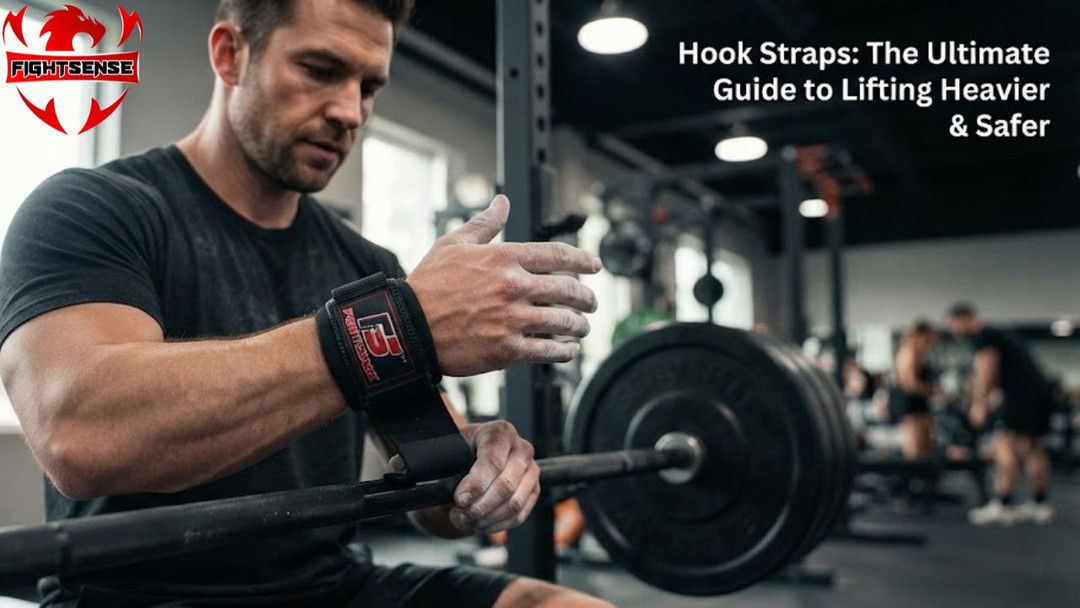
Hook Straps: The Ultimate Guide to Lifting Heavier & Safer
Hook Straps are the ultimate solution when your grip gives out way before your actual muscles do during heavy deadlifts or rows.
Ever felt that frustration in the gym, knowing your back or hamstrings have two or three solid reps left while your fingers are simply screaming and the bar starts slipping? Grip fatigue is a silent progress killer for countless lifters, but you do not have to let tired hands dictate your maximum strength. Incorporating this gear bridges the gap between your raw hand strength and the heavy barbell so you can finally train at your true potential.
Key Takeaways:
- Beat Grip Fatigue: Hook Straps let your back and legs handle the real heavy lifting.
- Build Balanced Strength: Keep unassisted warm-ups for raw grip; save gear for heavy sets.
- Trusted Durability: High-performance accessories from Fightsense offer secure wrist support.
- Lock in Your Form: Stop slipping and focus entirely on your mind-muscle connection.
- Smashed Plateaus: Protect your joints and safely push past your old limits.
What Exactly Are Hook Straps and How Do They Work?
To put it simply, these lifting accessories bridge the gap between your raw hand strength and the heavy barbell. Traditional lifting straps require you to manually wrap fabric around the bar multiple times, which can sometimes feel bulky or time-consuming to set up. In contrast, this gear combines a secure wrist wrap with a sturdy steel or reinforced polymer hook that rests right underneath the bar.
When you grip the bar, the hook takes on the vast majority of the load. This clever mechanism completely bypasses the intense friction and finger strain required to hold onto heavy steel. Your hands simply act as a secondary guide, while the support system carries the heavy weight for you. This allows you to direct 100% of your mental and physical energy toward executing the movement with pristine form, rather than praying your hands do not slip.
Why Is Your Grip Giving Out Before Your Muscles?
Before diving straight into solutions, it helps to understand the underlying mechanics of heavy pulling movements. When you lift heavy weights, your forearms, finger flexors, and hands are under immense physical tension. Naturally, your forearm muscles are significantly smaller and have less endurance than large muscle groups like your latissimus dorsi, traps, or hamstrings.
Because of this anatomical reality, your grip will almost always fatigue faster than the target muscle groups you are actually trying to grow and strengthen. When your hands fail prematurely, you miss out on crucial mechanical tension. Your back, hamstrings, and glutes get shortchanged because your grip acts as a weak link in the kinetic chain.
Why Should You Add Support Straps to Your Heavy Lifts?
Integrating a specialized lifting accessory into your pull days changes the game entirely. Let us look at the primary benefits you will experience right away:
- Massive Increase in Lift Capacity: By taking your hands out of the equation as a limiting factor, you can finally pull the numbers your larger muscles are actually capable of handling.
- Drastic Reduction in Grip Fatigue: You can breeze through your working sets without pausing to shake out burning forearms or worrying about a failing grasp.
- Enhanced Muscle Activation: When you stop stressing about holding the bar, your brain can focus entirely on mind-muscle connection, ensuring your back and legs do all the heavy lifting.
- Improved Safety and Joint Protection: Protecting your palms and fingers from excessive friction means fewer calluses tearing open and less undue stress on your delicate wrist joints.
How Do You Choose the Right Lifting Accessories for Your Goals?
Not all gym gear is created equal, and finding the right fit depends on your personal training style. When shopping around, you will typically encounter a few distinct material variations:
|
Material Type |
Best Suited For |
Key Advantages |
|
Leather Support Gear |
Powerlifters & Heavy Pullers |
Exceptional long-term durability, classic feel, molds to your wrist over time. |
|
Rubber-Coated Hooks |
High-Rep Training & CrossFit |
Maximum friction, completely stops slippage on knurled barbells. |
|
Neoprene-Padded Straps |
Hypertrophy & Long Sessions |
Ultimate comfort, eliminates chafing, provides plush wrist cushioning. |
When looking at reliable manufacturers in the fitness space, Fightsense has built a solid reputation for crafting durable, high-performance training accessories that withstand brutal gym sessions without breaking down. Choosing well-engineered gear from a trusted name ensures your equipment remains secure when you are pushing near-maximal loads.
Are You Using Your Lifting Gear Correctly?
Buying quality equipment is only half the battle; knowing how to implement it correctly ensures maximum safety and efficiency. Follow these simple steps during your next pull workout:
- Secure the Wrist Wrap: Fasten the cuff snugly around your wrist joint. It should feel firm and secure, but not so tight that it cuts off your blood circulation or restricts natural mobility.
- Align the Hook: Position the steel or reinforced hook so that it rests naturally against your palm or slightly below it, ready to latch onto the barbell.
- Latch onto the Bar: Approach the loaded barbell, roll your hands slightly forward, and let the hook click or seat itself securely against the knurling.
- Lock Your Form: Take a deep breath, brace your core, set your shoulder blades, and initiate the pull with absolute confidence in your secure connection to the bar.
What Exercises Benefit Most from These Tools?
While deadlifts are the absolute poster child for pulling accessories, your new gym companions can be utilized across a wide variety of movements:
- Conventional and Sumo Deadlifts: The ultimate test of raw strength where grip failure most commonly occurs.
- Barbell and T-Bar Rows: Keeps your upper and mid-back locked into the movement without your forearms giving out midway through a high-rep set.
- Heavy Shrugs: Allows you to hold maximal loads for trap development without your fingers slipping open on the heavy sets.
- Rack Pulls and Romanian Deadlifts (RDLs): Perfect for overloading the lockout phase or stretching the hamstrings safely.
What Are the Potential Drawbacks to Keep in Mind?
- Grip Stagnation: Relying on Hook Straps for every single set can cause your natural forearm strength to plateau over time.
- The Hybrid Solution: Use your unassisted grip for warm-ups, then reserve your gear exclusively for heavy working sets.
- Balanced Growth: This approach protects your progress, giving you heavy progressive overload without sacrificing natural grip development.
How Overcoming Gym Plateaus with Smart Gear Changes Everything
Plateaus in strength training are frustratingly common, and they usually happen when one specific link in the physical chain breaks down before the rest. If your back or legs are fully capable of pulling three plates, but your fingers can only hold two, you are staring at a classic structural plateau.
By removing that weak link, you allow your central nervous system to adapt to handling heavier loads safely. Over time, this exposure builds incredible physical confidence. You stop second-guessing your setup, you step up to the barbell with total assurance, and you break through those stubborn strength barriers that have held you back for months.
Conclusion:
At the end of the day, your progress in the gym should be limited by your drive, consistency, and dedication—not by how much weight your fingers can tolerate holding. Incorporating smart Hook Straps into your training arsenal allows you to protect your joints, maximize muscle engagement, and push past plateaus safely. Treat your body right, give your hands the reliable support they deserve, and watch your overall pulling strength skyrocket.
FAQs:
1. Can lifting accessories interfere with forearm hypertrophy?
No, as long as you use an unassisted grip during lighter warm-ups and accessory exercises.
2. How do grip aids impact time-under-tension during working sets?
They increase time-under-tension by keeping the target muscles engaged long after hand fatigue would normally force you to stop.
3. Can improper placement of gear cause nerve compression?
Yes, tightening gear too low over the hand bones can restrict blood flow and irritate nerves around the wrist joint.
4. What causes a barbell to slip during heavy pulls?
Slippage is usually caused by sweat, worn knurling on the bar, and progressive fatigue in the finger flexor muscles.
5. Are certain bar knurling patterns better for accessories?
Yes, aggressive mountain knurling grips fabric and leather much more securely than passive gym bars.
6. What is the difference between traditional straps and figure-eight loops?
Traditional straps require manual wrapping every set, whereas figure-eight straps lock your wrist directly to the bar in a continuous loop for maximum security.
7. How do pulling aids influence kinetic chain alignment?
They allow for a more symmetrical arm posture, preventing your shoulders or hips from dropping due to a slipping grip.
Disclaimer:
Lifting accessories are designed to support your training, not replace foundational strength. Always consult a professional before changing your workout routine.