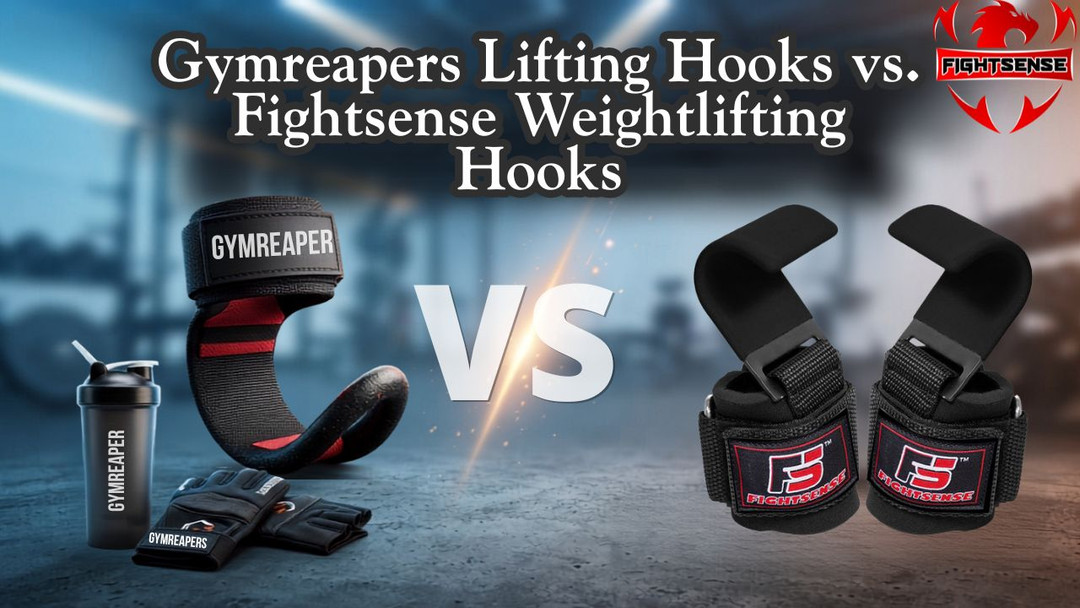
Gymreapers Lifting Hooks vs. Fightsense Weightlifting Hooks
Building a massive deadlift or expanding your back requires more than raw strength; your grip often gives out long before your back muscles do. When your forearms burn and the bar starts slipping during heavy pulling sessions, reliable gear is essential. This is where grip assist accessories come into play. If you are comparing top-tier options, Gymreapers Lifting Hooks stand out alongside Fightsense weightlifting hooks as popular choices for powerlifters and bodybuilders alike.
Choosing the right wrist straps and hooks can completely transform your pull workouts, protect your hands from calluses, and help you push past plateau limits. In this comprehensive comparison, we evaluate design, durability, comfort, and overall value to help you decide which lifting accessory deserves a spot in your gym bag.
Table of Contents
- Introduction
- Understanding Lifting Hooks and Grip Assist Gear
- Deep Dive: Gymreapers Lifting Hooks
- Deep Dive: Fightsense Weightlifting Hooks
- Feature Comparison Table
- Key Differences in Performance and Comfort
- Pros and Cons
- Expert Tips for Maximizing Lifting Hooks
- Common Mistakes to Avoid
- Frequently Asked Questions
- Conclusion & Call to Action
Understanding Lifting Hooks and Grip Assist Gear
Lifting hooks consist of a heavy-duty wrist wrap integrated with a steel or coated metal hook that rests inside your palm. When you grip a barbell, dumbbell, or pull-up bar, the hook takes the brunt of the load, effectively locking your hand to the bar.
Why Use Grip Assistance?
- Overcome Grip Fatigue: Your back and hamstrings can handle far more weight than your fingers can hold. Hooks bridge that gap.
- Protect Skin: They prevent painful tears and rough calluses during high-volume pulling routines.
- Isolate Target Muscles: By removing the mental and physical strain of holding onto the weight, you can focus entirely on lat engagement and muscular contraction.
Deep Dive: Gymreapers Lifting Hooks
Gymreapers has built a stellar reputation in the fitness community for manufacturing heavy-duty, premium-grade strength training equipment. Their lifting hooks are engineered to withstand extreme loads while keeping the user secure and comfortable.
Build Quality and Materials
Gymreapers use reinforced neoprene wrist supports paired with heavy-duty steel hooks coated in a non-slip rubberized material. This rubber coating is crucial because it prevents the hook from sliding around the knurling of the barbell.
Comfort and Ergonomics
The thick neoprene padding around the wrist evenly distributes heavy loads, preventing the strap from biting into your skin. The adjustable Velcro closure ensures a snug fit for virtually any wrist size, offering maximum stability during maximal effort sets.
Deep Dive: Fightsense Weightlifting Hooks
Fightsense delivers an accessible, budget-friendly alternative for athletes looking to improve their pulling power without breaking the bank. These hooks are designed to offer reliable wrist support and secure bar attachment for everyday gym-goers.
Build Quality and Materials
Fightsense hooks typically feature durable nylon or canvas webbing combined with padded wrist cushions and solid steel hooks. While slightly lighter in construction compared to premium heavy-duty brands, they hold up remarkably well during standard bodybuilding and powerlifting workouts.
Comfort and Ergonomics
The wrist wrap design focuses on quick adjustments and ease of use. They are particularly favored by beginners and intermediate lifters who want immediate relief from grip fatigue during exercises like shrugs, barbell rows, and lat pulldowns.
Feature Comparison Table
|
Feature |
Gymreapers Lifting Hooks |
Fightsense Weightlifting Hooks |
|
Primary Material |
Heavy-duty neoprene & coated steel |
Padded nylon & solid steel |
|
Wrist Support |
Extra thick padding & secure Velcro |
Standard padding with secure closure |
|
Grip Security |
High friction rubberized coating |
Standard steel finish with secure hold |
|
Best Suited For |
Heavy powerlifting & advanced bodybuilding |
General fitness, bodybuilding, & moderate lifting |
|
Price Point |
Mid to High Tier |
Budget-Friendly |
Key Differences in Performance and Comfort
1. Durability Under Heavy Loads
When handling weights exceeding 400 pounds on movements like deadlifts or heavy shrugs, structural integrity matters. Gymreapers models shine under maximal loads due to their reinforced stitching and heavy-gauge steel. Fightsense handles moderate to heavy workloads effortlessly, making them ideal for standard hypertrophy training.
2. Wrist Stability
Wrist extension can become an issue when lifting heavy. Gymreapers offer a stiffer, more supportive wrist cuff that locks the joint in a neutral position, whereas Fightsense provides a slightly more flexible, forgiving feel around the wrist.
Pros and Cons
Gymreapers Lifting Hooks
-
Pros:
- Exceptional durability for heavy lifting.
- Rubber-coated hooks prevent slipping on knurled bars.
- Thick, comfortable neoprene wrist padding.
-
Cons:
- Higher price point.
- May feel bulky for smaller wrists.
Fightsense Weightlifting Hooks
-
Pros:
- Highly affordable and accessible.
- Lightweight and easy to pack.
- Great for beginners and intermediate lifters.
-
Cons:
- Less wrist rigidity under extreme loads.
- Coating on hooks may wear down faster over time.
Expert Tips for Maximizing Lifting Hooks
- Position Correctly: Ensure the hook rests directly across your palm where your fingers naturally curl, rather than sitting too high up your fingers.
- Secure the Velcro: Tighten the wrist wrap securely before engaging with the bar to prevent shifting during the lift.
- Use for Pulling Movements Only: Reserve these accessories strictly for back exercises, shrugs, and deadlifts. Avoid using them for pushing movements or Olympic lifts where quick release is necessary.
Common Mistakes to Avoid
- Relying Solely on Hooks: While great for overcoming grip fatigue, make sure to train your natural grip strength during warm-up sets or dedicated forearm sessions.
- Neglecting Proper Form: Do not let the hooks compensate for poor posture or rounded shoulders during deadlifts.
- Ignoring Gear Maintenance: Regularly check the stitching and metal integrity of your hooks to ensure safe performance.
Get Yours Now!
Conclusion:
Both Gymreapers Lifting Hooks and Fightsense Weightlifting Hooks serve as valuable tools to elevate your back training and conquer grip fatigue. If you are an advanced lifter moving maximal weights who prioritizes heavy-duty padding and longevity, Gymreapers is the premier choice. If you want reliable, budget-friendly grip assistance for standard bodybuilding routines, Fightsense delivers fantastic results without breaking the bank.
FAQs:
1. Are lifting hooks better than traditional lifting straps?
Lifting hooks offer faster setup and release compared to traditional straps, making them ideal for drop sets and high-intensity workouts. However, traditional straps offer a closer connection to the bar feel.
2. Can beginners use Gymreapers or Fightsense hooks?
Yes, beginners can use them safely to prevent grip fatigue from limiting back development, provided they still focus on building foundational grip strength.
3. Do lifting hooks damage barbell knurling?
Rubber-coated hooks, such as those found on Gymreapers models, protect the barbell knurling from metal-on-metal friction and wear.
4. Do these hooks fit small wrists?
Yes, both brands feature adjustable Velcro straps designed to accommodate a wide range of wrist circumferences.
5. Are lifting hooks allowed in powerlifting competitions?
Generally, standard powerlifting federations do not permit lifting hooks or straps during sanctioned competition lifts, as they assist with the grip. They are meant for training purposes.
6. Which option offers better long-term value?
Gymreapers offer superior longevity for heavy lifters, while Fightsense provides unmatched value for budget-conscious fitness enthusiasts.
Disclaimer:
This article is for informational purposes only and does not replace professional fitness or medical advice. Always consult a qualified expert before using heavy lifting equipment.