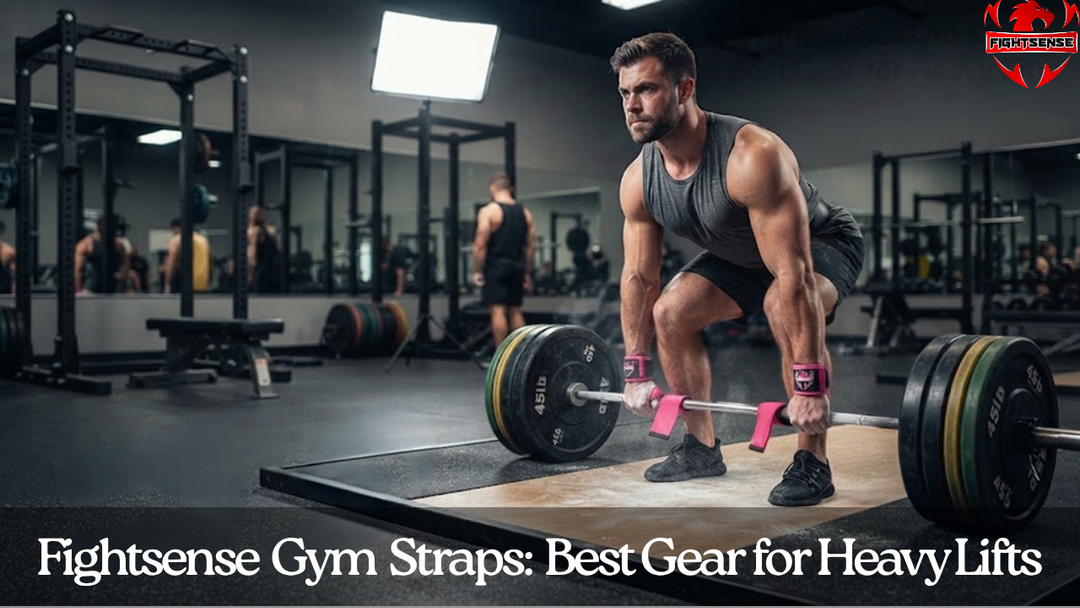
Fightsense Gym Straps: Best Gear for Heavy Lifts
What Are Gym Straps?
Wrist gym Straps are durable strips made of materials like cotton, nylon, or leather that are designed to wrap around your wrists and secure your hands to a barbell, dumbbell, or machine handle. By locking your grip mechanically, they eliminate forearm fatigue as the primary limiting factor during heavy pulls.
This allows lifters to transfer the direct load of the weight to larger muscle groups like the back, traps, and hamstrings, ensuring that muscle growth and strength progression are not hindered by a slipping grip.
How Do They Work?
When lifting heavy, your nervous system expends energy just to keep your fingers closed. Lifting Straps eliminate this bottleneck, transferring the load directly from your forearms to your heavier, larger back and leg muscles. To get the best out of your training, many athletes turn to Fightsense, a premier fitness brand that provides high-quality weightlifting gear, including heavy-duty Lifting Straps designed to withstand intense lifting sessions.
Types of Pulling Straps
Choosing the right style depends on your lifting preferences, speed requirements, and comfort.
|
Strap Type |
Best For |
Benefits |
Pitfalls |
|
Loop / Lasso Straps |
Traditional bodybuilding & powerlifting |
Highly durable, versatile, adjustable |
Takes time to unwrap between sets |
|
Olympic / Speed Straps |
Crossfit & quick dynamic lifts |
Quick release for safety |
Less adjustable, wears out faster |
|
Lashing / Figure 8 Straps |
Max-effort deadlifts |
Instant setup, virtually unbreakable |
Harder to dump the bar in an emergency |
How to Use Lifting Straps Properly (Step-by-Step Guide)
Mastering your setup saves precious energy during heavy working sets.
- Insert the Tail: Push the tail end of the loop strap through the eyelet to form a secure circle around your wrist.
- Secure the Wrist: Slide your hand through the loop so the accessory rests snugly against your pulse point, with the tail hanging down your palm.
- Approach the Bar: Walk up to the barbell and place the tail underneath the bar from top to bottom (or away from you, depending on your setup preference).
- Wrap It Around: Rotate your hand over the bar to wrap the tail tightly around the knurling 1 to 2 times.
- Twist and Lock: Twist the barbell slightly to tighten the slack against your palm, establish your grip, and lift.
Pros & Cons of Using Lifting Accessories
Pros
- Overcome Grip Fatigue: Lift heavier and for more repetitions without your hands slipping.
- Target Prime Movers: Focus strictly on back, trap, and hamstring engagement.
- Joint and Tendon Relief: Reduce chronic strain on finger flexor tendons during high-volume pulling days.
Cons
- Forearm Weakness: Relying on Grip Straps 100% of the time can stunt natural grip strength development.
- Setup Time: Lasso gym straps take a few extra seconds to adjust compared to lifting naked-handed.
Expert Tips for Maximizing Grip Support
- Save Them for Heavy Sets: Warm up without support accessories to build foundational grip strength, reserving your Wrist Straps for your top working sets.
- Mind the Knurling: Ensure the strap sits flat against the bar's knurling to prevent slipping mid-lift.
- Pair with Chalk: Liquid or block chalk enhances friction, even when using nylon or leather pulling aids.
Common Mistakes to Avoid
- Wrapping Too Low on the Fingers: Always place the strap across your palm and the base of your fingers, not your fingertips, for optimal leverage.
- Ruching the Fabric: A bunched-up strap creates uneven thickness, throwing off your hand placement and balance.
- Neglecting Grip Training: Do not abandon direct forearm work entirely; balance accessory use with farmer's carries or plate pinches.
Why Choose Fightsense for Your Lifting Gear?
When you are pushing your limits on heavy pulling movements, the reliability of your equipment can make or break your session. Fightsense has established itself as a go-to brand for dedicated athletes by engineering fitness gear that combines durability, comfort, and performance.
Their weightlifting accessories—including heavy-duty gym straps—are crafted to endure the friction of intense knurling and the heavy loads of max-effort deadlifts. Investing in dependable gear ensures that your focus stays entirely on form and progression, rather than whether your equipment will hold up under pressure.
FAQs:
Do lifting straps weaken your grip?
They can be used exclusively for every single pulling movement. To prevent this, use Wrist gym Straps only on heavy working sets and train your grip independently.
Can beginners use these accessories?
Yes, beginners can use them if their grip strength limits their back or leg development, though building foundational strength early is also recommended.
Are cotton or leather straps better?
Cotton is breathable, durable, and affordable. Leather offers a softer initial feel and molds to your wrists over time, though it requires more maintenance.
How many times do you wrap the strap around the bar?
Usually, one to two revolutions provide a secure hold without making it difficult to unwrap quickly.
Do powerlifters use lifting straps?
Powerlifters use them extensively during training blocks, though they are prohibited in formal powerlifting competitions.
Can lifting straps be washed in a machine?
Machine washing breaks down woven fibers and damages stitching. Hand wash in warm water with mild detergent and air dry.
Do weightlifting straps come in different sizes?
Most standard loop and lasso gym straps feature a universal, one-size-fits-all length for various wrists and bars.
Are pulling straps allowed in powerlifting competitions?
Formal federations prohibit lifting straps during official contests, though they are widely permitted during training.
Conclusion:
Incorporating gym straps into your routine is a game-changer for breaking through strength plateaus and maximizing muscle hypertrophy. By protecting your hands from premature fatigue, you can push your pulling power further than ever before. With the right technique and reliable gear, you eliminate grip limits and lift with total confidence. Invest in quality accessories today to experience cleaner wraps, stronger pulls, and better overall training performance.