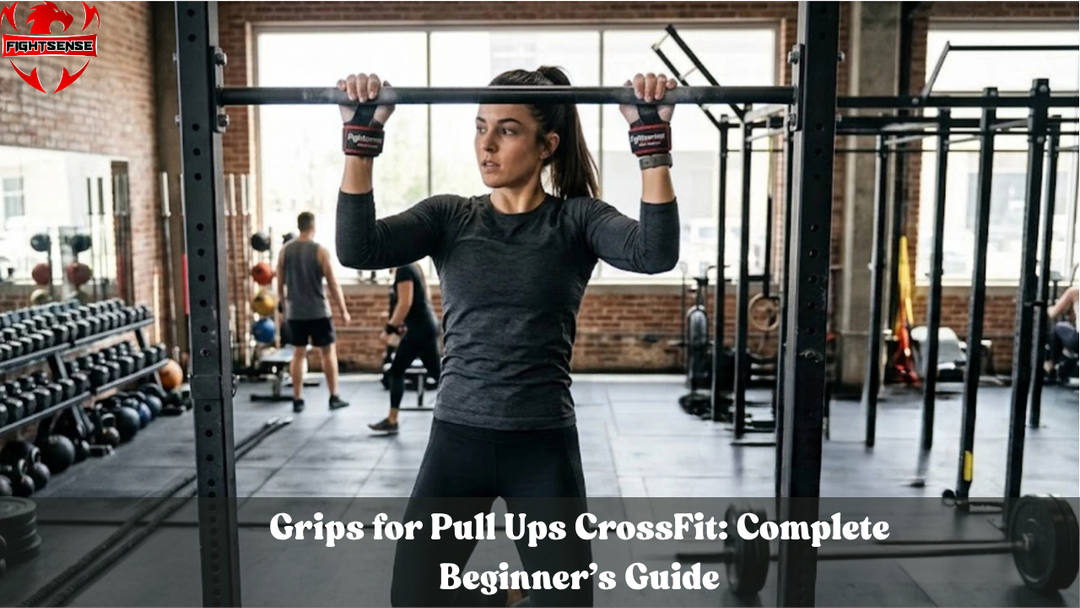
Grips for Pull Ups CrossFit: Complete Beginner’s Guide
Grips for Pull Ups CrossFit are something most beginners in CrossFit hear about pretty quickly. If you’ve recently started, you’ve probably already realized one thing—this training is no joke. It’s not just about showing up and doing workouts, it’s about improving every single session.
And in functional fitness training, even small things like your hand grip can make a big difference.
That’s where Fightsense comes in too—focused on helping athletes train smarter with the right support gear so they can perform better, not just harder.
But here’s what most beginners don’t expect…
Pull-ups don’t just challenge your upper body strength—they can really damage your hands if you’re not prepared. Blisters, slipping, and torn skin show up faster than you think.
So naturally, people start asking:
Do I actually need CrossFit pull up grips, or are they just optional gym accessories?
Let’s break it down in a simple way.
Key Notes:
- Grips for Pull Ups CrossFit reduce hand tears, blisters, and friction during workouts
- They improve grip stability in high-intensity CrossFit movements like pull-ups and toes-to-bar
- They support performance but should not replace natural grip strength training
- Choosing the right size and material is key for comfort and control
- Best results come when grips are combined with regular grip-strength exercises
What Are Grips for Pull Ups CrossFit?
In simple words, these grips are hand protection tools you wear during pull ups and other bar exercises.
But they’re not just for comfort.
Good grips for pull ups CrossFit actually help you:
- reduce friction between your hands and the bar
- improve control during kipping pull ups and toes-to-bar
- protect your palms from tearing
- reduce fatigue in your forearms
When you’re doing high-rep workouts, your hands take constant pressure and movement. That’s what causes most injuries—not lack of strength.
So grips basically act like a buffer between your skin and the bar.
Why Do Hands Tear So Easily in CrossFit?
Most people think ripped hands mean weak grip—but that’s not true at all.
It usually happens because of:
- sweat + friction on the pull up bar
- fast bar rotation during kipping movements
- built-up calluses that suddenly tear
- long, high-intensity functional fitness workouts
Even strong athletes face this. It’s not about strength—it’s about repeated stress on the skin.
That’s why many athletes use workout hand grips or gymnastic grips CrossFit style to manage it better.
What Are the Real Benefits of Grips?
Let’s keep this practical, not overcomplicated.
When you use grips for pull ups CrossFit properly, you’ll notice:
- Better grip efficiency: You’re not squeezing the bar as hard, which helps your grip strength last longer.
- More reps without stopping: Less hand pain means you can finish workouts more smoothly.
- Less risk of injury: No more ripped palms or broken calluses ruining your training week.
- Better focus: Instead of thinking about pain, you focus on performance and technique.
Do Beginners Really Need Them?
Here’s the honest answer:
If you’re doing basic pull ups → you can skip them
If you’re doing high-rep CrossFit workouts → they become really useful
But there’s a mistake many beginners make…
They start relying too much on grips and stop building real strength.
A better approach is:
- use grips during heavy or high-volume workouts
- still train grip strength separately
- don’t ignore basic forearm and bodyweight training
Things like dead hangs, resistance band work, and forearm training really help here.
And honestly, this is the kind of balanced training mindset brands like Fightsense support—using gear to assist your progress, not replace your effort.
Types of Grips:
You don’t need to overthink this.
Fingerless Grips
- quick and easy to use
- less restrictive
- good for experienced athletes
Hole Grips (Best for Beginners)
- balanced comfort and control
- easy to learn
- perfect starting point
Hole Grips
- more hand protection
- slightly more secure
- great for intense workouts
If you’re confused, just start with 2-hole grips. Simple.
What About Material?
This actually matters more than people think.
Leather grips
- comfortable
- durable
- take time to break in
Synthetic / Carbon grips
- strong grip on bar
- good for sweaty hands
- very common in modern CrossFit grip
Rubber hybrid grips
- extra sticky
- great for high-rep workouts
- can feel a bit stiff at first
Fit Matters More Than You Think:
Even the best CrossFit pull up grips won’t help if they don’t fit properly.
Here’s a simple rule:
- too tight → uncomfortable and restrictive
- too loose → slips during workouts
- perfect fit → slight fold when gripping the bar
That fold actually helps you lock into the bar better during movements like kipping pull ups.
Common Mistakes Beginners Make:
This is where most people mess up:
- using grips too early
- ignoring grip strength training
- not caring for calluses properly
- wearing grips incorrectly
- depending 100% on equipment instead of technique
Small mistakes like these can slow your progress more than you think.
Don’t Ignore Hand Care:
Even if you use grips, your hands still need attention.
Simple habits:
- file down thick calluses
- keep hands dry (chalk helps a lot)
- avoid letting rough skin build up
Because honestly, even the best grips for pull ups CrossFit can’t fully protect badly maintained hands.
Don’t Skip Grip Strength Training:
If your goal is to actually get better at CrossFit, this is important.
Add simple exercises like:
- dead hangs (start with 20–30 seconds)
- farmer carries
- towel pull ups
- resistance band training
This builds real strength in your hands and forearms, which improves everything—from pull ups to muscle ups.
Conclusion:
Don’t skip grip strength training if your goal is to actually get better at CrossFit. Grips can help you in workouts, but real progress comes from building natural strength in your hands and forearms. Simple exercises like dead hangs (start with 20–30 seconds), farmer carries, towel pull ups, and resistance band training can make a big difference over time.
These movements build real grip endurance and control, which improves everything from pull ups to muscle ups and overall functional fitness performance.
FAQs:
Can I use grips in every CrossFit workout?
You can, but they’re mainly useful for high-rep bar workouts like pull ups and toes-to-bar.
Do grips reduce grip strength?
Not directly, but overuse can slow natural grip development if you don’t train without them.
How long do pull-up grips last?
Usually a few months to over a year, depending on material and usage.
Should I use chalk with grips?
Yes, a small amount can help reduce sweat and improve bar control
Note:
This content is for informational purposes only. Consult a fitness professional before using grips for pull ups CrossFit or starting any new training routine.