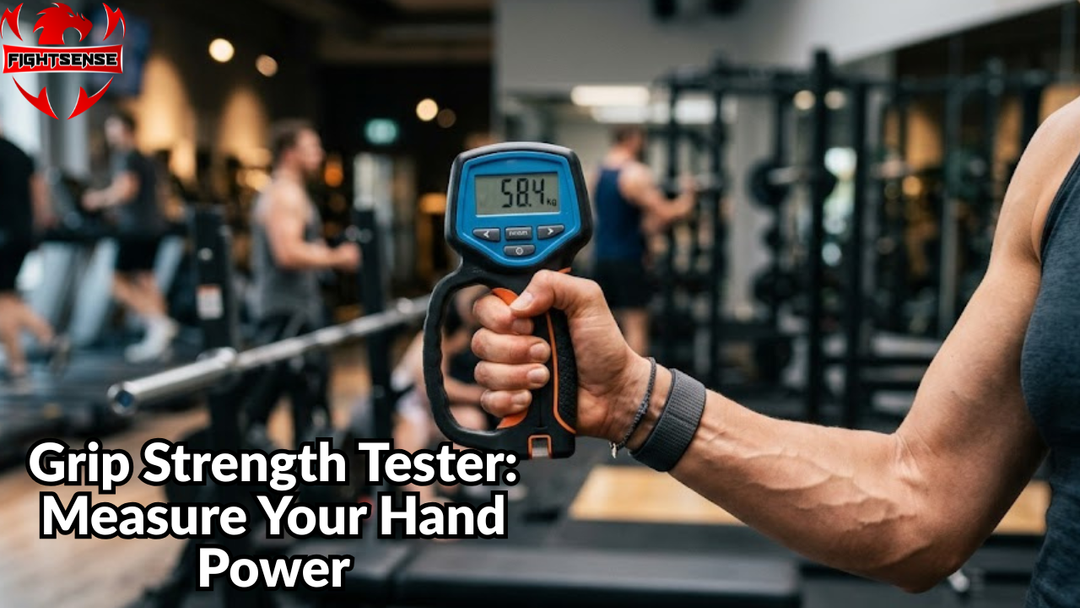
Grip Strength Tester: Measure Your Hand Power
Grip strength tester is often overlooked in fitness discussions, yet it plays a vital role in both athletic performance and everyday life. From lifting weights at the gym to carrying shopping bags or even opening a jar, your hand strength impacts countless daily activities.
A Hand Dynamometer is a simple but powerful device that helps measure this essential aspect of physical fitness. In recent years, it has also gained attention in the medical field as a key indicator of overall health and longevity.
In this comprehensive guide, we’ll explore everything you need to know about Hand Dynamometer—how they work, why they matter, the latest trends, and how you can use them to improve your hand power effectively.
Keynotes:
- A Hand Force Tester measures hand and forearm strength accurately.
- Regular testing helps track fitness progress over time.
- Strong grip improves gym performance and daily activities.
- Digital testers offer better accuracy and easy tracking.
- Consistent training is essential to improve grip strength effectively.
What Is a Grip Strength Tester?
A hand dynamometer, is a device that measures the greatest force your hand can create when squeezing. It gives you a number , usually in kg or lbs , so you can monitor your grip strength progress .
Modern versions of grip strength testers include spring based, hydraulic and computerised. Technology has advanced, and many digital gadgets now have capabilities like memory storage, user profiles, and Bluetooth for synchronising data with mobile apps.
Why Grip Strength Is More Important Than Ever?
Grip strength is no longer a problem only for sportsmen. Research over the past few years has demonstrated that it is a good predictor of overall health. Research has found that those with a stronger grip are likely to have better heart health, better mobility and even live longer lives.
Advantages of Having a Strong Grip Strength
Enhanced Athletic Performance
No matter if you’re lifting weights, doing CrossFit, climbing, or martial arts, your grip strength will affect your performance immediately. Deadlifts, pull-ups and rows are all exercises that depend largely on a solid grip.
Improved daily functioning
Simple chores like handling tools, typing, cooking and transporting things are easier with stronger hands.
Prevention of Injuries
Well-developed forearms and wrists stabilise joints, lowering the chances of strains and injuries.
Health Indicators
Doctors increasingly employ grip strength as a rapid screening technique for muscle weakness, age-related deterioration and other chronic conditions.
Psychological Confidence
It might sound strange, but physical strength, notably grip strength, can increase confidence and overall well-being.
Types of Grip Strength Testing Machines
The ideal grip strength testing for you relies on your needs and budget. The most popular types are:
Digital Hand Grip Tester
Today the most advanced and user-friendly choice is digital testers. They give exact readings and typically contain features such as:
- Some user profiles
- Bluetooth connection
These are perfect for athletes, trainers and health care providers that need reliable and trackable data.
Hydraulic Hand Strength Tester
Hydraulic testers are famous for their great accuracy and endurance. They are commonly utilised in hospitals and rehabilitation centers as they provide reliable readings without the need for batteries.
Spring-Based (Analogue) Tester
This is the most simple and cheapest type. It measures grip strength. It works via a spring mechanism. It’s not as accurate as digital or hydraulic versions, but it’s adequate for everyday use at home.
How to Use a Hand Dynamometer Correctly
To get accurate results, it’s important to follow proper technique:
1. Adjust the Handle: Make sure the handle fits comfortably in your hand. A proper grip ensures accurate measurement.
2. Position Your Arm: Hold your arm at a 90-degree angle with your elbow close to your body.
3. Squeeze Firmly: Apply maximum force for about 3–5 seconds.
4. Record the Reading: Take note of the value displayed.
5. Repeat for Accuracy: Perform 2–3 attempts for each hand and calculate the average.
Consistency in testing conditions is key to tracking progress effectively.
Latest Trends in Grip Strength Testing:
Grip strength testing has really advanced in the past few years. Here are some of the newest trends:
Intelligent Fitness Integration
Today’s digital grip testers connect to fitness applications, so users can track their development over time. Some devices even provide artificial intelligence advice to improve your strength.
Application in Preventive Healthcare
Grip strength is becoming an increasingly important early sign of health hazards, doctors say. It is currently a regular test in many clinics throughout the world.
Rehabilitation Engineering
Grip strength testers are also being included into physical therapy programs with real-time feedback systems to assist patients recover faster.
Portable & Compact Designs
New variants are lightweight and portable, allowing users to be able to track their strength on the go.
What is a Good Grip Strength Score?
Grip strength varies with age, gender and fitness level. But here are some general benchmarks:
Men.
Good: 55+kg
Average: 40-55 kg.
Below average: under 40 kg
Females
Excellent: 35 kg +
Average 25–35 kg
Below Average: less than 25kg
These numbers are not absolute. However, athletes and trained subjects routinely exceed these boundaries.
How to Improve Your Grip Strength?
If your grip strength is lower than expected, don’t worry—it can be improved with consistent training.
1. Hand Grippers: Portable tools designed specifically to strengthen grip.
2. Dead Hangs: Hang from a pull-up bar for as long as possible to build endurance.
3. Farmer’s Carries: Carry heavy weights in each hand while walking.
4. Wrist Curls: Use dumbbells to strengthen forearms
5. Plate Pinches: Hold weight plates between your fingers and thumb.
6. Stress Ball Squeezes: Simple yet effective for beginners.
Training Tips for Faster Results:
- Train your grip 2–3 times per week
- Gradually increase resistance
- Focus on both strength and endurance
- Avoid overtraining to prevent injury
- Track progress using a Hand Force Tester
Who Should Use a Hand Grip Meter?
Grip strength testers are beneficial for a wide range of users:
- Athletes looking to enhance performance
- Gym enthusiasts tracking progress
- Physical therapy patients recovering from injuries
- Elderly individuals monitoring muscle decline
- Professionals like mechanics, carpenters, and electricians
How Often Should You Test Grip Strength?
For best results:
- Beginners: Test once every 2 weeks
- Intermediate users: Test weekly
- Athletes: Test multiple times per week
Regular testing helps you stay motivated and track improvements accurately.
Choosing the Right Grip Tester:
When picking the correct Hand Force Tester for the best results, here are a few crucial things to keep in mind. Most crucial is to have the proper strength measurements. Accuracy and reliability. Comfort is important also, therefore an adjustable grip that suits your hand is best.
Another factor is the type of display. Digital testers are easier to read and more exact than analogue testers. Some of the more advanced designs even include memory storage and app connectivity for tracking progress. Finally, think about your budget. To recap, a digital Grip Tester is the best option for the majority of users because it is accurate, easy to use, and has helpful features.
Common Mistakes to Avoid:
- Using improper hand positioning
- Not warming up before testing
- Comparing results without considering age or gender
- Testing inconsistently
- Ignoring weaker hand performance
Fightsense Grip Support Gear for Improved Training Performance:
In addition to assessing grip strength with a grip strength tester, it’s also crucial to improve your actual grip throughout your workouts. Fightsense provides functional fitness gear to enhance your lifting and prevent hand fatigue during hard training.
The line comprises hooks, straps and weight lifting gloves, all designed to improve grip stability and control. These products assist sportsmen and gym users to lift bigger weights with improved comfort level by decreasing pressure on hands and wrists. Fightsense also has fitness palm grips and straps that will improve your overall workout efficiency and will allow you to focus more on muscle training instead of losing your grasp too early.
Summary:
Grip strength is a basic but potent metric of general fitness, and a grip strength tester is one of the easiest ways to quantify and monitor it. If you’re an athlete, gym lover or just a person working on general health, your grasp is one of the easiest ways to increase performance in your workouts and make life easier.
With the right training and supportive gear like Fightsense accessories you may prevent hand fatigue and develop stronger, more dependable grip strength over time. In the end, tiny improvements in grip strength can translate into large gains in fitness, confidence, and physical performance.
Note:
You should always talk to a fitness specialist before starting a new training routine. For the greatest results and to be safe, follow the instructions for how to use it.
FAQs:
1. What does a grip strength tester measure?
It measures the maximum force your hand can apply while squeezing, showing overall hand and forearm strength.
2. How often should I test grip strength?
Once every 1–2 weeks is ideal to track steady and accurate progress.
3. Is grip strength linked to health?
Yes, it is often used as an indicator of overall muscle health and physical fitness.
4. Are digital testers better than analog ones?
Digital testers are generally more accurate and easier to track over time.