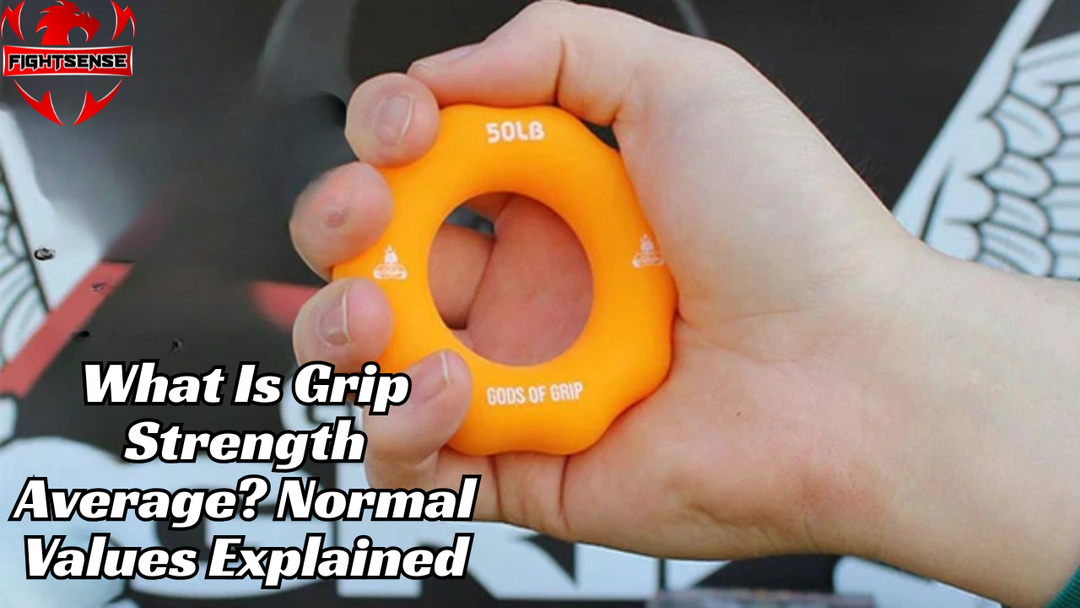
What Is Grip Strength Average? Normal Values Explained
Grip Strength Average is one of the simplest yet most powerful indicators of human physical health. It measures how much force your hand and forearm muscles can generate when squeezing an object. Although it looks like a small fitness metric, doctors and researchers use it to understand overall muscle strength, aging, and even health risks.
Keynotes:
- Average grip strength is about 105–120 lbs for men and 55–65 lbs for women.
- It is important for performance, daily strength, and injury prevention.
- Exercises like dead hangs, farmer’s walks, and pinch holds help improve grip strength.
- Custom grips and grip belts can improve comfort, control, and training performance.
What does it mean to have grip strength?
Grip strength is the amount of force that the muscles in your hand, wrist, and forearm make when you grip or squeeze something. A hand dynamometer, which measures how much pressure your hand can apply, is the most common way to measure it.
There are three primary kinds of grip strength average:
- Crush grip: squeezing something, like shaking hands
- Pinch grip is gripping something between your thumb and fingers.
- Support grip means holding something for a lengthy duration, like when you carry baggage.
People employ each type for different sports and daily tasks.
How Strong Is the Grip Strength Average?
The grip strength average changes with age, gender, body size, and how active a person is.
Men (Average Values)
- 46–50 kg for people aged 20 to 29
- 44–48 kg for people aged 30 to 39
- 42–46 kg for people ages 40 to 49
- 39–43 kg for those aged 50 to 59
- 35–39 kg for people over 60
Women (Average Values)
- 28–32 kg for people between the ages of 20 and 29
- 27–30 kg for those aged 30 to 39
- 25–28 kg for people ages 40 to 49
- 23–26 kg for people between the ages of 50 and 59
- 20–23 kg for people over 60
People who are athletes or who practice strength training on a regular basis often do better than these averages.
Things That Affect Grip Strength:
Grip strengthaverage isn't set in stone; it can be changed by a number of things:
- Age: strength slowly goes down after 30 to 40 years
- Men usually have stronger grips than women because they have more muscle mass.
- Body size: a bigger muscle mass usually equals a stronger grasp.
- Exercise: persons who are active have stronger grips.
- Nutrition: Eating protein helps muscles grow.
Health problems including arthritis, neurological problems, or trauma might make you weaker.
Why Grip Strength Is Important?
Grip strength is more than just a fitness number. It is widely used in medical science because it reflects overall body condition.
It is linked with:
- Muscle health and sarcopenia (age-related muscle loss)
- Risk of frailty in older adults
- Cardiovascular and metabolic health
- Recovery ability after illness or injury
- General functional independence in daily life
In many studies, low grip strength is considered a warning sign of poor health outcomes.
Benefits of Good Grip Strength:
Having a firm grip is good for your health and your life in many ways:
- Better at sports and workouts at the gym
- Easier to do everyday things like carrying, lifting, and opening things
- Less chance of hurting your hands and wrists
- Better stamina for strenuous activities
- More strength in the upper body as a whole
- Helps people stay healthy and independent as they become older
Common Mistakes That Reduce Grip Strength:
Many people unknowingly weaken their grip strength due to poor habits:
- Ignoring forearm training in workouts
- Overusing lifting straps in gym exercises
- Not training grip directly (only focusing on biceps/chest)
- Poor wrist alignment during lifting
- Lack of consistency in strength training
- Long periods of inactivity or desk lifestyle
How to Measure Grip Strength Properly?
The most accurate method is using a hand dynamometer:
- Sit or stand in a relaxed position
- Hold the device firmly without bending your wrist
- Squeeze with maximum effort for a few seconds
- Repeat 2–3 times for accuracy
- Record the highest reading
Both hands should be tested separately for better comparison.
How to Improve Grip Strength?
You can improve grip strength average with targeted exercises:
- Farmer’s walks (walking with heavy weights)
- Dead hangs (hanging from a bar for time)
- Hand grippers
- Deadlifts and pull-ups
- Wrist curls and reverse curls
Training 2–3 times per week is enough for noticeable improvement within weeks.
Fightsense – Reliable Tools to Improve Your Grip Strength:
Fightsense makes useful and long-lasting training items that will help you get better at grip strength. Their equipment is built for regular resistance training, which lets users slowly make their hands, wrists, and forearms stronger over time.
Fightsense devices can help you do structured grip training at home or in the gym, whether you're just starting your fitness journey or you're an athlete trying to improve your performance. Using it regularly can help you get stronger, last longer, and do better with your hands in everyday tasks and sports.
Final Thoughts:
Grip strength is a basic but important sign of health that shows how well your muscles are working, how old you are, and how well you can move. Knowing what the average grip strength is will help you figure out how fit you are and where you need to develop. You may develop your grip strength average at any age if you train regularly and live a healthy life
Disclaimer:
This page offers a basic knowledge of grip strength and how FightSense grip belts and custom grips could enhance your performance. See a medical practitioner or professional trainer regularly for specific recommendations.
FAQS:
1. What does grip strength tell us about general health?
Grip strength is a common rapid test of overall body strength and muscle function, notably in clinical and sporting settings.
2. What is a strong grip strength?
Men usually weigh more than 60 kg and women usually weigh more than 35 kg. This level of strength is mainly found in trained athletes or people who are focused on strength.
3. What do doctors use grip strength average testing for?
Grip strength is a simple and non-invasive approach for doctors to check on muscle health, the effects of age, and the risk of physical frailty.
4. Is it possible for grip strength to get better after a certain age?
Yes, even at 40 or 50, regular resistance and forearm exercise may make your grip much stronger.
5. What stops grip strength from getting stronger?
Some common things that hold people back are not training their forearms well, not working out enough, not doing enough progressive overload, and living a sedentary lifestyle.