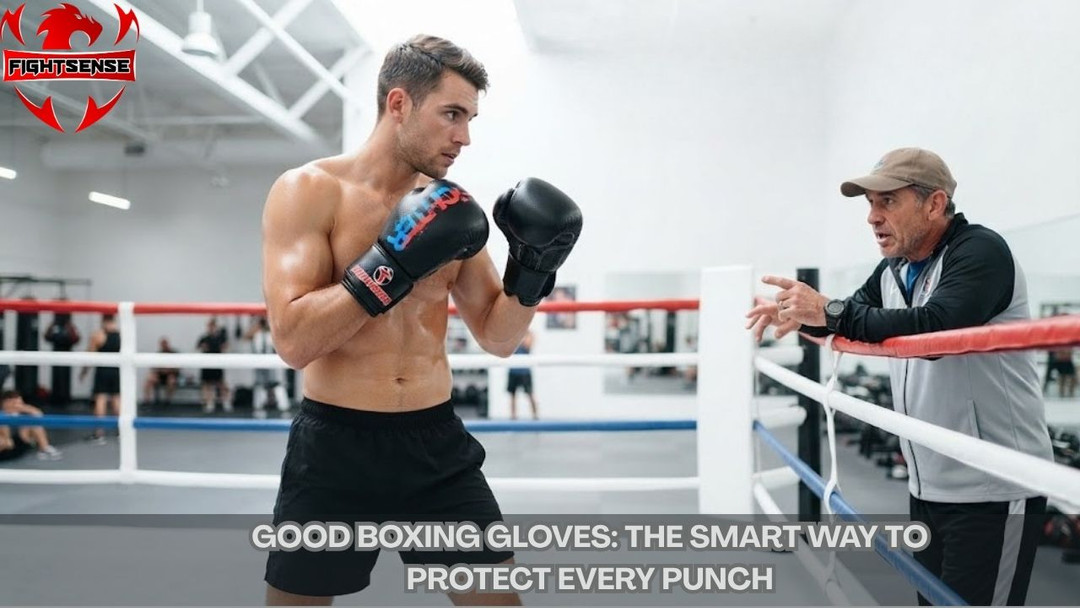
Good Boxing Gloves: The Smart Way to Protect Every Punch
Not all boxing gloves are made to handle the same kind of training. The wrong pair can affect your comfort, wrist support, and even how confidently you throw each punch.
Finding Good Boxing Gloves means choosing a pair that fits your training style, hand size, and protection needs. Whether you are hitting the heavy bag, sparring, or fitness training, this guide will help you understand glove weight, fit, padding, materials, and the key mistakes to avoid before buying.
What Makes Good Boxing Gloves?
A good pair of boxing gloves ought to offer a blend of protection, comfort, fit, durability, and purpose.
Gloves that are used for heavy-bag training may not be appropriate for sparring. Again, a lightweight competition glove may not be the most practical choice for regular training.
Here are some crucial variables to consider while comparing boxing gloves:
- Training objective
- Weight of glove
- Hand Size & Fit
- Brace for wrist
- Padding
- Outer material
- Fastening system
- Build Quality
- Frequency of training
First Comes Protection
Boxing is a sport of frequent impacts; thus, hand and wrist protection should be a key concern.
A well-made glove will help support the wrist when punching and cushion the knuckles also. More padding is not necessarily preferable for every case, though.
For example, sparring gloves often require adequate padding for both fighters, whereas bag gloves tend to prioritize impact absorption and durability.
Comfort Counts When Training
Even a glove with a lot of padding might be uncomfortable if the hand compartment is excessively tight, too loose, or poorly designed.
Your fingers should fit snugly inside the glove, and your hand should remain secure when you make a fist.
Boxers typically use hand wraps, so always consider how gloves feel over your usual wraps.
Durability is key for everyday training
Boxing gloves are subjected to repeated impact, sweat, friction, and compression.
If you train often, seek good stitching, good fasteners, good padding, and sturdy exterior construction. A quality glove may offer more value than simply selecting an item based on its upfront cost.
Which Boxing Gloves Are Best for Different Training?
Training Gloves
Training gloves are made for diverse purposes such as bag training, pad work, technique exercises, and boxing training.
That adaptability makes a training glove a sensible initial buy for a newbie.
Gloves for Bags
Bag gloves are primarily meant for hitting heavy bags and other training targets.
They are primarily made for protection of the knuckles, durability, and handling impact. If you do a lot of heavy-bag work, pick a glove that will offer you enough padding but not add too much bulk to your hand.
Sparring Mitts
Sparring gloves are for the safety of your partner.
They usually have greater padding than gloves that are made for heavy bag work. The aim is to protect your hands and to also reduce unnecessary impact to your training partner.
Always check your gym standards before buying sparring gloves, as some require a specific glove weight.
Gloves Competition
Competition gloves are chosen according to the rules of the appropriate boxing organization or event.
They are not always the greatest choice for regular training because competitive equipment is subject to certain laws and standards.
If you are going to compete, make sure to look up your event rules before you buy.
What Size Boxing Gloves Should You Get?
One myth is that glove ounces are the same as hand size.
They’re not.
The ounce measurement refers to the weight of the glove, which is affected by the glove padding and structure. Hand fit is its own matter.
Generally, boxing gloves are available in the following weights:
10 ounce Boxing Gloves
10 oz gloves are lightweight and might be advantageous for some forms of training and competition.
They don’t have the same weight and padding as heavier training gloves and may not be the first choice for someone looking for maximal cushioning during frequent exercise.
12oz Boxing Gloves
12-ounce gloves can be good for bag work, pad work, fitness boxing, and lighter training.
They are a marriage of protection with mobility, and perhaps more suited to athletes who prefer a lighter glove.
14 oz Boxing Gloves
14 oz gloves are a nice medium ground.
They have a little more padding than lighter gloves, but may still be worked in for many training sessions. 14 oz can be a reasonable alternative for recreational boxers who want versatility.
16 oz Boxing Gloves
16 oz gloves are a frequent choice for sparring and general training.
The extra padding can give more cushioning, but the added weight might feel heavier during high-intensity activities.
18 oz. Boxing Gloves
Heavier gloves may be necessary for bigger athletes or athletes who exercise in a style that requires it.
But heavier doesn't necessarily mean better. It is not the heaviest glove on the market but the glove that suits your training demands.
How Should Boxing Gloves Fit?
One of the most critical aspects of purchasing boxing gloves is a suitable fit.
Your gloves should fit snugly, but not too tight.
If possible, try them with the same hand wraps you use for training.
Indications of a Good Match
A well-fitted glove should:
- Hold your hand tight
- Keep your wrist supported
- Natural finger positioning
- Maintain proper knuckle position
- Not move your hands too much
- Know hand wraps
Signs the Gloves Are Too Tight
If you observe the following, your gloves may be too tight:
- Numbness
- Over pressure
- Limited finger motion
- Poor thumb placement
- Difficulty making a natural fist
Signs the Gloves are Too Big
Overly loose gloves can let your hand move inside the glove.
This can limit control and make the glove feel unstable when punching.
The goal is a good, secure fit—not just the tightest possible fit.
What kind of padding works best?
How a boxing glove feels when you throw a punch is quite important, and padding is a big part of this.
Different gloves employ different mixes of foam, densities, and construction methods.
Multi-Layer Foam
Multi-layer padding allows for a combination of diverse foam properties to control impact and hold the shape of the glove.
For athletes who routinely work out, this may come in handy.
More Rigid Bag Stuffing
Best training boxing gloves may have thicker cushioning since they are hitting a hard target again and again.
The idea is to protect, but let the athlete feel the punch of the punch.
Softer Sparring Pads
Sparring gloves usually need padding suitable for sparring with a partner.
A sparring glove should be protective for the individual throwing the blow and receiving it. It should also help to limit the needless influence on the individual receiving it.
So, don’t think that just because a glove feels good on the heavy bag, it’s going to be good for sparring.
Velcro vs. Lace-Up Boxing Gloves
The two most common closure systems are hook-and-loop closures and laces.
|
Feature |
Velcro / Hook-and-Loop |
Lace-Up |
|
Easy to put on alone |
Excellent |
Difficult |
|
Convenience |
Excellent |
Moderate |
|
Customized fit |
Good |
Excellent |
|
Everyday training |
Very practical |
Practical with assistance |
|
Wrist adjustment |
Good |
Excellent |
What Are the Best Boxing Gloves for Beginners?
The best gloves for beginners are typically comfortable, multifunctional, protective, and easy to use.
If you are just learning the basics, you don’t have to go out and buy many specialist pairs right away.
Good beginning gloves should include:
- Proper knuckle padding.
- Secure wrist support
- Comfortable hand position
- Construction that lasts
- Simple closure
- Right weight
- Lots of room for hand wraps
If you are not sure of the right weight, consult your boxing coach or club before you buy.
If you are a beginner, and you are comparing brands, you can check out the Fightsense boxing gloves and other training options by evaluating the following crucial factors: fit, glove weight, padding, wrist support, construction, and intended usage.
It’s not just about choosing a brand. It’s about choosing a glove that suits how you actually train.
Boxing Glove Types: Pros, Cons & Best Uses
|
Glove Type |
Best For |
Main Advantages |
Limitations |
|
Training Gloves |
General workouts & beginners |
Versatile, comfortable, beginner-friendly |
Less specialized for specific training |
|
Bag Gloves |
Heavy bag & pad work |
Durable, built for repeated impact |
Not designed for sparring |
|
Sparring Gloves |
Partner training |
Extra cushioning, better protection |
Heavier and less suited to speed work |
|
Competition Gloves |
Boxing matches |
Lightweight, competition-focused |
Limited everyday use; rules vary |
How to Choose the Best Boxing Gloves Step by Step
- Step 1: Find Your Training Style: First select how you plan to utilize the gloves – bag work, mitts, fitness classes, technique, sparring, or competition. The way you train dictates the type of glove you wear.
- Step 2: Evaluate Your Gym Requirements: Check with your coach before you buy regarding glove weight, sparring rules, and competition criteria.
- Step 3: Choose the right weight: Consider your body size, training goal, and your coach's suggestions. Don't just go by ounces while picking up gloves.
- Step 4: Test the Fit With Hand Wraps: Try the gloves with your regular hand wraps. They should be tight, but not excessively tight, and not confining to movement.
- Step 5: Test the Wrist Support: Pick a closing that offers stability and comfort to your wrists, especially if you’re punching repeatedly.
- Step 6: Confirm the Padding: Select padding relative to your training. Bag gloves and sparring gloves may have differing padding and protective requirements.
- Step 7: Check Construction: Make sure the stitching, seams, thumb attachment, wrist cuff, closure, padding, and outside material are good quality and durable.
- 8. Think About How Often to Train: If you work out regularly, look for robust materials, secure wrist support, and lasting comfort.
Expert Tips on How to Buy Boxing Gloves
Buy for your workout, not just for looks.
A glove that looks good isn't always the proper glove.
Choose first based on your training needs.
Always Think About Hand Wraps
Hand wraps give thickness to the interior of the glove.
So a glove that feels perfect without wraps may feel excessively tight during a real workout.
Don’t Automatically Reach for the Heaviest Glove
More ounces doesn't automatically guarantee better protection for all activities.
Choose a weight that is right for your training goal and body size.
Ask Your Coach Before You Spar
Your coach or gym may have sparring rules.
Following such principles is more crucial than a general online recommendation.
Focus on the Important Features
When evaluating gloves (including Fightsense alternatives), consider these aspects in the following order:
- Good fit
- Protection:
- Wrist support.
- Padding Construction
- Longevity
- Material Appearance
This method assists you in making a more reasonable shopping decision.
How to Care for Your Boxing Gloves
Even good boxing gloves might fall apart rapidly if they are always stuffed moist inside a gym bag.
After each workout:
- Pull your gloves out of your gym bag.
- Undo the wrist bands.
- Air dry gloves in a well-ventilated location.
- Do not keep them crushed in a closed bag.
- Clean exterior according to manufacturer's guidelines.
- Keep washing and drying your hand coverings.
- Check for any damage to the cushioning and stitching.
Do not dry gloves by over-heating, as this can damage some fabrics and adhesives.
If the padding is really squished, the glove is structurally compromised, or the wrist support is failing, think about changing the gloves.
With proper care, your boxing gear can have a longer usable life.
Get Yours Now!
FAQs:
What are the finest boxing gloves for heavy bags?
Look for quality knuckle padding, decent wrist support, solid construction, and a comfortable fit. Your training approach and size are relative to the right weight.
Can I wear good boxing gloves for sparring and bag work?
If the gloves are suitable for your gym’s sparring needs, you can start with an adaptable pair. However, dedicated bag and sparring gloves can be useful for frequent training.
Are leather boxing gloves superior to synthetic?
Leather offers outstanding durability and a quality feel, but synthetic gloves are a more economical alternative. Construction quality, cushioning, fit, and wrist support are other key factors.
Do I have to use hand wraps under boxing gloves?
Hand wraps are often utilized for extra support and protection of your hands and wrists. Your trainer or gym can advise you on how to wrap and what equipment to use throughout your training.
How long do quality boxing gloves last?
There is no set lifespan. How long gloves can be used depends on the frequency of training and the impact, as well as the materials, structure, care, and quality of padding. Check your gloves often for compressed padding, torn stitching, or decreased wrist support.
Conclusion:
Choosing Good Boxing Gloves starts with understanding your training style, body and hand size, and protection needs. Consider factors like glove weight, fit, padding, wrist support, material, and construction before buying. Beginners can start with versatile training gloves, while regular boxers may prefer specialized options for bag work or sparring. When comparing brands, Fightsense is one option to consider for comfort, protection, support, and durability. The best choice is the glove that suits your actual training needs—not simply the one that looks impressive.
Disclaimer:
This content is for general informational purposes only. Always choose training gear based on your personal needs and consult a professional if unsure.