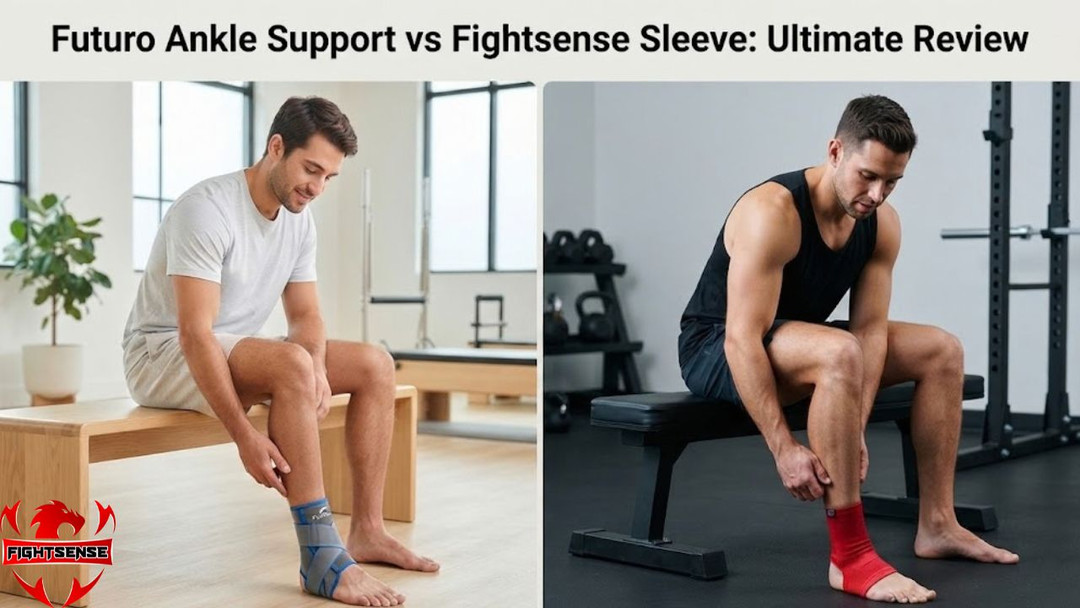
Futuro Ankle Support vs Fightsense Sleeve: Ultimate Review
Futuro Ankle Support and Fightsense offer two distinct approaches to joint stabilization whether you are recovering from an injury, managing daily stiffness, or protecting your ankles during sports. While Futuro is a household brand known for everyday comfort and easy availability, Fightsense is built for active individuals who need high-durability protection during heavy-impact routines. In this guide, we break down both brands side-by-side with complete objectivity so you can make the smartest decision for your mobility.
Why Is Choosing the Right Ankle Brace So Important?
Your ankle is a complex structure made up of bones, ligaments, tendons, and muscles working in harmony to bear your entire body weight. When you experience a sprain or chronic instability, those supporting tissues become stretched or micro-torn. Wearing the wrong type of brace can either fail to provide enough structural rigidity or, conversely, over-restrict your movement and delay natural muscle strengthening.
Choosing the right brace depends on your primary goal:
- Mild Compression & Warmth: Ideal for minor soreness, arthritis, or light walking. Lightweight sleeves work best here.
- Moderate Support & Alignment: Great for active daily routines or moderate sprains where you need lateral stability without sacrificing mobility.
- Firm / High-Impact Protection: Essential for sports like basketball, running, lifting, or martial arts where sudden lateral cuts and heavy footfalls put severe strain on the joint.
Getting the balance right ensures fast recovery, prevents secondary joint fatigue, and keeps you active safely.
What Are the Key Features of Futuro Ankle Support?
When looking at daily support options, Futuro Ankle Support is a recognizable classic found in most pharmacies and medical supply stores. Manufactured under the trusted 3M healthcare line, Futuro focuses on accessibility, soft-touch fabrics, and moderate compression designed for general wellness.
Material and Feel
Futuro products typically utilize elastic knit blends or soft neoprene mixtures. The fabric feels gentle against sensitive skin, making it very approachable for individuals who need to wear a brace inside casual shoes or around the house.
Compression and Adjustment
Most standard Futuro ankle support designed offer dual-stretch elastic materials or simple criss-cross wrap straps. They excel at providing light-to-moderate compression, which helps manage mild edema (swelling) and provides a comfortable warming sensation around the joint capsule.
Best Suited For
If your routine involves low-impact activities—such as working an office job, taking light neighborhood walks, or managing mild morning stiffness—Futuro Ankle Brace offers a practical, budget-friendly solution that gets the job done without feeling overly bulky.
How Does Fightsense Approach Ankle Support and Protection?
Fightsense takes a performance-first approach to orthopedic support. Originally engineered to meet the intense demands of combat sports, weightlifting, and high-intensity interval training (HIIT), Fightsense designs its braces to withstand heavy wear, moisture buildup, and repetitive high-velocity movements.
Construction and Fabric Technology
Fightsense braces feature high-grade perforated neoprene and moisture-wicking synthetic linings. This combination allows heat retention around the ligaments (which keeps joints supple) while actively allowing sweat to evaporate during intense workouts.
Structural Stability
Equipped with reinforced figure-8 adjustable compression straps and heavy-duty industrial velcro, Fightsense focuses on locking down the heel and limiting excessive inversion/eversion (side-to-side rolling). This extra reinforcement gives athletes the confidence to jump, sprint, and change direction abruptly.
Best Suited For
Fightsense is tailored for individuals engaged in active sports, gym training, heavy lifting, or those who need rigorous stabilization during intense physical rehab.
How Does Futuro Compare to Fightsense Side-by-Side?
To help you clearly evaluate both options, let's look at how Futuro Ankle Sleeve stacks up directly against Fightsense across critical performance categories:
|
Feature |
Futuro Brace |
Fightsense Brace |
|
Primary Material |
Elastic knit & soft-touch neoprene blend |
Perforated high-grade neoprene & breathable lining |
|
Support Level |
Light to Moderate compression |
Moderate to High firm stabilization |
|
Adjustability |
Single wrap or elastic sleeve design |
Dual figure-8 straps with heavy-duty velcro |
|
Best For |
Daily walking, office wear, mild arthritis |
Gym training, combat sports, running, rehab |
|
Breathability |
Good for casual daily wear |
High moisture-wicking for heavy sweating |
|
Durability |
Standard everyday wear life |
Reinforced stitching built for high-impact use |
Which Ankle Support Should You Choose for Your Specific Activity?
Selecting the superior brace isn't about finding a single "winner" for everyone—it is about matching the brace to your personal lifestyle and medical requirements.
Choose Futuro If:
- You need light compression for general arthritis or daily walking.
- You prefer a thin profile that fits easily into dress shoes or narrow sneakers.
- You are looking for a convenient, affordable option available at your local pharmacy.
- You do not plan to engage in heavy sports or rapid lateral agility training.
Choose Fightsense If:
- You participate in dynamic sports like basketball, tennis, running, or martial arts.
- You require maximum heel lock and adjustable strap compression to prevent recurrent sprains.
- You experience heavy sweating during workouts and need moisture-wicking performance fabrics.
- You want long-term durability that withstands repetitive washing and high-strain athletic use.
How Can You Maximize Your Ankle Recovery and Prevent Future Injuries?
While wearing a supportive brace like Futuro Ankle Support or Fightsense is vital during recovery, relying solely on passive support is not enough for complete rehabilitation. To build long-term joint resilience, consider these evidence-based recovery strategies:
Progressive Proprioception Training: Practice single-leg balance exercises on stable and unstable surfaces (like a foam pad) to retrain your brain's joint positioning awareness.
Strength Building: Incorporate calf raises, best ankle support inversions, and resistance band dorsiflexion to strengthen the surrounding tendons.
Smart Bracing Habits: Use your brace during high-risk physical activities or acute recovery phases, but gradually reduce dependency during low-impact, controlled environments to allow natural muscular engagement.
Hydration & Warm-Ups: Always warm up the ankle joint with dynamic ankle circles before exercise to increase synovial fluid circulation.
Conclusion:
Choosing between both brands comes down to your daily activity level and recovery needs. Futuro Ankle Support is an excellent choice for everyday comfort, light compression, and easing mild joint stiffness during casual walking. On the other hand, if you require maximum stability for high-impact sports, gym workouts, or preventing sprains, the Fightsense Sleeve offers superior durability and adjustable strap support. Ultimately, picking the right brace ensures you stay active, confident, and completely pain-free.
FAQs:
Q: Can an ankle support be worn over socks?
Yes. A thin sock underneath reduces skin chafing, absorbs sweat, and makes putting the brace on much easier.
Q: How do you know if an ankle brace is too tight?
Numbness, tingling, cold toes, or deep skin indentations mean it is restricting blood flow and needs loosening.
Q: Will a support sleeve fully prevent repeat ankle sprains?
It significantly improves stability and joint awareness, but works best alongside strength and balance training.
Q: How often should an ankle sleeve be replaced?
With regular weekly use, most sleeves lose optimal compression and shape after 6 to 12 months.
Q: Does futuro ankle support help reduce swelling after an injury?
Yes, targeted compression limits fluid accumulation and enhances blood circulation to speed up recovery.
Q: Are open-heel designs better than full-coverage sleeves?
Open heels offer better mobility and breathability, while full-coverage sleeves deliver uniform heat and compression.
Disclaimer:
This content is for informational purposes only and does not replace professional medical advice. Always consult a qualified healthcare provider regarding joint injuries, severe pain, or proper rehabilitation.