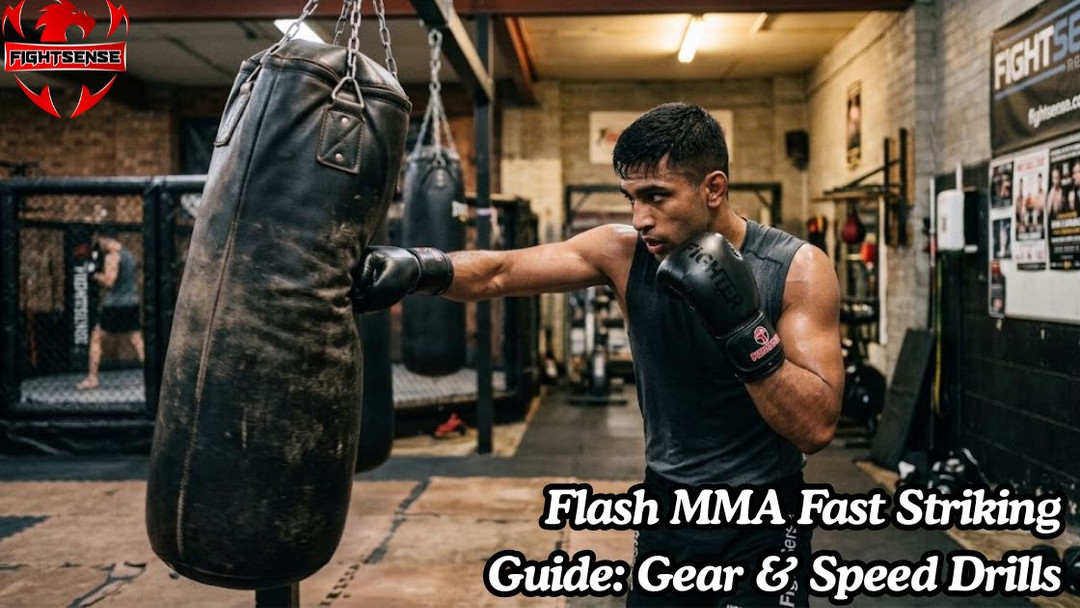
Flash MMA Fast Striking Guide: Gear & Speed Drills
In modern combat sports, a Flash MMA finish represents the ultimate display of speed, precision, and timing. A flash knockout or rapid combination occurs when a fighter generates sudden kinetic power before the opponent can react or brace for impact. Achieving this explosive speed requires sharp technique, optimized fast-twitch muscle activation, and relentless physical conditioning.
However, delivering high-velocity strikes creates immense reactive force. Every rapid punch on a heavy bag sends impact shock waves straight through your knuckles, wrists, and elbows. Conditioning your body for lightning-fast striking means balancing power output with structural protection.
Flash MMA Speed Training: Biomechanics and Technique
Fast punching is not merely about moving your hands quickly; it relies on kinetic transfer from the ground up:
- Ground Reaction Force: Power begins in the feet. Driving through your calves and hips initiates kinetic velocity.
- Rotational Core Acceleration: Torque generated by the abdominal wall transfers speed from the lower body to the upper torso.
- Terminal Extension (The Snap): Relaxing the shoulders until the final microsecond allows maximum fist velocity upon contact.
When you train for explosive movements, force output spikes significantly. Without joint stability and proper padding, repetitive impact can compromise your wrist alignment and slow down your development.
Step-by-Step Drills to Maximize Striking Speed
1.Lightweight Resistance Band Shadowboxing: Build muscle endurance without altering punch mechanics.
Attach low-tension resistance bands around your upper back and grip the handles. Execute 3 rounds of 3 minutes focusing on rapid hand retractions. Focus on snapping the hands back to the defensive guard position as fast as they go out.
2.Interval Heavy Bag Velocity Bursts: Train the nervous system for rapid force production.
Stand at full striking distance against a heavy bag. Execute 10-second non-stop straight punch combinations at maximum speed, followed by 10 seconds of active footwork. Repeat for 6 continuous sets per round.
3.Plyometric Push-Ups and Upper Body Explosiveness: Develop fast-twitch shoulder and tricep fibers.
Perform explosive plyometric push-ups off the floor or an elevated surface, pushing hard enough for your hands to leave the ground. Perform 4 sets of 6–8 reps with full rest between sets to prioritize speed over exhaustion.
4.Speed Bag Coordination and Rhythm Drills: Enhance hand-eye timing and shoulder endurance.
Keep continuous cadence on the speed bag using tight circular arm motions. Keep hands high to reinforce guard position while conditioning the deltoids for extended fights.
Essential Protective Gear for High-Speed Combat Training
High-speed striking requires gear that safeguards your anatomical structure while allowing full range of motion.
1. High-Density Flash MMA Gloves and Boxing Gear
Speed training requires dense foam protection to distribute kinetic shock evenly. Professional MMA gloves allow grapple-to-strike transitions, while heavy-bag boxing gloves provide thick multi-layer padding to cushion your knuckles during high-velocity impact.
2. Anatomical Hand Wraps & Wrist Stabilizers
Underneath your gloves, proper hand wraps secure the small metacarpal bones in your hand. They prevent micro-fractures and stabilize the wrist joint when landing heavy strikes at awkward angles.
3. Cross-Training Gear & Strength Accessories
Striking speed depends heavily on upper-body conditioning. Combat athletes regularly cross-train with weightlifting gloves, wrist wraps, and lifting hooks during heavy strength workouts to preserve grip endurance and support joint integrity.
Combat Sports Gear vs. Fitness Support Accessories
Selecting the right equipment keeps your training versatile across combat drills and weight room conditioning:
|
Gear Type |
Primary Function |
Ideal Application |
Key Anatomical Benefit |
|
MMA Gloves |
Impact absorption & finger dexterity |
Sparring, bag work, and grappling |
Protects knuckles while enabling grip |
|
Boxing Gloves |
Maximum wrist and knuckle protection |
Heavy bag workouts & power striking |
Prevents joint hyper-extension |
|
Weightlifting Gloves |
Palm protection & traction control |
Barbell training & cable workouts |
Prevents calluses and improves grip stability |
|
Cycling Gloves |
Vibration dampening & palm padding |
Reduces nerve pressure during long rides |
Brands specializing in comprehensive athletic gear—such as FightSense—offer tailored products ranging from durable boxing gloves and MMA gloves to supportive gym gloves, weightlifting accessories, and cycling gloves. Equipping yourself with specialized gear ensures you remain protected whether you are sharpening strikes on the bag or building stamina in the gym.
Pros & Cons of Heavy Speed Training
Pros
- Improved Reaction Time: Trains the central nervous system to fire motor units rapidly.
- Higher Fight Efficiency: Fast strikes consume less energy than telegraphic, slow power punches.
- Increased Knockout Potential: Unseen punches landed with high velocity generate maximum force.
Cons
- Elevated Joint Wear: Rapid impact increases torque on wrist and elbow joints.
- Risk of Overtraining: Central nervous system fatigue accumulates quickly with maximum-velocity drills.
Expert Tips for Injury Prevention and Peak Conditioning
- Wrap Your Hands Every Session: Never hit a heavy bag without hand wraps, even during light workouts.
- Match Glove Weight to Drill Type: Use heavier gloves (14–16 oz) for bag work to build shoulder endurance and light gloves (4–7 oz) for grappling-strike transitions.
- Condition Your Core and Back: Balance forward striking muscles by training back muscles with lat pull-downs and rowing movements using weightlifting straps.
- Hydrate for Joint Health: Dehydrated cartilage increases joint friction and risk of injury during repetitive impact.
Common Training Mistakes to Avoid
- Flaring Your Elbows: Striking with flared elbows leaks kinetic energy and exposes your ribs to counters.
- Clenching Fists Too Early: Keep your hands relaxed until the moment before contact to conserve speed and muscle energy.
- Neglecting Cross-Training Support: Using bare hands during heavy gym conditioning can wear out your grip and inflame wrists needed for striking.
- Ignoring Pain Signals: Striking through acute joint pain leads to long-term ligament damage.
FAQs:
How do you increase hand speed for MMA?
Focus on shadowboxing with light resistance, interval heavy bag speed bursts, plyometric push-ups, and keeping your shoulders relaxed during punch extension.
Can weightlifting gear help MMA training?
Yes. Cross-training accessories like weightlifting gloves, wrist wraps, and lifting hooks help maintain grip stability and reduce forearm fatigue during strength conditioning sessions.
What is the difference between MMA gloves and boxing gloves?
MMA gloves feature open fingers and lighter padding (4–7 oz) for grappling capability, while boxing gloves feature full enclosure and thicker padding (10–16 oz) for knuckle protection.
How often should you practice speed drills?
Perform dedicated speed drills 2 to 3 times per week when your central nervous system is fresh, allowing adequate recovery between intense sessions.
Do heavier gloves make your hands slower?
Training with heavier gloves builds shoulder endurance. When you switch back to lighter competition gloves, your hands feel faster and lighter.
Should you use gloves for gym cross-training?
Using padded gym or cycling gloves protects your palms from calluses, improves grip security, and reduces pressure on wrist nerves during cardio or strength workouts.
Conclusion:
Developing explosive speed for Flash MMA techniques requires dedicated mechanical training, kinetic chain alignment, and smart conditioning. By incorporating targeted speed drills alongside dynamic strength workouts, you build both striking velocity and physical resilience. Equip yourself with the right gear, stay consistent with your drills, and sharpen your striking performance today.
Disclaimer:
This blog is intended for informational purposes only. For professional guidance on MMA gear, consult your trainer or a certified sports equipment advisor.