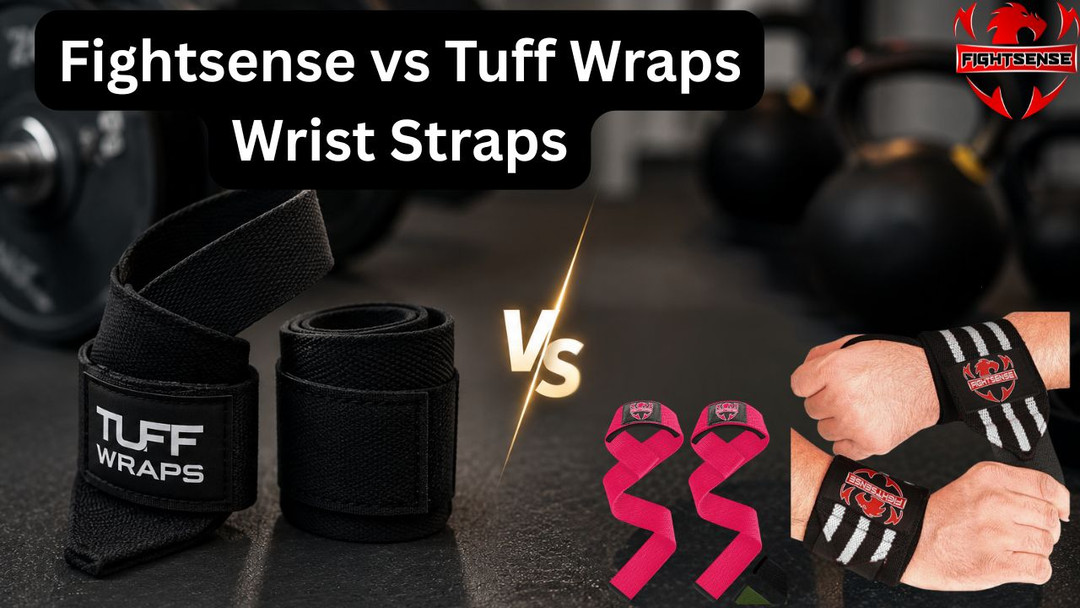
Fightsense vs Tuff Wraps Wrist Straps
If you train with heavy presses, you have probably seen Tuff Wraps wrist straps in plenty of gym bags and lifting videos. They are a familiar name, and they look the part. But a good-looking strap is not the same as a strap that keeps your wrists steady when the bar gets heavy, so it pays to compare them properly before you spend your money.
In this guide, we put the two side by side on support, comfort, fit, durability and value, and we explain who each option suits best. If you want a straight answer without the hype, you will find it here.
Keynotes
- Tuff Wraps straps are built for lifters who want firm, no-fuss wrist support.
- FightSense wraps use a soft cotton and elastic blend that stays comfortable through long sessions.
- A stiff strap can feel secure, but it can also dig in when you wrap it tight.
- Fit matters as much as fabric: the right length and a simple thumb loop make wrapping quick and even.
- For most home and gym lifters, comfort and value matter as much as maximum stiffness.
How Wrist Wraps Protect Your Wrists During Heavy Lifts
When you press a heavy bar, your wrists take a lot of the load. A wrap works by holding the wrist joint in a neutral line, so the force travels through your forearm instead of bending the wrist back. That is why lifters who bench, overhead press or squat with a low bar often reach for support, and why Tuff Wraps wrist straps have earned a following among lifters who like a firm, locked-in feel.
Good support should feel steady without cutting off circulation or leaving deep marks. FightSense wraps are made from a cotton and elastic blend that stretches enough to wrap evenly, and the thumb loop keeps the start of the wrap in place while you wind it round. If you are building a home gym, a pair of weightlifting wrist wraps is one of the cheapest ways to add real support to your pressing days.
Wraps and straps are not the same tool. Wraps brace the wrist, while straps help your grip hold a bar you might otherwise drop. If you pull heavy deadlifts or rows, gym wrist straps can help you hold on for extra reps, and a pair of lifting gloves with wrist support can add grip and padding on long pulling sessions.
Tuff Wraps Wrist Straps vs FightSense: Support, Comfort and Value Compared
Both options are made for lifters, but they feel different on the wrist and they suit different training styles. Here is how they stack up where it matters most.
Tuff Wraps Wrist Straps for Heavy Bench Press
On a heavy bench day, Tuff Wraps wrist straps give a firm, locked-in feel that many lifters trust when the weight climbs. The stiff wrap resists bending, so your wrists stay in line through the press. FightSense wraps take a softer approach: the cotton and elastic blend still braces the joint, but it moulds to your wrist instead of fighting it, which suits lifters who press often and want support they can wear for a whole session. For a closer look at pressing with wraps, read our bench press wrist wraps guide.
Comfort and Fit
Comfort is where the two options part ways. Tuff Wraps wrist straps feel firm and secure, but that stiffness can press into the wrist on long sessions, especially if you wrap them tight. FightSense wraps feel softer against the skin, and the stretch lets you adjust the tension to suit the lift. Both use a thumb loop to hold the wrap in place, so check the length and the loop before you buy, because a wrap that is too short will not cover the joint properly. Our Rip Toned wrist wraps comparison looks at the same comfort trade-off with another popular brand.
Durability and Everyday Value
A wrap earns its keep by lasting through months of heavy sessions. Tuff Wraps wrist straps are built tough, and with care they hold up well over time. FightSense wraps use reinforced stitching and a hard-wearing cotton and elastic blend, so they also stand up to regular training, and they cost less than many big-name rivals. Value is not just the price tag, it is how many good sessions you get from each pair. For another head-to-head on value, see our Berserk wrist wraps comparison.
Versatility Across Presses, Pulls and Everyday Training
Some lifters use one pair of wraps for everything: presses, squats and the odd strongman-style session. A softer wrap is easier to keep on between sets, while a very stiff strap often comes off as soon as the set ends. Think about how you actually train across the week, not just your heaviest single, and pick the pair you will reach for most often. For one more comparison before you decide, read our DMoose wrist wraps comparison.
Who Should Choose Which Strap?
The right choice comes down to how you train. If you want the firmest feel and you only wrap up for top sets, Tuff Wraps wrist straps may suit you. If you train several days a week and want support that stays comfortable from the first set to the last, the softer FightSense wrap is the easier pair to live with.
Choose Tuff Wraps if You:
- You like the firmest, most locked-in feel for top sets.
- You mainly wrap up for bench press and heavy singles.
- You are happy to trade a little comfort for maximum stiffness.
Choose FightSense if You:
- You train several days a week and want wraps that stay comfortable.
- You want a softer cotton and elastic blend that moulds to your wrist.
- You want solid support at a fair price for everyday training.
Why Lifters Who Train Heavy and Want Steady, Comfortable Wrist Support Choose FightSense
At FightSense, the goal is simple: make gym gear that works hard without making training uncomfortable. The wraps are made from a soft cotton and elastic blend, with a thumb loop that keeps the wrap in place and a length that suits most wrists. Lifters who switch often say the same thing: the wraps feel supportive from the first set, stay comfortable through the session, and still cost less than many big-name rivals. That mix of comfort, quality and fair pricing is why so many lifters keep coming back.
Ready to Press Heavier With Steadier Wrists?
Pick up a pair of FightSense wrist wraps and feel steady, comfortable support from your first warm-up set to your last heavy rep.
Plus, orders above $100 ship free at FightSense.
Conclusion
Both options will support your wrists, but they suit different lifters. The Tuff Wraps pair brings a firm, locked-in feel that heavy single-rep lifters will like, while FightSense wraps bring softer, everyday comfort that holds up across a full week of training. If you press often, train several days a week and want support that feels good from the first set to the last, FightSense is the easier pair to live with. Pick the wrap that matches how you train, wrap up properly, and keep adding weight with steady wrists.
FAQs
Are Tuff Wraps straps good for heavy bench press?
Yes, they can be. The firm wrap holds the wrist in line when the bar gets heavy, which suits lifters who chase top-end singles. If you bench several times a week, though, a softer wrap may feel better across the whole session, so think about how often you will wear them.
What is the difference between wrist wraps and wrist straps?
Wraps brace the wrist joint to keep it straight under load, while straps loop around the bar to help your grip hold on. Many lifters use both: wraps for pressing days and straps for heavy pulls.
Do I need wrist wraps for bench press?
Not everyone does. If your wrists stay comfortable and in line without support, you may not need them yet. They help most when the weight climbs, your wrists bend back under the bar, or you feel aches after pressing days.
How tight should I wrap my wrist wraps?
Snug enough to support the joint, but not so tight that your fingers tingle or your hand changes colour. You should still be able to make a fist and feel your fingers stay warm. Loosen the wrap between sets if it starts to feel uncomfortable.
Are FightSense wrist wraps good for beginners?
Yes. They are easy to wrap, comfortable enough to wear for a full session, and they give steady support without feeling stiff or bulky. Beginners often find the softer cotton and elastic blend easier to get used to than a very rigid wrap.
Can I use the same wraps for squats and overhead press?
Yes. A good pair of wraps works for any lift where the wrist needs to stay straight under load, including low-bar squats and overhead presses. Just re-wrap them firmly for each lift and loosen them between sets.
How do I wash wrist wraps?
Hand wash them in cool water with a mild soap, then lay them flat to dry. Avoid hot water and tumble dryers, which can wear the elastic out faster. Washing them now and then also keeps them fresh between sessions.
How long do wrist wraps last?
It depends on how often you train and how you look after them. A well-made pair used a few times a week can last many months. Replace them when the elastic feels loose, the fabric frays, or they no longer hold your wrist steady.