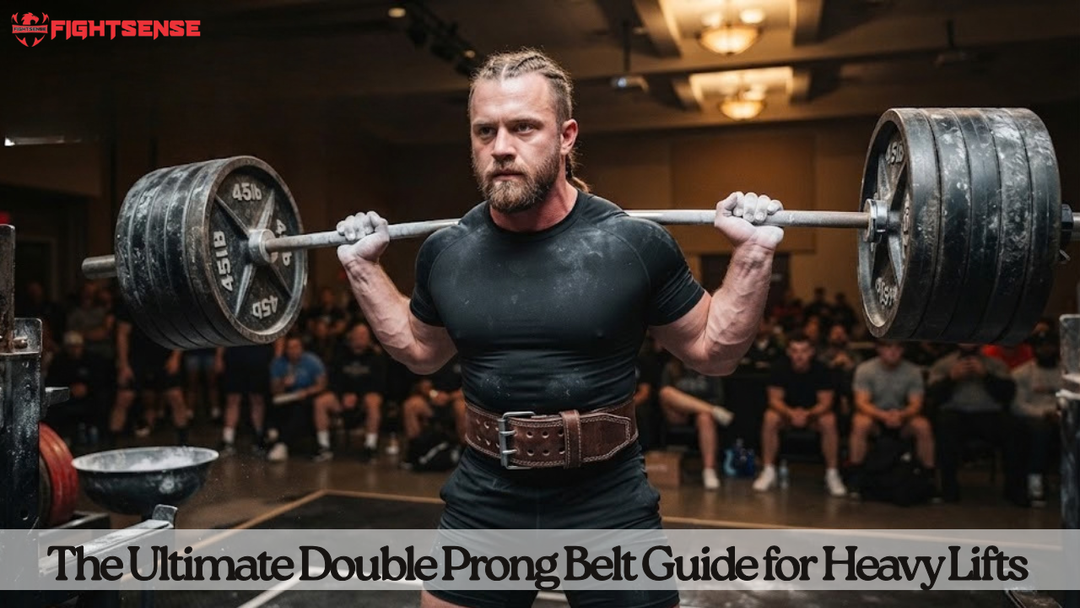
The Ultimate Double Prong Belt Guide for Heavy Lifts
Stepping up to a heavy barbell requires more than raw strength and sheer willpower; it demands absolute structural integrity. Whether you are chasing a new personal record on squats or pulling heavy deadlifts, the right gear changes everything. A double prong belt remains the gold standard for powerlifters and strength athletes seeking unbreakable core support. Unlike quick-release alternatives, a dual-prong design locks down securely, distributing intra-abdominal pressure evenly across your entire midsection.
When your core is completely stable, your spine stays protected, allowing you to transfer force more efficiently from the floor through the bar. In this comprehensive guide, we will break down everything you need to know about choosing, using, and maintaining this essential piece of lifting equipment to maximize your performance safely.
What is a Double Prong Belt and How Does It Work?
This powerlifting belt is equipped with a dual-prong steel buckle, which is designed for optimal security during heavy loads. While casual gym-goers may use flexible nylon wraps, serious strength athletes depend on stiff leather belts with two parallel metal prongs that slip through two rows of heavy-duty eyelets.
The Mechanics of Intra-Abdominal Pressure
If you brace your core against a hard surface (like a thick leather belt) you raise intra-abdominal pressure (IAP). This pressure is like an internal hydraulic jack that supports your lower back from the inside. The double prong belt system is to make sure the stress is distributed evenly on both sides of the buckle . This is so when you get to your max exertion , you will not slip .
Anatomy of a Heavy-Duty Lifting Belt
Knowing what’s in a high-performance lifting accessory can help you understand why certain materials dominate the market.
- Real Leather Build: Good quality vegetable-tanned leather offers the support necessary for strenuous compound movements without buckling under the strain.
- Heavy-Duty Steel Buckle: Nickel-plated steel prongs and frame will not bend under thousands of pounds of total tension.
- Reinforced Stitching: Multiple layers of bonded leather are held together with heavy nylon or polyester thread stitching for long-lasting toughness.
- Suede Lining: Interior suede finishes keep the belt from sliding or shifting against your lifting singlet or shirt during execution.
Double Prong vs. Lever Belts: Which One Fits Your Training?
While heavy lifters often debate between different closure mechanisms, comparing these styles clarifies your choice for heavy training sessions:
|
Feature |
Double Prong Belt |
Lever Belt |
|
Adjustability |
Fully adjustable for weight changes. |
Fixed sizing via screwdriver. |
|
Security |
Zero risk of mechanical failure. |
Instant on/off quick-release. |
|
Best For |
Flexible sizing & total reliability. |
Rapid transitions between sets. |
Key Benefits of Using a Double Prong Belt
A good dual pin lifting accessory pays dividends immediately in the gym.
- Unmatched Structural Security: Two steel prongs secure the belt in place so it will never pop open during a powerful and best for squat or deadlift.
- Better Lumbar Support: Unvarying width all over the back and core prevents too much spinal hyperextension.
- Longevity: A well-maintained leather belt can last for decades because there are no complex mechanical pieces or moving levers that can break.
- Confidence Under Heavy Loads: When you know your midsection is locked in, you can concentrate on driving the weight.
The FightSense Standard in Lifting Gear
When you’re designing a serious home or commercial gym system, choosing the proper brand makes a huge difference in durability and comfort. Traditional dual-pin closures have a classic feel, but elite athletic outfitters like FightSense devote their whole production expertise on professional-grade weightlifting belts and lever belts specifically intended for adult athletes. Trusted names in heavy-duty gear give you the best support for your midsection, locking in your form for maximum effort lifts.
How to Choose the Right Size and Thickness
Getting the correct fit is critical for both safety and performance.
Measuring Your Waist
Forget your normal pants size. Wrap a flexible tape measure around your waist at the belly button level – the point where the belt will actually sit during hard lifts. Pull it tight and write down the measurement in cm or inches.
Selecting Thickness (10mm vs. 13mm)
- 10mm Belts: Very rigid but will allow a little more contouring to your body form. Great for intermediate lifters and general power lifting.
- 13mm Belts: The most popular thickness in powerlifting federations since it delivers maximum stiffness. Ideal for the serious heavyweight combatant who needs absolute stiffness.
Step-by-Step Guide: How to Wear and Secure Your Belt Properly
- Belt Placement: Center the large back panel in the middle of your lower back, then wrap the tapering ends around your waist.
- Breathe Deeply : Before you lock the belt, expand your diaphragm out into your tummy and lower back.
- Engage the Prongs: Insert the two metal prongs into the matching holes on the other end, at the same time.
- Pull & Secure: Pull on the end of the strap to push the double prong belt securely through the leather eyelets.
- Your brace at a glance: Do a bodyweight squat or test your breath to check the fit is snug, supportive and comfortable without pinching your ribs or hips.
Pros and Cons of Dual-Prong Closure Systems
Pros
- Maximum load reliability.
- Easy to alter if you gain or lose weight.
- Saves cost over intricate specialized lever belt mechanisms.
Cons
- Removing the belt between heavy sets with a quick-release lever takes less work and time.
- Can be stiff at times and need to be broken in.
Expert Tips for Maximizing Core Stability
- Breathe Into the Belt: Don’t suck in your stomach, rather push it out against the leather.
- Pair with proper footwear: Solid core bracing goes best with solid, flat-soled lifting shoes.
- Flex Your Leather: Break in a new leather belt by rolling it back and forth to soften the material, while not sacrificing the essential structural integrity.
Common Mistakes Lifters Make with Powerlifting Belts
- Wearing It Too Loose: If you can easily slide your full hand beneath the belt as you brace yourself, it is too loose to give you the proper spinal support.
- Wrong Placement: Placing the belt too high on your ribcage or too low on your hips can limit your movement and make you less efficient.
- The Belt: A lifting aid that helps build core strength, but it won't substitute appropriate abdominal bracing and breathing mechanics.
Shop Now !
FAQs:
A double prong belt is used for:
It is used by powerlifters, weightlifters and strength athletes to increase intra-abdominal pressure and protect the lower spine during large compound lifts.
Can powerlifting belts have double prong?
Yes, the majority of the main powerlifting federations allow two prong leather belts (as long as they adhere to certain width and thickness requirements, usually up to 10cm wide and 13mm thick).
How can I get a stiff leather lifting belt to bend?
You can also break in a belt faster by rolling the belt up firmly in alternate directions, bending the leather back and forth, and wearing it during lighter warm up sets .
Dual prong belt or lever belt?
Neither is “better” in and of itself, but rather a matter of choice. The dual-prong types are the best for security and easy adjustability, while the lever models allow for quicker removal between sets.
Can a beginner use a powerlifting belt?
If you are a beginner, yes, you can use a belt, as long as you are also working on learning appropriate spinal alignment and natural bracing of the core at the same time.
Summarize
It takes discipline, good technique and stringent equipment to master big compound motions. A trustworthy double prong belt offers the stable core input and structural spine support you need to safely push past plateaus and lift with full confidence.
Disclaimer:
This page serves only for informative needs. To guarantee correct use and avoid damage, always see a fitness professional before using any lifting equipment.