
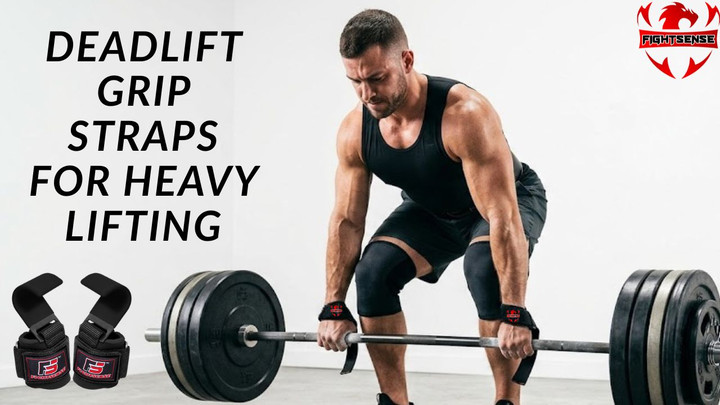
Deadlift Grip Straps for Heavy Lifting
28th Apr 2025
Deadlift grip straps are a useful tool for improving lifting performance and overcoming grip limitations. Deadlifts are a key exercise for building strength, but grip strength often becomes the main barrier to lifting heavier weights. When your grip fails, it can stop you from completing reps or progressing in load.
Grip straps help by securing your hands to the bar, reducing grip fatigue and allowing you to focus on proper form and target muscles. In this blog, we’ll cover the benefits of grip straps, different deadlift grip styles, and how Fightsense lifting straps can help improve your training performance.
What Are Deadlift Grip Straps?
Deadlift grip straps are simple yet highly effective lifting accessories designed to help you maintain a secure hold on the barbell during heavy lifts. They are typically made from materials like cotton, nylon, or leather and are worn around the wrists.
The strap wraps around the barbell, creating a tight connection between your hand and the bar. This reduces the demand on your grip strength and allows you to focus more on lifting the weight itself.
Grip straps are commonly used in:
- Deadlifts
- Rows
- Shrugs
- Pull exercises
They are especially helpful when lifting near your maximum capacity.
Why Do Lifters Use Grip Straps?
One of the biggest challenges in strength training is that smaller muscle groups—like your forearms—tend to fatigue faster than larger muscle groups like your back and legs.
During a heavy deadlift, your posterior chain may be strong enough to weightlifting , but your hands may fail to hold onto the bar. This mismatch can limit your progress.
Grip straps solve this problem by:
- Reinforcing your grip
- Reducing reliance on forearm strength
- Allowing you to train larger muscles more effectively
For many lifters, straps are the key to breaking through plateaus.
How Do Wrist Lifting Straps Work?
Deadlift grip straps work by securely anchoring your wrists to the barbell, creating a stronger and more stable connection during lifts. When wrapped properly, the straps generate friction and tension around the bar, preventing it from slipping out of your hands.
Instead of relying entirely on your finger strength, part of the load is transferred to your wrists, allowing you to maintain control even with heavier weights. This reduces grip fatigue and lets you focus more on engaging your back, glutes, and hamstrings. In simple terms, grip straps eliminate your grip as the weakest link, enabling your stronger muscle groups to boost workout performance at their full potential.
Types of Deadlift Support Straps:
There are several types of grip straps available, each suited for different needs.
Lifting Straps (Loop Straps)
- Most common type
- Easy to use
- Great for beginners
Figure-8 Straps
- Provide maximum security
- Ideal for very heavy lifts
- Harder to release quickly
Leather Straps
- Durable and long-lasting
- Slightly less flexible
Cotton Straps
- Comfortable and affordable
- Good for general use
Choosing the right type depends on your experience level and training goals.
When Should You Use Grip Straps?
While grip straps are beneficial, they should not be used all the time. Strategic use is key.
Use Grip Straps When:
- Lifting heavy weights (80–90% of your 1RM)
- Performing high-rep sets where grip fatigue builds up
- Training back muscles and grip is limiting performance
- Recovering from minor hand fatigue or strain
Avoid Using Them When:
- Warming up
- Training grip strength intentionally
- Performing lighter sets
A balanced approach ensures that you continue to develop natural grip strength while still benefiting from straps when needed.
Benefits of Weightlifting Straps:
Using grip straps offers several advantages, especially for those serious about strength training.
1. Lift Heavier Weights
Straps allow you to handle heavier loads without worrying about grip failure.
2. Better Muscle Activation
By removing grip limitations, you can fully engage your back, glutes, and hamstrings.
3. Increased Training Volume
You can perform more reps and sets without your grip giving out early.
4. Reduced Forearm Fatigue
This is particularly useful during long workouts or high-volume training sessions.
5. Improved Focus
You can concentrate on proper form and muscle contraction rather than holding the bar.
Mastering the Correct Way to Use Grip Straps:
Using straps correctly is essential for safety and effectiveness.
Step-by-Step Guide:
- Insert your wrist through the loop
- Tighten the strap around your wrist
- Wrap the loose end around the barbell
- Twist the bar to secure the strap
- Grip tightly and lift
Common Mistakes:
- Wrapping too loosely
- Not tightening before lifting
- Using straps only on one hand
- Relying on straps for every set
Proper technique ensures maximum benefit and reduces risk.
Are Grip Straps Allowed in Competitions?
If you’re training for competition, keep this in mind:
- Grip straps are not allowed in most powerlifting competitions
- They are mainly used for training and assistance
This means you should still train your raw grip strength regularly.