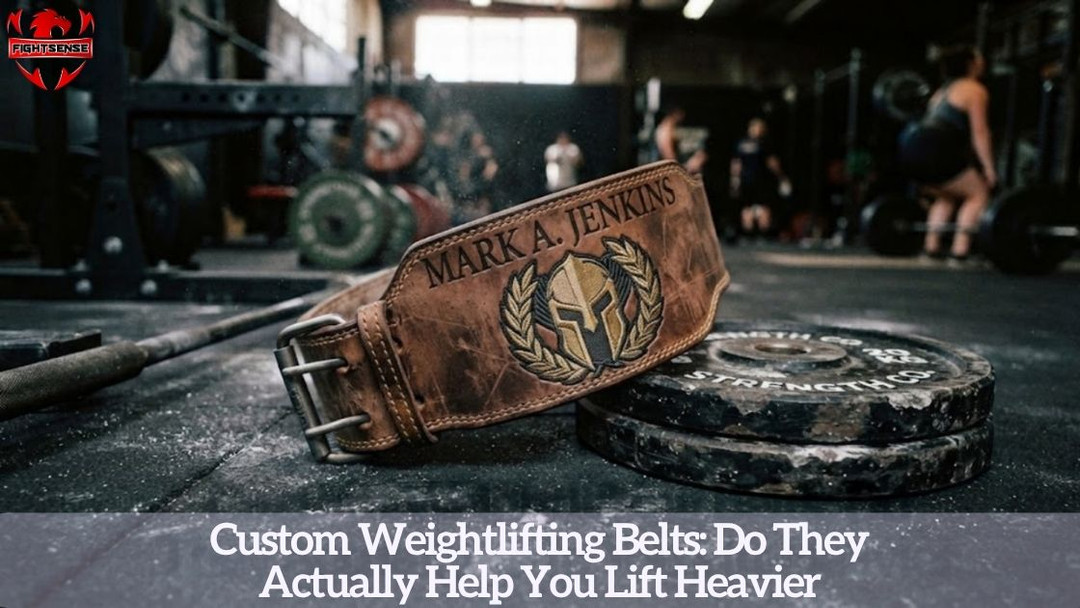
Custom Weightlifting Belts: Do They Actually Help You Lift Heavier?
Custom Weightlifting Belts are often seen in gyms—but are they really worth it, or just gym hype? In modern gyms, you’ll see all kinds of lifting belts—from simple functional ones to fully personalized designs with names and logos. That’s where Custom lifting Belts stand out.
They look premium and motivating, but do they actually improve your lifting performance, or is it just about style? In this guide, we’ll break it down in a simple way so you can decide whether they’re worth it or not—and when a standard high-quality belt might be the smarter choice.
Key Takeaways:
- Custom Weightlifting Belts are more about personalization and style than actual strength improvement.
- Performance depends on material quality, fit, and construction—not customization.
- A high-quality standard belt can often match or outperform a custom belt in real training.
- Many lifters choose custom belts for motivation and identity, not functional benefits.
- For serious strength training, durability and support matter more than design or branding.
What Is a Custom Weightlifting Belt?
A weightlifting belt is a supportive training accessory that helps improve core stability during heavy lifts like squats and deadlifts. It works by increasing intra-abdominal pressure, allowing you to brace your core more effectively and maintain better lifting form.
Before deciding whether Custom Weightlifting Belts are worth buying, it's important to understand what a lifting belt does and how it supports your training.
Why do lifters even want custom weightlifting belts?
Customizing is not a random decision most lifters make; it generally depends on their motivation and identity.
There are three reasons:
First, Personalisation. In fitness culture, gear is a statement of personality. A belt with your name or brand is more personal and inspiring.
Second, perception: Many individuals feel that custom equipment seems more “pro” even if it performs the same.
Third, the impact of social media. Gym content developers also employ tailored equipment since it appears better on video.
What actually makes a weightlifting belt “custom”?
A common misunderstanding is that “custom” means “better.” That’s not true.
A custom belt usually allows you to personalize:
- Name or initials
- Logos or branding
- Colors and stitching
- Buckle type
- Design patterns
However, the core structure remains the same. The real performance still depends on:
- Leather or nylon quality
- Thickness and rigidity
- Stitching strength
- Buckle durability
So even if two belts look different, their performance can be identical—or completely different depending on build quality.
Can personalized lifting belts actually improve your performance?
This is where it becomes quite obvious.
What a weightlifting belt does is increase intra-abdominal pressure and stabilize your core during hard lifts. That function does not depend on customization.
So :
- A custom belt does NOT automatically add strength
- A poorly manufactured bespoke belt can hamper performance
- A good-grade standard belt will outperform a custom one
Performance is about engineering, not design.
This is why experienced lifters consider the quality of construction over the look when buying Custom Weightlifting Belts.
Are custom-designed weight belts only for appearance?
Looks aren't everything, but they matter.
The choice for the newcomer is frequently an emotional one. It’s more symmetrical for the advanced lifter. But aesthetics do not add strength in practical training situations – stability does. Many athletes soon recognize this and turn to performance-oriented gear instead of design-heavy options.
At this point, people tend to pick brands such as Fightsense, which specialize in sturdy training gear, like weightlifting belts and lever belts, made to hoist high weights and not to be customized visually.
Quick Comparison: Custom vs Standard Weightlifting Belts
|
Feature |
Custom Lifting Belts |
Premium Weightlifting Belts |
|
Personalization |
High |
Low |
|
Performance Support |
Depends on build |
Consistently strong |
|
Durability |
Varies widely |
Generally high |
|
Price |
Higher |
More practical |
|
Delivery Time |
Made-to-order |
Ready to use |
|
Best For |
Style & identity |
Strength training |
How do you choose the right belt for your training style?
Your training style should decide your belt—not trends.
For heavy compound lifts like squats and deadlifts:
- You need rigid support
- Strong buckle system
- Thick construction
For general fitness:
- Comfort matters more
- Moderate flexibility is fine
For strength-focused athletes:
- Consistency and durability matter most
Many lifters eventually prefer high-performance standard belts because they offer reliable support without unnecessary customization.
This is where brands like Fightsense naturally fit, offering dependable weightlifting belts and lever belts built for serious training demands.
Why do lifters switch from custom belts to standard belts?
This is a pretty common change.
To begin with, lifters love personalization. But in due course:
- They lift more weight.
- They like stability.
- They seek steady performance
- They are made to last a long time
Design is not as important as function, till then.
So many lifters go away from Custom Weightlifting Belts and go for performance-driven solutions instead.
Do custom lifting belts justify their price?
It depends on your goal.
If your goal is:
- Motivation
- Style
- Personal identity
Then yes, they can feel worth it.
But if your goal is:
- Strength improvement
- Long-term durability
- Serious training performance
Then customization doesn’t add real value.
In most cases, performance-focused belts deliver better long-term results.
What should you focus on instead of customization?
If you care about performance, focus on:
- strengthened material or grade leather
- Strong buckle system: lever or prong
- Correct thickness for your lifting level
- Secure and good fit
- Long-term durability under heavy loading
These elements influence lifting performance more directly than design ever can.
What mistakes do buyers usually make?
Many buyers make avoidable mistakes:
- Choosing design over durability
- Ignoring material quality
- Not understanding buckle systems
- Overpaying for aesthetics
- Assuming custom = stronger
These mistakes often lead to disappointment when performance doesn’t match expectations.
FAQs:
Can a poorly made custom belt affect performance?
Yes, if the materials or stitching are weak, it can reduce stability and fail to provide proper support during heavy lifts.
Are lever belts better than custom-designed belts?
In most cases, lever belts offer more consistent tightness and better support, especially for heavy strength training sessions.
What is the ideal thickness for a good lifting belt?
Most strength athletes prefer belts between 10mm to 13mm, as this range provides a strong balance of support and comfort.
Do professional lifters use custom weightlifting belts?
Some do it for branding or personal preference, but most experienced lifters prioritize performance, durability, and consistency.
How long does a quality weightlifting belt usually last?
A high-quality belt can last several years if it is properly maintained and not exposed to unnecessary wear and tear.
Are custom belts allowed in competitions?
Yes, as long as they meet official size and safety regulations set by the competition federation.
What is the main purpose of using a weightlifting belt?
A weightlifting belt helps increase intra-abdominal pressure, which improves core stability and supports the spine during heavy lifting.
Closing Thoughts:
At the end of the day, Custom Weightlifting Belts are more about style and personality than they are about performance. They can add a little bit of individuality to your gym experience, but they won’t instantly make you stronger or boost your ability to lift.
If you care about aesthetics and identification, they can be a nice choice, but if you care about serious training, consistency, and long-term durability, the higher-quality standard belt is usually the smarter decision.
Disclaimer:
This article is for informational purposes only. Individual training needs may vary, so always choose equipment based on your personal fitness level and goals.