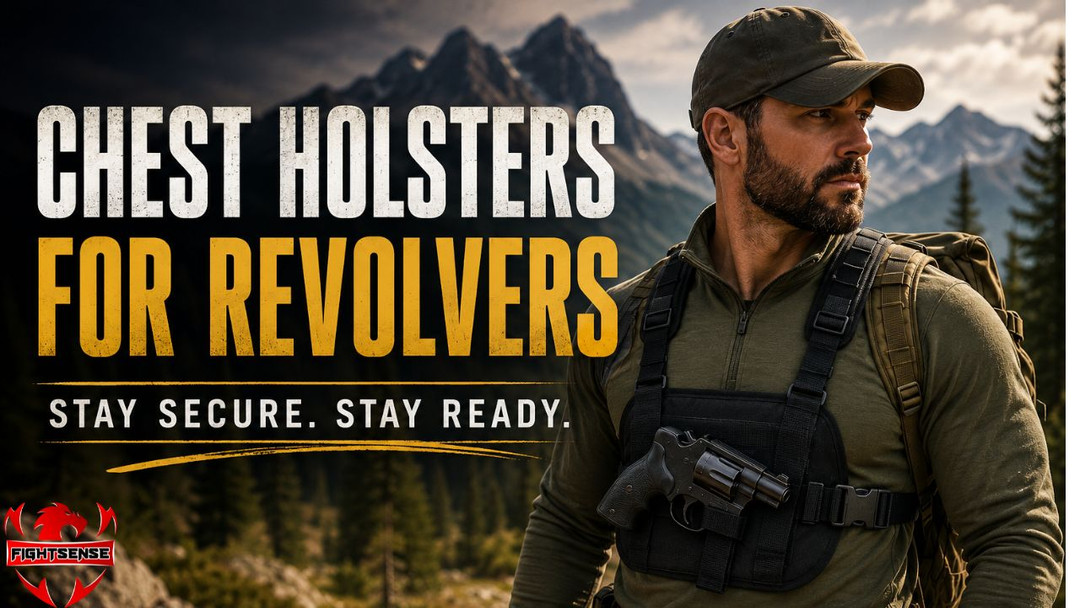
Chest Holsters for Revolvers Guide 2026
Chest holsters for revolvers are becoming popular among outdoor enthusiasts, hikers, and tactical users who want quick access, balanced weight distribution, and hands-free movement. Whether you’re on a trail, in training, or using a concealed chest holster, the right setup can improve comfort and control.
In this guide, we’ll break down how chest holsters work, when to use them, and how options like a chest pack, shoulder carry, or tactical chest holster compare in real-life situations.
Key Takeaways
- Chest holsters improve accessibility and balance
- Ideal for hiking, outdoor survival, and tactical use
- Better weight distribution than belt holsters
- Can be used with chest packs or shoulder carry systems
- Choosing the right fit improves safety and comfort
What Are Chest Holsters for Revolvers?
A chest holster for revolvers is a carry system worn across the upper torso that holds your revolver securely in front of your chest.
Unlike waist holsters, this setup:
- Keeps the firearm accessible even with backpacks
- Reduces pressure on hips
- Works well in sitting, hiking, or climbing positions
A modern tactical chest holster is designed for stability, fast draw, and secure retention during movement.
When Should You Use Chest Holsters for Revolvers?
You should consider chest carry if you:
- Carry a backpack regularly
- Spend time hiking or outdoors
- Need fast access while moving
- Prefer balanced weight distribution
- Work in tactical or field environments
Why Chest Holsters Are So Popular
People prefer chest carry systems because they solve real-world problems:
1. Better Accessibility
Your revolver stays right in front of you—easy to reach even when seated or wearing gear.
2. Balanced Weight Distribution
Instead of pulling on your waist, weight spreads across your chest and shoulders.
3. Outdoor-Friendly Design
A chest holster for hiking is especially useful when carrying backpacks or climbing uneven terrain.
Chest Holster for Hiking vs Other Carry Styles
Let’s compare different carry methods:
Chest Holster for Hiking
- Best for long outdoor trips
- Works with backpacks
- Stable during movement
Shoulder Carry
- Easy access under a jacket
- Less stable during heavy activity
- Can shift during running or climbing
Waist Holster
- Good for everyday carry
- Can be uncomfortable with backpacks
- Limited access while seated
For outdoor users, a chest holster for hiking is often the most practical choice.
Chest Pack vs Chest Holster
A lot of users confuse a chest pack with a chest holster.
Chest Pack
- Used for storage (tools, phone, gear)
- Not designed specifically for firearm retention
Chest Holster
- Built for secure weapon carry
- Faster draw access
- More stability for revolvers
Some advanced systems combine both into hybrid tactical setups.
Concealed Chest Holster Use
A concealed chest holster is designed to keep your revolver hidden under clothing or outer gear.
This is useful for:
- Security professionals
- Outdoor survival users
- Tactical training environments
Key features include:
- Tight retention straps
- Low-profile design
- Quiet draw system
Tactical Chest Holster Features
A high-quality tactical chest holster usually includes:
- Adjustable shoulder straps for secure fit
- Reinforced holster retention system
- Quick-release buckles
- Weather-resistant material
- Compatibility with outdoor gear
These features make it reliable for extreme conditions like hiking, camping, or field training.
Training & Mobility Advantage
A chest holster also supports better body mechanics:
- Keeps arms free during movement
- Works well with climbing or crawling
- Reduces lower back strain
- Maintains stable posture under load
This is why many outdoor trainers prefer chest systems over waist carry.
How to Choose the Right Chest Holster
Before buying, check:
Fit & Adjustability
Should fit snug without restricting breathing.
Retention Strength
The revolver must stay secure during movement.
Comfort Padding
Important for long hikes or extended wear.
Compatibility
Should work with your gear setup (jackets, backpacks, etc.)
Explore More Personal Safety Solutions from fightsense
While chest holsters are designed for specific firearm carry needs, many people prefer non-lethal options for everyday personal protection. Fightsense offers a variety of self-defense and fitness products designed to support personal safety and active lifestyles. Whether you're looking for everyday safety essentials or reliable workout gear, you can explore a range of practical solutions to match your needs.
Practical Tips for Safe Use
- Always adjust straps before movement
- Keep draw practice slow and controlled
- Avoid loose fittings during hiking
- Test comfort with full gear load
- Regularly inspect buckles and stitching
Get Yours Now!
Conclusion
Chest holsters for revolvers are a practical solution for users who need mobility, stability, and fast access in outdoor or tactical environments. Whether you choose a concealed chest holster, a chest holster for hiking, or a full tactical chest holster, the right setup improves safety and performance.
If you’re combining strength training and outdoor readiness, pairing your setup with FightSense fitness gear can further improve endurance, posture, and core stability—helping you move smarter in any environment.
FAQs
1. What are chest holsters for revolvers used for?
They are used for secure, hands-free carry of revolvers during hiking, tactical use, and outdoor activities.
2. Is a chest holster better than shoulder carry?
Yes, for movement-heavy activities like hiking, chest holsters offer more stability than shoulder carry.
3. Can I use a chest pack instead of a chest holster?
A chest pack is for storage, while a chest holster is designed for firearm retention and quick access.
4. Are chest holsters good for hiking?
Yes, a chest holster for hiking is one of the most stable and comfortable carry options.
5. What is a concealed chest holster?
It is a low-profile holster designed to hide your revolver under clothing or outer gear.
6. What makes a tactical chest holster different?
It includes reinforced materials, quick access design, and enhanced durability for field use.