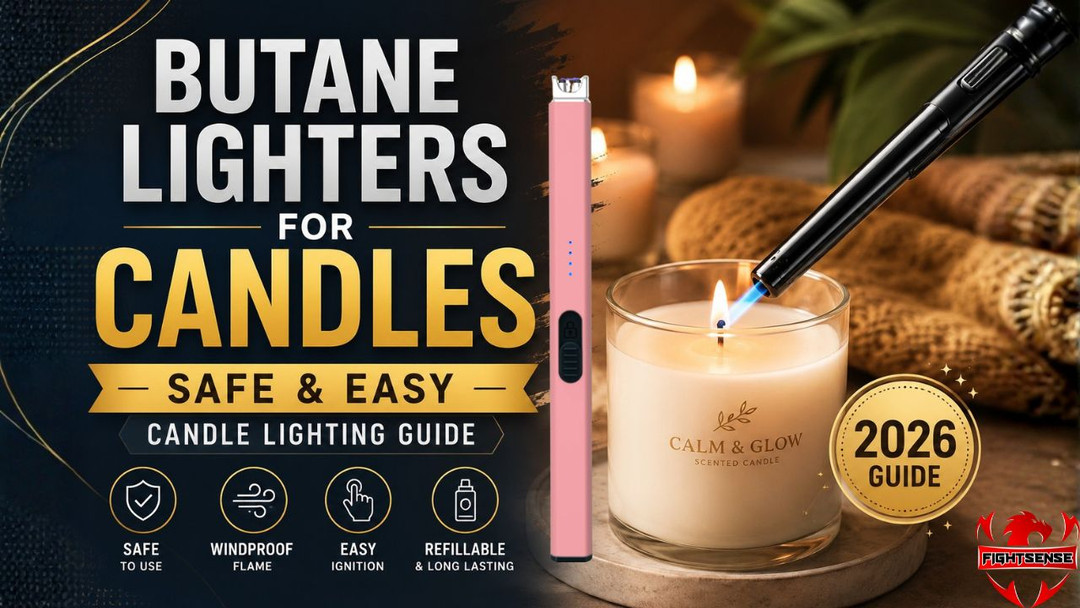
Butane Lighters for Candles: Safe Picks for 2026
Lighting a candle should take seconds, not a burnt fingertip. Yet anyone who has tried to reach the wick at the bottom of a tall jar with a match knows the awkward tilt, the singed knuckle and the flame that dies halfway down. That is why butane lighters for candles have earned a permanent place in kitchen drawers: a long neck, a steady flame and a hand that stays well clear of the heat.
This guide explains how they work, what to check before you buy one, how to use one safely at home and when a flameless arc lighter is the smarter pick instead. No jargon, no hype — just the practical detail that makes evening candlelight easy.
Keynotes
- A long neck keeps your hand away from the flame and reaches wicks at the bottom of deep jars.
- A jet-style flame holds up better in a draught than a match, so relighting takes one try, not three.
- Refillable models cost less over time than buying disposable lighters again and again.
- A safety lock and a child-resistant switch help prevent accidental ignition.
- Keep lit candles at least 12 inches from anything that can burn, and never leave one burning unattended.
- Choose the neck length, safety features and fuel type to match how often you light candles.
How Butane Lighters for Candles Work
A butane lighter burns gas stored in a small tank inside the handle. Pressing the trigger opens a valve, gas flows to the nozzle and a spark lights it. Most candle lighters add two things a pocket lighter does not have: a long metal neck that carries the flame to the wick, and a flame control that lets you turn the flame up for a stubborn wick or down for a tea light.
The long neck is the feature that does the real work. It keeps your fingers out of the heat, lets you light a wick without tipping the jar and reaches lanterns and pillar candles that a short lighter cannot touch.
How to Use Butane Lighters for Candles Safely
Good habits matter more than the model you buy. Follow these steps every time you light up:
- Hold the lighter upright and point the neck at the wick, not at your skin or anything flammable.
- Press the trigger once and hold the flame on the wick for a second or two until it catches.
- Switch the safety lock on before you put the lighter away, and store it out of children's reach.
- Refill only in a ventilated spot, away from flames, and wipe up any spilt fuel before you light anything.
- Check the NFPA candle safety guidance for the other half of the picture — how to burn the candle itself safely once it is lit.
Why a Long Neck Beats Matches and Short Lighters
Matches work, but they burn down fast and go out in a draught. Short lighters force your hand over the rim of the jar, right where the heat rises. For deep jars and tall pillars, butane lighters for candles win on reach alone: the flame arrives at the wick while your hand stays cool and clear.
That reach also keeps candles upright. Tipping a jar to meet a short flame spills hot wax and can crack the glass. A long neck lights the candle where it stands.
Jet Flame or Soft Flame?
Some butane lighters make a soft, candle-like flame; others make a narrow jet flame that is hotter and steadier in a breeze. A jet flame suits outdoor lanterns and draughty windowsills. A soft flame is gentler on delicate wicks and easier to control indoors. Neither is better in every home — pick the one that matches where you light candles most.
For a closer look at the flameless side of the same choice, our best candle lighter guide for 2026 compares slim, rechargeable models side by side.
Choosing the Right One: Five Things to Check
Before you buy, check five things: neck length, refills, safety features, build quality and how you will actually use it.
Neck Length
Measure your tallest candle jar. The neck should reach the wick with your hand still outside the rim. Flexible necks bend around the rim of a lantern or a wick that sits at an angle — the flexible-neck arc lighter 2-pack shows the idea, with a bendable neck and a second lighter as a spare.
Refills and Running Costs
A refillable lighter costs more on the day you buy it and less over the months that follow, because a can of butane costs far less than replacing disposable lighters. Check how the tank fills before you buy, and look for a clear fuel window so you are not guessing when it runs low.
Safety Features
Look for a safety lock, a switch that keeps the trigger covered in a drawer, and a flame control you can reach with one hand. Households with children should put the lock first, whatever model they choose. When several rooms need a lighter, the USB rechargeable lighter 6-pack keeps one in the kitchen, one in the living room and spares for gifts — with no fuel to store at all.
Build and Grip
A lighter that feels loose or rattles when you press the trigger will not last. A solid metal neck and a grip that fits your hand make the tool easier to aim, especially on a tall pillar candle.
If you light candles in several rooms or buy for a household that goes through lighters quickly, the flameless candle lighter 12-piece pack is the bulk option, and the plasma lighter 6-box set keeps gift-ready spares on hand.
Butane Flame or Electric Arc: Which Suits Candles Better?
A butane lighter gives you a real flame, which some people prefer for lighting incense or a gas stove. An electric arc lighter gives you a flameless spark that needs no gas, no matches and no refills — you charge it over USB and it works in a breeze that would blow a match out. When the wind picks up on the patio, butane lighters for candles with a jet-style flame hold their own, but a flameless arc has no flame to lose at all.
Our stove lighter versus electric candle lighter comparison lays out the trade-offs in detail — flame against arc, running costs and which tool fits which room — and the rechargeable candle lighter guide for 2026 explains how arc lighters work day to day.
Candle Safety Habits That Matter
Safe use of butane lighters for candles starts with the candle, not the lighter. The National Fire Protection Association advises keeping candles at least 12 inches from anything that can burn and blowing them out before you leave a room or go to bed. Place candles on a sturdy, heat-resistant surface, trim the wick before lighting, and keep matches and lighters away from children.
Never light a candle near curtains, bedding or loose paper, and never use a lighter near flammable liquids. A steady hand and a clear surface around the candle do more for safety than any feature on the lighter itself.
Common Problems and Quick Fixes
Most problems with butane lighters for candles come down to fuel, air in the line or a dirty nozzle — and most take a minute to fix.
The Flame Will Not Stay Lit
Refill the tank, then turn the flame control up a notch. If the lighter hisses but does not catch, the spark may be weak; dry the nozzle and try again in a ventilated spot.
The Flame Looks Weak
Air trapped in the tank after a refill is the usual cause. Let the lighter rest for a minute after refilling so the gas settles, then light it away from the candle first to check the flame.
The Lighter Runs Out Too Soon
A high flame setting burns fuel fast. Turn the flame down once the wick catches, and store the lighter upright in a cool drawer. If you light candles every evening, a rechargeable model may suit you better — our best candle lighters for 2026 round-up compares the options side by side.
Why Candle Lovers and Busy Home Cooks Trust FightSense for Safer, Easier Evening Light
At FightSense, we design everyday tools for real routines: the scented candle that makes an evening feel calm, the lantern on the patio table, the birthday candles that need lighting in one pass. Whether you reach for butane lighters for candles or a flameless arc that charges over USB, the goal is the same — a candle lit safely, without burnt fingers or a fumbled match. Visit the FightSense store and find the lighter that fits your kitchen, your lanterns and your evenings in.
Light Every Candle Without Singed Fingers
Trade the matchbox for a steady, flameless arc — your next candle lights in seconds, with no gas refills and no burnt fingertips. The FightSense 2-in-1 USB candle lighter is slim, windproof and ready for every jar in the house. Plus, orders above $100 ship free at FightSense.
Shop the 2-in-1 Electric Candle Lighter — $9.99Conclusion
A long-neck butane lighter turns the fiddliest part of candlelight — reaching the wick — into the easiest part. Pick a comfortable neck, a safety lock and a refillable tank, store it locked and out of children's reach, and keep every lit candle at least 12 inches from anything that can burn. And if you would rather skip fuel altogether, a USB-rechargeable arc lighter does the same job with no flame at all.
FAQs
Are butane lighters safe for candles?
Yes, when you use them as directed. Keep the flame away from your skin, lock the lighter before you store it, and never leave a lit candle unattended.
Can you refill a butane candle lighter?
Most full-size butane lighters are refillable. Hold the can upright, press the nozzle into the refill valve for a few seconds, then wait a minute before lighting so the gas settles.
What is the best way to light a deep jar candle?
Use a long-neck lighter and hold the jar still. Point the neck straight at the wick, light once, and let the flame catch before you pull the lighter out — tipping the jar risks hot wax spills.
Do butane lighters work in a breeze?
A jet-style butane flame holds up better in a draught than a match, but a strong gust can still disturb it. For patios and open windows, a flameless arc lighter is the steadier choice because there is no flame to blow out.
Why does my butane lighter stop working?
Usually it is out of fuel, or air is trapped in the tank after a refill. Refill it, let it rest for a minute, dry the nozzle and check the flame control before you try again.
Are butane lighters allowed on planes?
Rules vary by airline and airport, and jet-style torch lighters face tighter limits than ordinary lighters. Check with your airline before you fly, and never pack a lighter in checked luggage without confirming the rules first.
How should I store a butane lighter at home?
Store it upright in a cool, dry drawer with the safety lock on and the flame turned down. Keep it away from heat, direct sunlight and children's reach.
Butane lighter or electric arc lighter — which should I choose for candles?
Choose a butane lighter if you want a real flame and already keep butane at home. Choose an electric arc lighter if you want no fuel, no refills and a spark that works in a breeze — it charges over USB and is ready whenever you are.