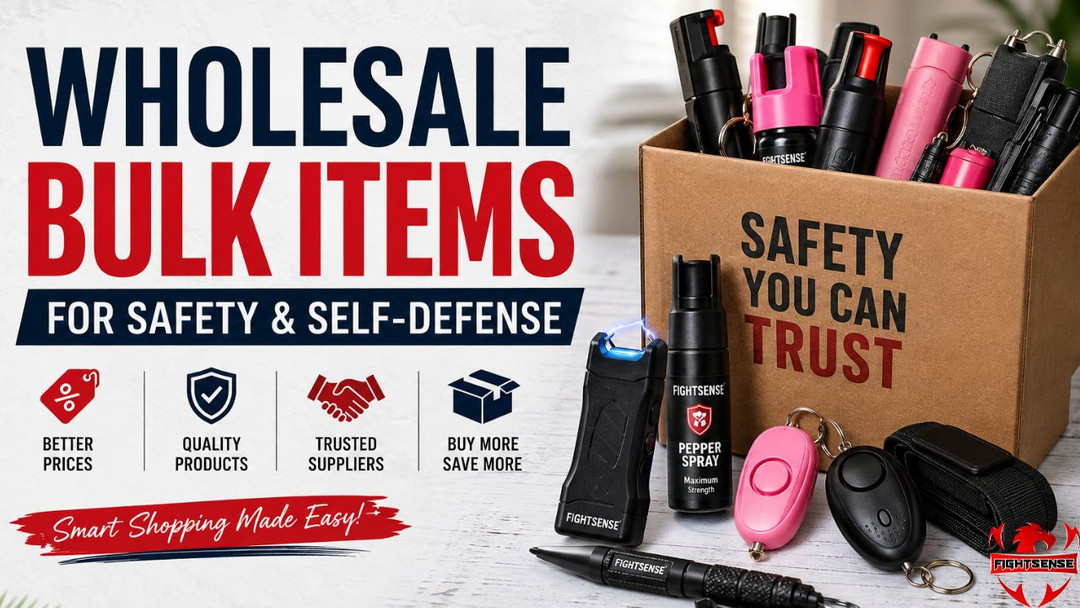
Wholesale Bulk Items for Safety & Self-Defense
Buying safety products in large quantities can help retailers, security businesses, and organizations control costs while keeping useful products in stock. Wholesale Bulk Items can include personal safety accessories, alarms, self-defense products, and everyday protective gear.
However, buying in volume is not simply about finding the lowest price. Product quality, minimum order quantities, supplier reliability, shipping, storage, and local regulations can all affect the real value of a bulk order.
This guide explains how to choose wholesale safety products, compare options, avoid common purchasing mistakes, and build a practical product mix for your customers.
What Are Wholesale Bulk Items?
Wholesale bulk items are products purchased in larger quantities, usually from a manufacturer, distributor, or wholesale supplier at a reduced per-unit price.
Wholesale purchasing is generally intended for resale or business use. Bulk buying, on the other hand, can also mean purchasing a larger quantity simply to reduce the cost per item.
For retailers, the main advantage is the ability to purchase inventory at volume and sell individual products at a retail price.
Wholesale vs. Bulk Buying
The two terms are closely related, but they are not identical.
|
Feature |
Wholesale Buying |
Bulk Buying |
|
Main purpose |
Resale or business use |
Stocking or personal/business use |
|
Typical buyer |
Retailer or reseller |
Consumer, organization, or business |
|
Quantity |
Usually larger |
Can range from moderate to large |
|
Pricing |
Wholesale or tiered pricing |
Quantity-based discount |
|
Supplier relationship |
Often ongoing |
May be one-time or recurring |
|
Example |
Store buying 500 safety alarms for resale |
Organization buying 100 alarms for staff |
Understanding this difference helps buyers choose the right purchasing model for their needs. Wholesale purchasing is generally more focused on resale, while bulk purchasing can be focused on saving money or maintaining inventory.
Why Buy Safety Products in Bulk?
Buying safety products in larger quantities can offer several practical advantages.
Lower Cost Per Unit
Wholesale suppliers often offer better pricing as order quantities increase. This can improve retail margins when the products are sold individually.
However, always calculate the landed cost, not just the listed unit price. Shipping, packaging, taxes, and other fees can change the final cost.
Better Inventory Availability
Popular safety products can sell quickly. Keeping additional stock helps retailers avoid frequent reordering and reduces the chance of running out of popular items.
Easier Product Bundling
Bulk inventory also makes it easier to create useful product combinations.
For example, a retailer may create a personal safety bundle containing a safety alarm, keychain accessory, and other permitted everyday safety products.
More Consistent Supply
Working with a reliable wholesale supplier can create a more predictable purchasing cycle. This becomes especially useful for retailers with recurring customer demand.
What Safety Products Can You Buy Wholesale?
The best wholesale product mix depends on your customers, location, budget, and applicable laws.
Common categories include:
- Personal safety alarms
- Safety keychains
- Pepper spray where legally permitted
- Stun devices where legally permitted
- Self-defense accessories
- Protective sports equipment
- Training and fitness accessories
- Everyday safety products
For a retailer, a combination of low-cost accessories and higher-value products can create a more balanced inventory.
How to Choose Wholesale Bulk Items
Choosing the right products requires more than comparing supplier prices.
1. Check Product Quality
Quality should be one of your first checks.
Look at:
- Materials
- Construction
- Packaging
- Product consistency
- Available specifications
- Warranty information
- Customer feedback
A low-priced product is not a good deal if customers return it frequently.
2. Compare Minimum Order Quantity
Minimum order quantity, or MOQ, tells you how many units a supplier requires for an order.
A supplier offering a very low price may require a large MOQ. That can create unnecessary inventory if demand is uncertain.
Choose an MOQ that matches your sales volume and available storage.
3. Calculate the Complete Cost
Before placing an order, calculate:
Product cost + shipping + applicable taxes/fees = estimated landed cost
Then compare that number with your expected selling price.
This gives you a clearer picture of your potential margin.
4. Review Supplier Reliability
A dependable supplier should provide clear information about:
- Product specifications
- Order quantities
- Shipping times
- Returns
- Warranty coverage
- Customer support
- Stock availability
Supplier reliability becomes even more important when you depend on regular inventory replenishment.
5. Check Packaging and Labeling
Packaging matters because customers need clear information about the product.
For regulated or restricted safety products, check whether additional labeling, age restrictions, warnings, or other requirements apply in your market.
What Should You Check Before a Bulk Order?
Use this checklist before committing to a large purchase:
- Is the supplier established and trustworthy?
- What is the exact MOQ?
- What is the landed cost per unit?
- Is the product quality consistent?
- What is the estimated shipping time?
- What happens if products arrive damaged?
- Is there a warranty?
- Can the supplier maintain future inventory?
- Are the products permitted in your selling area?
- Do packaging and labeling meet applicable requirements?
This approach helps reduce the risk of buying large quantities of products that are difficult to sell or legally restricted.
What Is the Best Self-Defense Product to Buy in Bulk?
There is no single best product for every retailer.
The right choice depends on your target customer and local requirements.
For many stores, smaller safety accessories can be easier to stock because they generally require less storage space and can work well as add-on purchases. Other businesses may prefer a broader product range that includes personal alarms and legally permitted defensive products.
The important point is to match inventory with customer demand instead of purchasing large quantities simply because the wholesale price looks attractive.
Safety Product Comparison Table
Different safety products serve different purposes. A retailer should consider usability, customer demand, storage, and applicable regulations before selecting inventory.
|
Product Type |
Main Use |
Storage Needs |
Retail Appeal |
Key Consideration |
|
Personal Safety Alarm |
Attract attention |
Low |
High |
Sound and usability |
|
Safety Keychain |
Everyday carry accessory |
Low |
High |
Compact design |
|
Pepper Spray |
Personal protection |
Low |
High |
|
|
Stun Device |
Personal protection |
Low |
Moderate to High |
Legal restrictions and safe handling |
|
Belt Buckle Self Defense |
Defensive accessory |
Low |
Niche |
Laws, design, and responsible use |
|
Sports Protection Gear |
Training and activity |
Moderate |
High |
Material and fit |
A belt buckle self defense product may appeal to customers looking for an everyday accessory with a defensive purpose. However, retailers should avoid assuming that an item is legal everywhere simply because it is sold as a self-defense product. Laws can vary by state and locality.
Self-defense laws can also differ depending on the circumstances and the type of force involved.
How to Buy Self-Defense Products in Bulk
A simple purchasing process can make bulk sourcing much easier.
Step 1: Identify Your Customer
First, determine who will buy your products.
Your audience might include:
- Retail shoppers
- Students
- Commuters
- Security professionals
- Outdoor users
- Fitness customers
- General personal-safety shoppers
Knowing your audience helps you avoid purchasing products that do not match actual demand.
Step 2: Select a Product Category
Start with a focused product range rather than buying everything at once.
For example, you might begin with personal alarms and compact safety accessories before expanding into additional categories.
Step 3: Compare Suppliers
Compare suppliers based on:
- Price
- MOQ
- Product quality
- Shipping
- Warranty
- Customer service
- Inventory availability
Do not choose a supplier based on price alone.
Step 4: Start With a Controlled Quantity
If you are testing a new product, a smaller initial order can reduce inventory risk.
Once you see consistent demand, you can increase your order volume.
Step 5: Track Sales and Reorder Points
Monitor which products sell fastest.
A simple inventory system can show:
- Units purchased
- Units sold
- Remaining stock
- Average monthly sales
- Reorder point
This turns bulk buying into a data-driven process.
Pros and Cons of Buying in Bulk
Pros
- Lower potential cost per unit
- Better inventory availability
- Easier product bundling
- Potentially stronger retail margins
- Fewer frequent purchasing cycles
Cons
- Higher upfront investment
- More storage requirements
- Risk of slow-moving inventory
- Possible cash-flow pressure
- Additional legal and compliance checks for some products
Bulk buying works best when the expected demand supports the quantity purchased.
Expert Tips for Wholesale Buyers
Focus on Landed Cost
A supplier with the cheapest product price may not have the cheapest final cost.
Always include shipping and other applicable charges.
Test Before Scaling
When possible, evaluate product quality before placing a very large order.
A small test order can reveal packaging, quality, shipping, and customer-demand issues early.
Keep Your Product Range Balanced
Do not fill your entire inventory with one product category.
A balanced range can help you serve different customer needs and reduce dependence on a single product.
Watch Seasonal Demand
Some safety products may see higher demand during specific periods, such as back-to-school shopping, travel seasons, or holiday retail periods.
Use your previous sales data to guide future purchasing decisions.
Review Laws Before Selling
Legal requirements can vary significantly between jurisdictions. Self-defense laws may also depend on the type of product and how it is possessed or used.
For U.S. businesses, state and local rules should be checked before selling or distributing regulated products. The ATF, for example, maintains state-law resources for firearms, while other self-defense products can be governed by different state or local rules.
Common Mistakes When Buying Wholesale Bulk Items
Buying Only Because the Price Is Low
Cheap inventory is not automatically profitable.
If the product has poor quality or low demand, the lower unit price does not help your business.
Ordering Too Much Too Soon
Large MOQs can create excess inventory.
Start with quantities that your sales data can support.
Ignoring Shipping Costs
A low wholesale price can become expensive after shipping and other charges.
Always calculate your estimated landed cost.
Skipping Supplier Research
A supplier should be evaluated before a major purchase.
Check policies, product information, communication, reviews, and order terms.
Forgetting Legal Requirements
Some self-defense products have restrictions that vary by location.
Never assume that a product is legal for sale or possession everywhere.
Where Can Retailers Find Wholesale Safety Products?
Retailers should look for suppliers that offer clear product information, transparent ordering terms, dependable shipping, and support for repeat orders.
FightSense wholesale bulk items guide can also be used as an internal resource for readers researching bulk purchasing and wholesale safety products.
When evaluating a supplier, compare the complete offer rather than focusing only on the advertised wholesale price.
Conclusion
Wholesale Bulk Items can help retailers and organizations control purchasing costs, maintain inventory, and build a useful selection of safety products. However, successful bulk buying depends on more than quantity.
Before placing an order, compare the supplier, MOQ, landed cost, product quality, shipping terms, demand, and applicable legal requirements. Start with products that match your customers, track sales, and scale your orders based on real demand.