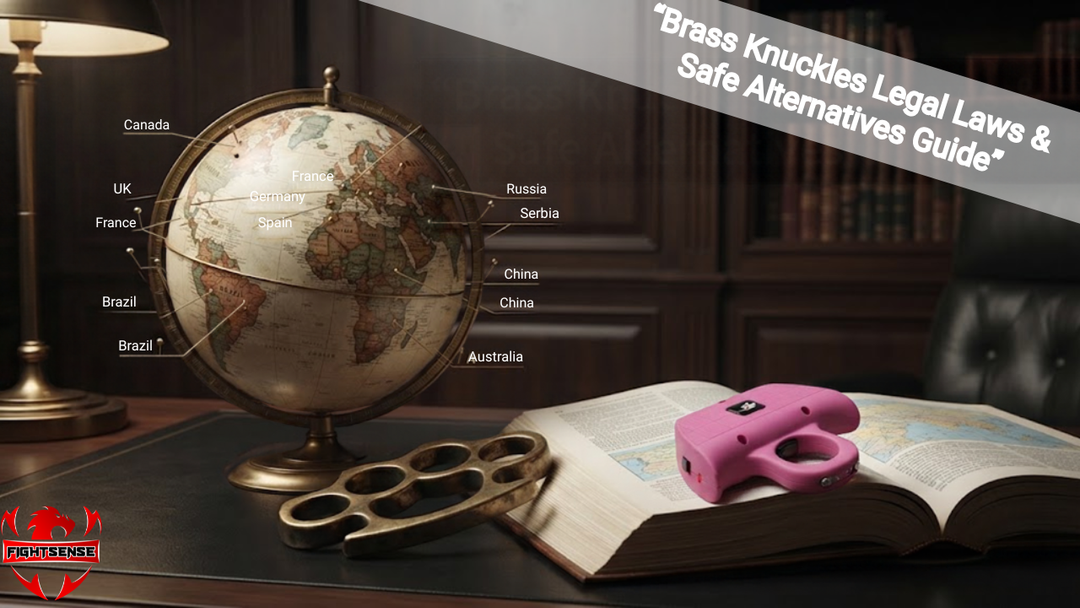
Brass Knuckles Legal Laws & Safe Alternatives Guide
When considering personal protection, understanding Brass Knuckles Legal status is crucial before carrying any form of hand-held self-defense tool. Many individuals look into these metallic items for safety, but the reality of weapon ownership is heavily restricted worldwide. Knowing the laws prevents legal trouble, while exploring alternative solutions ensures you stay protected without breaking the rules.
What Are Brass Knuckles?
Brass knuckles are weapons for hand-to-hand fighting. They are constructed of brass , steel or other hard metals and fit tightly over the fingers . They have four ring-like finger openings with a solid metal base that sits against the palm.
Why Are They Used?
Historically and culturally, individuals look for brass knuckles legal or hefty knuckle dusters, brass versions for close-quarter fighting or imagined personal defense. They are mainly meant to increase the striking power in a fight. But they do raise the chance of serious physical injuries by a large margin. They are severely restricted or banned outright in most areas.
Are Brass Knuckles Legal? Understanding the Basics
People are often surprised by the question of everyday carry in brass knuckles systems. In most states and nations, conventional brass knuckles officially categorized as lethal weapons. Knuckle dusters, brass or heavy metal grips in public carry significant penalties, criminal charges or felony arrests.
Traditional hardware is very limited in this regard, hence the question of whether brass knuckles legal ends up being a definitive “no” for civilian public carry. Law enforcement agencies see these stiff metal instruments as offensive weapons. Just having one can get you into a lot of legal trouble.
Global Legality: Which Countries Allow or Ban Them?
Laws on metal hand protection differ widely from country to country. Knowing where they are allowed or not allowed can save travelers and fans from serious criminal consequences.
Countries Where They Are Illegal or Strictly Limited:
- Canada: Prohibited weapons, classified as such by law. Simple possession is a serious criminal violation under the Criminal Code.
- United Kingdom & Australia: Importation requires specific government license, and outright forbidden under offensive weapon acts.
- Most of Europe: Countries like France, Germany, Spain, Italy, Austria, and Russia all have strong bans on carrying them. In France, you can buy them as a “collectable” if you’re over 18, but it is illegal to carry them for self-defense.
- Other Nations: Hong Kong, Singapore, Taiwan and Malaysia have severe anti-weapon legislation; possession is penalized.
Countries with liberalization or specific regulations:
- Brazil: Legal to possess and freely sold under the local name soco inglês.
- China: Citizens can own them legally for personal defense under certain rules, but carrying them on public transit (trains, metros, busses) is severely forbidden.
- Serbia: Legal to own for anyone above 16 years of age, although it is still prohibited to carry them openly or hidden in public settings.
The Risks of Carrying Metal Hand Protection
The immense risks linked with traditional metal protection extends far beyond the world of physical altercations. If you get stopped by law authorities and you have taser knuckles or knuckle dusters in your pocket or vehicle it will be immediately confiscated and you will be charged with a crime.
Even if you are acting strictly in self-defense, the law usually does not create exceptions for banned weapons. This is why it is compulsory to verify the legal limits of brass knuckles legal in your particular state or country before obtaining any close-quarter defense gear.
Comparison: Traditional Metal vs. Modern Self-Defense
|
Feature |
Traditional Brass Knuckles |
FightSense Non-Lethal Alternatives |
|
Legal Status |
Mostly illegal / Prohibited worldwide |
Generally legal for civilian carry |
|
Lethality Risk |
Extremely high (causes severe injury) |
Low (designed to deter and escape) |
|
Portability |
Heavy and rigid |
Compact and lightweight |
|
Risk of Arrest |
High (felony or misdemeanor risk) |
Low (compliant with safety laws) |
Step-by-Step Guide to Evaluating Self-Defense Tools
- verify Local Laws – Before you purchase any hand-held defense equipment, always verify local laws regarding forbidden weapons.
- Evaluate Your Risk: Decide if you require protection for nite commutes, walks or home defense.
- Opt for Non-Lethal Methods: Select equipment that temporarily disables intruders rather than inflicting lasting catastrophic damage.
- Test Portability: Make sure that the safety gadget can fit easily in your pocket, backpack or keychain.
- Compliance Check: Make sure the gear you pick conforms to safety requirements and doesn't belong to banned weapon categories.
Pros and Cons of Hand-Held Protection
Pros
- Enhanced Grip: Provides secure retention during high-stress situations.
- Psychological Deterrent: Visible protection can discourage potential threats.
- Immediate Access: Designed for fast deployment when seconds matter.
Cons
- Serious Legal Consequences: Criminal charges are serious for old metal ones.
- Escalation Risk: Can convert a little argument into a serious physical situation.
- No Versatility: Metal implements without flexibility are useless outside of warfare.
Expert Tips for Legal Personal Safety
- Stay Informed: Laws change often; make sure you know the local concealed carry and weapon ordinances of brass knuckles legal.
- Choose Compliance: Select approved non-lethal deterrents that can provide protection without infringing criminal codes.
- Focus on Situational Awareness: The best defense is to stay out of high-risk environments.
Common Mistakes People Make with Defense Gear
- Assuming Intent Matters: Believing that “self-defense intent” excuses the possession of an unlawful weapon.
- Ignoring Local Ordinances: Not understanding that regulations are very different amongst towns, states, and countries.
- Buying Unverified Items: Buying banned hardware online without checking local import or carry rules.
Safe and Smart Alternatives by FightSense
Traditional metal gears cross the boundary into forbidden territory . So current safety requires novel solutions. That’s what FightSense is all about – providing trustworthy non-lethal protection, with compliance in mind. FightSense is a company that develops personal safety devices that are simple to use, functional and regulation compliant.
Rather than the threat of huge fines that come with restricted gear, a FightSense stun gun knuckles or a small keychain alarm provides you the upper hand in risky situations without the harsh legal repercussions. These sophisticated technologies are designed to prevent attackers securely, while keeping you on the right side of the law.
Get Yours Now!
FAQs:
Are there any places where brass knuckles are legal?
Yes , they are permitted to be owned in some nations ( such as Brazil ) and some areas , but carrying them in public is forbidden everywhere.
What makes brass knuckles unlawful in most places?
They are seen as dangerous, deadly weapons that can inflict permanent, serious injury in physical confrontations.
What happens if you are caught with metal knuckles?
Law enforcement can prosecute you with misdemeanors or felonies, penalize you heavily and seize the goods immediately.
Are non-lethal options like FightSense stun devices legal?
Yes, there are plenty of non-lethal self-defense items meant for civilian use that are 100% lawful, however age and permit limits may apply.
Can I use brass knuckles legal in my home defense?
Even having illegal firearms at home could make it hard to have legal standing if something happens. Compliant options are safer.
Why should you buy FightSense products?
They are effective for near and far deterrent, and meet basic non-lethal self-defense rules.
How can I know if a self-defense item is lawful in my state/country?
Check local police guidelines, customs rules or check state and national laws about illegal firearms for civilians.
Do I require permits for non-lethal safety tools?
Most non-lethal consumer-grade goods don’t need elaborate permissions, but always check local state restrictions.
Summary:
All of this navigating of brass knuckles legal really goes to show that carrying traditional metal weapons is almost never worth the risk. Heavy-grip protection may be appealing, but the consequences under the law are significantly worse than any benefits. Ultimately real protection for yourself is to defend yourself without sacrificing your independence. Opting for clever, non-lethal options will keep you totally compliant and ready for anything that comes your way.
Disclimer:
This blog is just for informational purposes and is not legal advice. Always verify your local laws before buying or using brass knuckles.