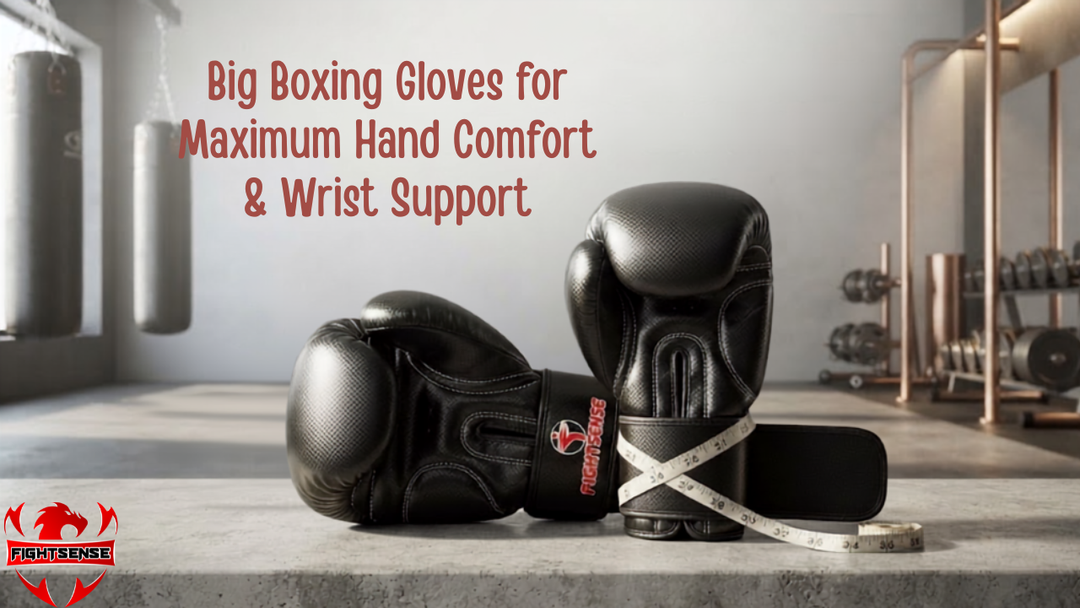
Big Boxing Gloves for Maximum Hand Comfort & Wrist Support
Finding the right gear when you have larger hands, thick wrists, or a heavyweight frame can feel like an uphill battle. Squeezing into standard 16oz or 18oz gloves often cuts off circulation, jams your knuckles, and leaves your wrists vulnerable to injury during heavy bag sessions.
To solve this problem, reputable fitness brands like FightSense design big boxing gloves specifically engineered to provide extra interior hand compartments, extended wrist cuffs, and superior multi-layer foam padding without sacrificing wrist support or shock absorption. Whether you are a heavyweight fighter sparring in the ring or a fitness enthusiast hitting the heavy bag, choosing the correct size and fit ensures both your safety and performance.
What Are Big Boxing Gloves and Why Are They Used?
Big boxing gloves are a kind of training gloves with larger hand compartments, greater palm widths and thicker cushioning options (typically 16oz to 18oz). These roomy versions, like the specialized FightSense designs, are engineered for larger hands, wide knuckles, and thick wrists, without impeding circulation or generating uncomfortable hand cramps, as opposed to ordinary gloves that fit snugly for average-sized hands.
Big boxing gloves are commonly utilized by fighters and fitness buffs for optimal safety, comfort, and joint protection during intense training sessions. Whether you’re throwing forceful punches on the heavy bag or sparring in the ring, the extra interior space allows you to construct a natural, stable fist. The extra shock-absorbing foam layers also help to protect your hands and training partners from injury.
Why Standard Boxing Gloves Cause Pain for Big Hands
Most commercial boxing gloves are manufactured on a standard mold to comfortably accommodate an average hand size. When a boxer with wide palms, lengthy fingers, or big knuckles puts on a regular glove, a couple of things happen.
The hand compartment is not wide enough, so the fingers have to bunch up against the front lining. I can't make a good fist because of the lack of room, so I strain my thumb and jam my fingers when I hit something. Regular wrist bands also may not often wrap tight enough over bigger wrists, leaving joints vulnerable to sprains during high-impact activities such as pad work and fighting.
Key Features to Look For in Big Boxing Gloves
When selecting extra-large or roomier boxing gloves, check for specific construction characteristics, not just the ounce weight label.
- Extended Hand Compartments: Look for brands such as FightSense that have extra space for your thumb and wider palms.
- Multi-Layer Foam Padding – Dense latex or gel-infused foam cushions intense impacts to protect large knuckles.
- Secure Closure Systems: Extra-long hook-and-loop Velcro straps or classic lace-up designs, typically seen on durable FightSense versions, provide specific tightness for thick wrists.
- Real Leather Construction: Full-grain cowhide or buffalo leather will break in to your hand over time and withstand rigorous everyday gym use.
- Thumb Attachment Design: The thumb is attached ergonomically to keep the thumb safely aligned and to reduce unintended eye pokes.
Top Boxing Gloves Compared
|
Glove Model |
Weight Options |
Material |
Best Suited For |
|
Ring-to-Cage C17 |
16oz, 18oz |
Cowhide Leather |
Sparring & Large Hands |
|
Winning MS Series |
14oz, 16oz |
Synthetic / Leather |
Joint Protection & Comfort |
|
Fairtex BGV9 |
16oz, 18oz |
Full-Grain Leather |
Heavy Bag & Mitt Work |
|
Hayabusa T3 LX |
16oz, 18oz |
Italian Leather |
Wrist Support & Durability |
How to Choose the Right Glove Size and Weight
Glove weight and hand compartment size are not the same measurement at all. An 18oz glove does not come with a larger hand compartment; it just has additional padding.
- Heavybag Work: Pick a 16oz glove with substantial padding to protect your knuckles from rough surfaces.
- Sparring – Always use 16oz or 18oz gloves with softer multi-layered padding to protect your training partners.
- For Large Hands: Check manufacturer sizing charts for wide-hand versions or models recognized for roomy finger cavities.
Step-by-Step Guide: Breaking In Your New Leather Gloves
When new, boxing gloves for sparring are often very stiff and tight. Here are some steps for breaking them in without hurting the inner cushioning.
-
Wrap Your Hands Properly: Always wear full-length hand wraps to fill up small negative space and to protect your skin from friction.
-
Use Glove Stretchers: Insert wooden or plastic glove stretchers into the hand compartment overnight to help expand the leather.
-
Condition the leather: Rub a bit of mink oil or leather balm into the outside to soften the skin.
-
Hit the Heavy Bag Slowly: Light bag work for the first week to allow the foam to develop to your knuckle shape naturally.
Pros & Cons of Extra-Large Boxing Gloves
Pros
- Improved protection: More padding volume lessens the shock effect on big joints.
- Comfortable Fit: Say goodbye to cramps and numbness from cramped hand compartments.
- Improved wrist stability. Longer cuffs help to stabilize fatter wrists during strong strikes.
Cons
- Slower Hand Speed: Extra weight can somewhat reduce punching speed.
- Color Options: Some specialty large-fit models have fewer cosmetic options.
- Higher Price Point: Heavyweight leather gloves are frequently more expensive.
Expert Tips for Wrist and Hand Care
It’s not enough to have the best gear to protect your hands. Always use professional-type Mexican stretch hand wraps of at least 180 inches with your huge boxing gloves. The extra length gives the appropriate layers of support around your knuckles and wrists. Also, never leave wet gloves in your gym bag; air them out in a well-ventilated area after each session to prevent bacterial growth and damaging inner foam.
Maintaining Hygiene for Long-Lasting Gear
Sweat builds up and over time breaks down the inner lining and foam matrix of boxing gloves. Extend the lifespan of your huge boxing gloves by using antimicrobial sprays and inserting cedar shoe trees or moisture-absorbing pouches after every training session.
Common Mistakes to Avoid
- Buying on Weight Alone: Thinking that a heavy glove gives you a big hand compartment.
- Hand Wraps Skipped: Not wrapping your wrist joints initially, and relying exclusively on the cushioning of the gloves.
- Ignoring Maintenance: Not cleaning sweat from inside lining, leading to early breakdown of foam.
- Choosing Synthetic: Over Leather for powerful use. Cheap synthetic leather splits fast under the pressure of huge hands and powerful blows.
FAQs:
What size boxing gloves do heavyweights use?
Most heavier fighters and big-framed people will choose 16oz or 18oz gloves for sparring and normal bag training to get the most protection.
Are the hand compartments bigger on 18oz gloves?
Not necessarily. Glove weight is the amount of padding, not the volume within. Seek out companies that are known expressly for roomier hand compartments.
Can people with big hands use lace-up gloves?
Lace-up gloves provide the finest wrist support, but need a trainer or partner to tie them. Velcro models are significantly easier to use when practicing alone.
How to remove unpleasant smell from gloves?
Once you’ve trained them, air them out right away. Use cedar inserts to absorb the moisture and wash the interior with an antimicrobial spray monthly.
How long do good boxing gloves last?
Premium leather boxing gloves can last one to three years with everyday use and with good care.
Are bag gloves good for sparring?
No. Bag gloves are very dense and rigid foam gloves, made for hitting hard things. They can easily damage your sparring partners.
What To Look For In Best Brands For Wide Hands Gloves?
Brands like Ring-to-Cage, Hayabusa, and Fairtex provide larger hand profiles, as opposed to the usual slim-fit brands.
Conclusion:
Buying the correct pair of huge boxing gloves can revolutionize your training experience by minimizing hand cramping, cushioning your joints, and delivering strong wrist support. Look for solid solutions, for example, the premium lineup from FightSense, with spacious hand compartments, durable construction, and suitable multi-layer padding.
If you pair your new equipment with excellent hand wraps and routine maintenance, you will be able to work out comfortably without injury for years to come. Looking to enhance your fight gear? See our top FightSense product choices above and buy the perfect pair for your hands today.