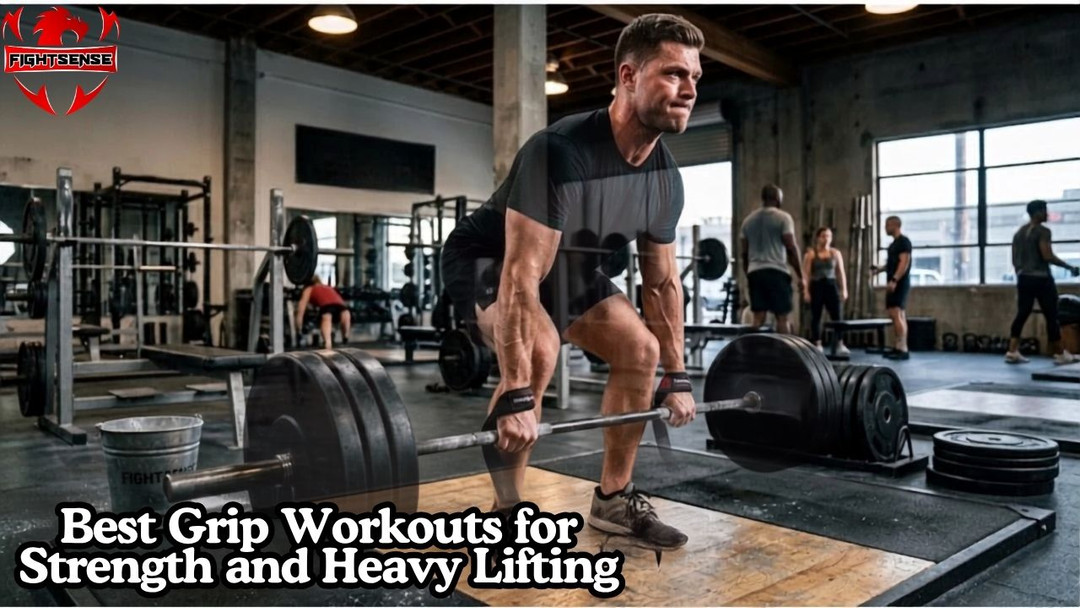
Best Grip Workouts for Strength and Heavy Lifting
Have you ever been in the middle of a heavy deadlift set, feeling like your legs and back have three more reps in them, only for your fingers to suddenly start to slip? It is one of the most frustrating feelings in the gym. Your target muscles are ready to go, but your hand strength gives out first.
The best grip workouts help you hold heavier weights, improve control during pulling exercises, and reduce the likelihood that grip strength will limit your the best grip workouts.
In this comprehensive guide, we will break down the mechanics of grip strength, explore the most effective exercises to build iron-clad hands, and show you how to blend raw strength training with supportive gear to maximize your gains.
Best Grip Workouts to Build Stronger Hands
Adding targeted exercises to your routine twice a week will transform your forearm size and crushing capacity. Here are the top movements every lifter needs.
1. The Farmer’s Carry (Support & Crushing Grip)
The Farmer’s Carry is the undisputed king of real-world strength exercises. It taxes your forearms, upper traps, core, and mental fortitude all at once.
- How to do it: Pick up a pair of heavy dumbbells or kettlebells. Stand tall with your shoulders pulled back and core braced. Walk for a set distance or time (e.g., 50 meters or 40 seconds) without letting the weights touch your legs.
- Pro Tip: Keep your wrist straight. Do not let the weight bend your wrists downward.
2. Dead Hangs (Support Grip & Shoulder Health)
Dead hangs can help build grip endurance and may feel beneficial for shoulder mobility and upper-body relaxation.
- How to do it: Grab a pull-up bar with an overhand grip, slightly wider than shoulder-width. Lift your feet off the floor and hang for as long as possible. Aim for 3 to 4 sets of 45–60 seconds.
- Pro Tip: Engage your shoulder blades slightly rather than completely turning into a loose sack to protect your rotator cuff.
3. Plate Pinches (Pinching Grip)
Most lifters ignore the thumb, yet thumb strength is what locks a barbell into your palm during heavy pulls.
- How to do it: Take two smooth weight plates (start with 10 lb or 25 lb plates) and place them flat sides facing out. Pinch them together using only your fingers and thumb. Hold them by your side for time.
- Pro Tip: Try not to let the plates rest against your thighs.
4. Reverse Barbell Curls (Brachioradialis & Wrist Extensors)
While traditional curls target the biceps, flipping your grip workouts forces the brachioradialis (upper forearm) to take over the load.
- How to do it: Hold a straight bar or EZ-bar with a pronounced (palms facing down) grip for the workout. Curl the weight up towards your chest, keeping your elbows tucked tight to your torso. Lower it under control.
Understanding the 3 Types of Grip Strength
Before diving into the routines, you need to understand that your hands do not work in just one way. Your forearms contain multiple small muscle groups responsible for three distinct types of grip workout strength.
|
Grip Type |
What It Means |
Gym Example |
|
Crushing Grip |
Closing the hand using fingers and palm |
|
|
Pinch Grip |
Holding an object between the thumb and fingers |
Plate pinches |
|
Support Grip |
Deadlifts and dead hangs |
To build truly strong hands, your training must target all three areas consistently.
How a Weak Grip Can Limit Your Lifting Performance
A weak grip can become the limiting factor during exercises such as deadlifts, rows, and carries. When your hands fatigue before your larger muscle groups, you may need to stop the set even though your back or legs still have more capacity.
Bridging the Gap: Raw Grip Workouts vs. Lifting Gear
Building raw grip strength takes consistent time and fatigue management. However, your major muscle groups like your lats and hamstrings should never suffer while your forearm endurance catches up. This is where strategic integration of FightSense fitness equipment transforms your heavy lifting sessions.
A smart training protocol involves training your raw grip on warm-ups and lighter accessory sets. But when it comes to maximum volume on deadlifts, heavy rows, or barbell shrugs, relying purely on raw hand strength causes severe forearm burnout long before your back is fully stimulated.
Grip training should remain part of your routine, while lifting accessories can be useful when grip fatigue prevents you from completing higher-volume pulling exercises.
5 Common Grip Training Mistakes
Avoid these frequent pitfalls to keep making consistent strength gains:
- Training Grip at the Start of a Workout: Avoid exhausting your forearms before heavy compound exercises if grip strength is likely to limit your performance.
- Ignoring Thumb Strength: Focusing exclusively on closing your four fingers ignores the pinching power provided by your thumb.
- Overusing Straps on Light Sets: While straps are vital for heavy working sets, using them on warm-ups prevents natural grip adaptation.
- Neglecting Wrist Extensors: Only working on closing your hand leads to muscle imbalances. Perform wrist extensions to keep your forearms healthy and pain-free.
- Using Too Much Momentum: Swings and jerks during wrist curls or plate pinches reduce tension on the target forearm muscles.
Expert Tips for Maximum Forearm Growth
To accelerate your progress, implement these simple tweaks in your regular lifting routine:
- Thicken Your Handles: Wrap a towel around dumbbells or use thick rubber grips to instantly turn any regular exercise into a crushing grip workout.
- Squeeze the Bar Real Hard: Maintaining a firm grip on the bar can help improve stability and control during pressing movements.
- Use Chalk: Sweaty palms make your muscles work twice as hard to maintain a grip. Chalk removes moisture, letting your muscles focus purely on generating force.
Get Yours Now!
FAQs:
How often should grip best grip workouts be done?
Recovery time can vary depending on training volume and intensity, but many lifters can include grip training two to three times per week with proper recovery.
Do grip workouts increase forearm size?
Yes. The forearm muscles (flexors, extensors, and brachioradialis) respond to progressive overload just like biceps or triceps, leading to noticeable muscle growth and thicker forearms over time.
Should lifting straps be avoided when building grip strength?
No. A hybrid approach works best. Perform warm-ups and lighter working sets without straps to build raw grip power, then switch to lifting straps like Weightlifting Straps for maximal sets so grip failure does not limit back development.
What is the single best exercise for grip strength?
The Farmer's Carry is one of the most effective all-around grip exercises because it challenges your ability to hold and control a heavy load.
What causes wrist pain during grip exercises?
Wrist discomfort during grip exercises can result from several factors, including poor technique, excessive training volume, or unsuitable loading. Persistent or severe pain should be evaluated by a qualified healthcare professional.
Can hand grippers build enough strength for deadlifts?
Hand grippers build crushing grip, but deadlifts require support grip. While grippers offer benefits, exercises like dead hangs, heavy carries, and plate pinches translate much better to barbell performance.
How long does it take to see improvements in grip strength?
Some people may notice improvements within a few weeks, while meaningful progress depends on training consistency, starting strength, and recovery.
Is grip strength an indicator of overall health?
Hand grip strength is commonly used in research as one measure of physical function and overall strength, particularly in older adults.
Conclusion:
Mastering the best grip workouts is the ultimate key to breaking through frustrating lifting plateaus. By targeting crushing, pinching, and support strength through exercises like Farmer’s Carries, dead hangs, and plate pinches, you build a rock-solid foundation for every heavy lift.
Disclaimer:
Before beginning any new workout program, especially if you have current medical issues, see a doctor. Maintaining correct form and technique helps one avoid problems.