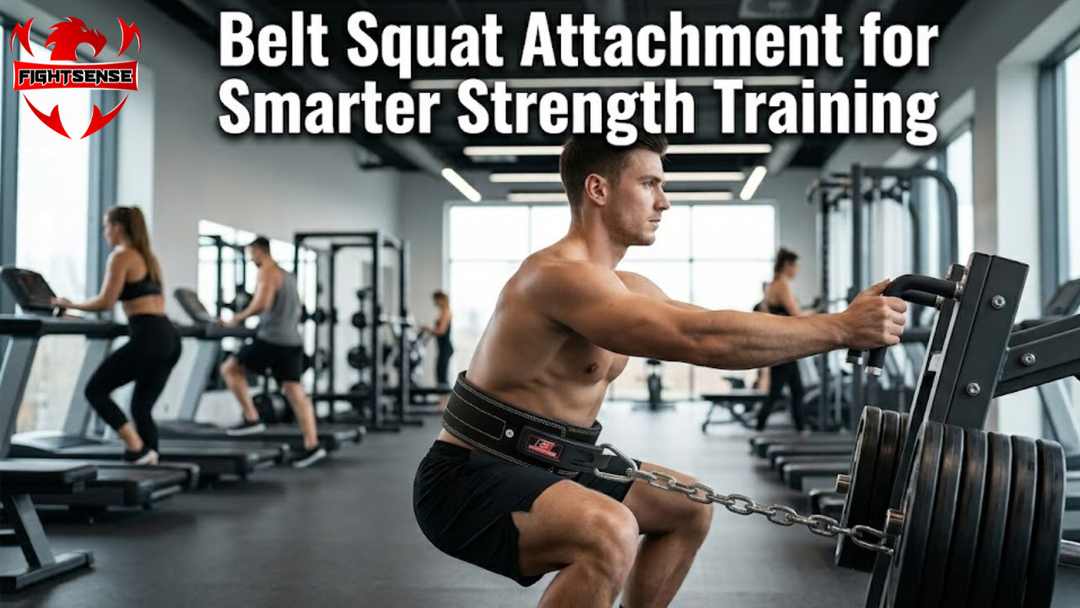
Belt Squat Attachment for Smarter Strength Training
Belt squat attachment is a powerful training tool for anyone who has ever struggled with heavy squats leaving their lower back tired, sore, or overloaded. You’re not alone—this is exactly where it completely transforms lower-body training.
Instead of placing a heavy barbell on your shoulders, it shifts the load to your hips, allowing your lower body to work just as hard—if not harder—while your spine gets a much-needed break.
For modern lifters, athletes, and fitness enthusiasts, adding proper support gear like the Fightsense Weight Lifting Belt or the Fightsense Premium Lever Belt can enhance stability, improve control, and provide extra comfort during heavy training sessions, making workouts safer, stronger, and more effective overall.
What Is a Belt Squat Attachment?
A belt squat attachment is a gym machine or rack attachment that allows you to perform squats with the weight attached to a dipping belt around your waist instead of on your shoulders.
This one little modification alters everything.
Instead of compressing your spine with a loaded barbell, the resistance is transferred directly to your lower body. Your quadriceps, glutes, hamstrings and calves still work quite hard – but your back is under far less strain.
That's why belt squats are currently commonly utilized in:
- Muscle development
- Weightlifting
- Conditioning for Athletics
- Rehabilitation training
- Functional training
- Home gym setups.
Many lifters now include belt squats as a core movement in their leg routine, especially during high-volume training phases.
Benefits You Will Notice Over Time:
With consistent use of the Belt squat training system, most lifters experience:
- Stronger legs
- Less back fatigue
- Improved squat volume
- Better recovery
- More balanced lower-body development
This is why many athletes now consider the Belt squat training system a permanent part of their training routine.
Why Are Athletes Switching to Squat belt workout system Training?
More and more athletes are turning to the belt squat attachment to substitute some of their squat training, as it provides a unique combination of safety and performance.
Less strain on your back
Traditional squats can put a lot of stress on the spine, but the Belt-supported squat training takes the pressure off your lower back.
This makes training safer, especially on high leg days.
Improved leg activation
Because your upper body is not used to balance the barbell, the Belt-supported squat training makes your legs do more of the work.
This leads to better quad and glute involvement.
Quicker Recovery
The Belt squat training system decreases the stress on the joints overall and lifters tend to recover faster between workouts.
That means you can train your legs more often.
Exercises You Can Do with Squat belt attachment:
The Belt squat training system is more versatile than most people realize.
Belt Squats Standard
This is the main movement and the basis of lower-body strength training.
Split Squats
The Squat belt workout system for split squats is excellent for correcting muscle imbalances and increasing stability.
Calf Raises (Standing)
You can load your calves significantly with no pressure on your spine.
Squats on the Walk
Advanced athletes utilize the Squat belt workout system for movement training and conditioning.
Recommended Gear for Belt Squat Training:
The right accessories can dramatically improve your performance and comfort during intense workouts.
Here are two smart additions for serious lifters.
Weight Lifting Belt for Better Stability:
During heavy training sessions, core stability becomes critical.
A quality lifting belt helps:
- improve bracing
- support posture
- create a stronger lifting position
The Fightsense Weight Lifting Belt is a great option for athletes who want extra support during demanding squat sessions.
Premium Lever Belt for Heavy Strength Training:
If you train seriously and lift heavy regularly, a lever belt can be a major upgrade.
Lever belts provide:
- consistent tightness
- quick adjustments
- superior support during maximal effort lifts
The Fightsense Premium Lever Belt is especially useful for:
- powerlifting
- heavy squats
- strength-focused workouts
Who Should Use a Squat belt attachment?
The Squat belt attachment is good for practically everyone but especially for:
- Power lifters
- Bodybuilders
- Sportsmen
- First-timers
- Back pain sufferers
The Squat belt workout system is often used by advanced lifters to boost training volume without exhausting recovery capability.
How to Use a Squat belt attachment Safely?
Proper technique is key to getting the most out of the Belt-supported squat training.
Maintain a steady position, manage the movement and don’t rush excessive reps.
And, Fightsense appropriate support gear can aid boost comfort and stability while lifting during strenuous workouts.
The belt squat attachment is a strong instrument, but like any tool, it performs best when utilized with correct technique and wise progression.
Final Thoughts:
The belt squat attachment is a smart way to build strength while reducing stress on your lower back. It helps you train effectively, recover better, and stay consistent with heavy workouts.
With proper support gear like the Fightsense Weight Lifting Belt or FightSense Premium Lever Belt, your training becomes more stable, controlled, and safer for long-term progress.