
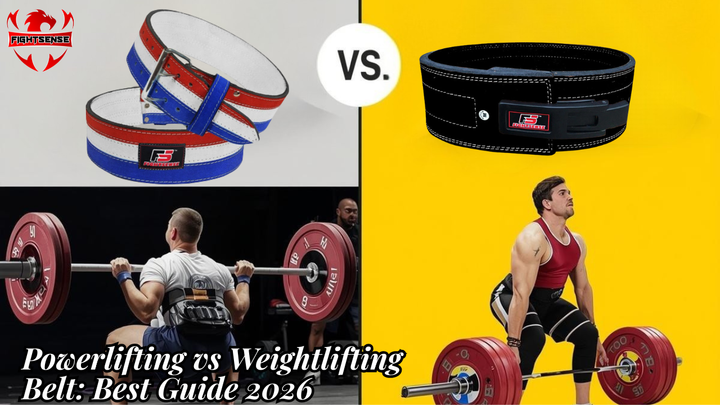
Powerlifting vs Weightlifting Belt: Best Guide 2026
18th Mar 2025
Powerlifting vs Weightlifting Belt—choosing the right belt is essential for performance, safety, and effective strength training. While both types provide spinal support and core stability, their designs and purposes vary. Powerlifting belts are wider and stiffer, ideal for heavy lifts like squats and deadlifts, whereas weightlifting belts offer greater flexibility, making them perfect for dynamic movements such as cleans and snatches.
In this guide, we’ll break down the main differences, proper uses, and advantages of these belts to help you select the best option for your lifting style and goals.
Key Highlights:
-
Weightlifting belts give more flexibility; powerlifting belts are stiffer.
-
Olympic lifts call for weightlifting belts; powerlifting belts are ideal for squats and deadlifts.
-
Whereas powerlifting belts give stability, weightlifting belts let mobility.
-
For maximal strength, pick a powerlifting belt; for dynamic lifts, pick a weightlifting belt.
What is a Powerlifting Belt?
A powerlifting belt is specifically designed for lifters who focus on raw strength. These belts are usually made of thick, stiff leather and have a uniform width, often around 13mm all around. This design provides maximum stability for the lower back and core.
Key Features:
- Thickness: Uniform thickness for maximal support.
- Material: Usually stiff leather or reinforced synthetic material.
- Buckle: Single prong, double prong, or lever for a tight fit.
- Stiffness: Less flexible to prevent spinal flexion under heavy loads.
When to Use a Powerlifting Belt:
Powerlifting belts are ideal for exercises like:
- Squats: Helps maintain proper posture and avoid forward lean.
- Deadlifts: Provides spinal stability when lifting maximal loads.
- Bench Press: Stabilizes the core and assists with leg drive.
Pros and Cons:
Pros:
- Maximum support for heavy lifts.
- Reduces spinal stress and injury risk.
Cons:
- Restricts mobility, making it less suitable for dynamic lifts.
- Can feel uncomfortable for some lifters if not properly fitted.
What is a Weightlifting Belt?
A weightlifting belt is designed for Olympic-style lifts like the snatch and clean & jerk, which require explosive power and full range of motion. These belts are often tapered at the front, allowing more freedom for bending, twisting, and rapid movement.
Key Features:
- Tapered Design: Thicker at the back for support, thinner at the front for flexibility.
- Material: Leather or flexible synthetic materials.
- Width: Slightly narrower than powerlifting belts, enhancing mobility.
- Flexibility: Allows dynamic lifts without restricting movement.
When to Use a Weightlifting Belt:
Weightlifting belts are ideal for:
- Snatch: Requires extreme mobility in shoulders, hips, and spine.
- Clean & Jerk: Explosive movement that needs freedom of motion.
- Olympic lifts with speed emphasis: Helps maintain technique while lifting heavy.
Pros and Cons:
Pros:
- Greater mobility compared to powerlifting belts.
- Supports dynamic movements without compromising technique.
Cons:
- Offers less support for extremely heavy, slow lifts.
- May not be ideal for maximal strength testing.
Powerlifting vs Weightlifting Belt: Detailed Comparison:
To make it easier to understand, here’s a detailed comparison table:
| Feature | Powerlifting Belt | Weightlifting Belt |
|---|---|---|
| Thickness | Uniform (~13mm) | Tapered (thicker back, thinner front) |
| Flexibility | Low | High |
| Material | Stiff leather or reinforced synth | Flexible leather or synthetic |
| Best Exercises | Squat, Deadlift, Bench Press | Snatch, Clean & Jerk |
| Support | Maximum spinal support | Moderate support |
| Mobility | Restricted | High |
| Adjustability | Buckle or lever system | Buckle or Velcro system |
| Target Audience | Strength athletes | Olympic weightlifters |
How to Choose the Right Belt for You?
Choosing the right belt isn’t just about the type—it’s about your goals, body type, and lifting style.
Consider Your Training Goals:
- Heavy squats and deadlifts → Powerlifting belt.
- Olympic lifts and explosive lifts → Weightlifting belt.
Comfort and Fit:
- The belt should be snug but not dig into your ribs or stomach.
- Adjustable belts with prongs, levers, or Velcro allow better fitting.
Training Frequency and Lifting Style:
- Daily heavy lifting → Stiffer, more durable powerlifting belt.
- Mixed lifting styles → Flexible weightlifting belt for mobility.
Personal Preference:
- Some lifters prefer stiffer support, while others prioritize flexibility.
- Trying both types can help you decide what feels best for your body.
Tips for Using a Belt Safely:
A belt is only helpful if used correctly. Incorrect use can limit your gains or even cause injury.
Proper Positioning:
- Place the belt just above your hip bones.
- Ensure it covers the lower back completely.
Tightness:
- Tight enough to create intra-abdominal pressure.
- Loose belts provide minimal support.
Breathing and Bracing:
- Take a deep breath into your abdomen, not chest.
- Brace your core against the belt before lifting.
Don’t Rely on It Completely:
- Core strength is still essential.
- Use the belt as a tool, not a crutch.
How to Care for Your Lifting Belt?
Proper care keeps your lifting belt safe and long-lasting, whether it’s a powerlifting or weightlifting belt.
1. Cleaning:
- Leather: Wipe with a damp cloth; avoid soaking.
- Synthetic: Wipe with mild soap and water.
2. Conditioning (Leather Only):
- Apply leather conditioner occasionally to prevent cracking.
3. Storage:
- Keep in a cool, dry place; hang or lay flat, don’t fold tightly.
4. Inspection:
- Check for cracks, fraying, or worn-out areas regularly.
5. Replacement:
- Replace if the belt loses support or shows excessive wear.
Common Lifting Belt Mistakes and How to Avoid Them:
Many lifters make mistakes that reduce belt effectiveness. Here’s what to watch out for:
1. Wearing the Belt Too Loose – Reduces intra-abdominal pressure and spinal support.
2. Using the Belt for Every Lift – Not all lifts need a belt; use it selectively for heavy or risky movements.
3. Incorrect Placement – Too high or too low placement reduces support and can cause discomfort.
4. Ignoring Core Training – Strong abs and lower back complement belt support and reduce injury risk.
How Lifting Belts Boost Athletic Performance?
Using a properly fitted lifting belt can significantly enhance an athlete’s performance. By providing extra core stability, belts allow athletes to lift heavier weights with better form, reduce the risk of lower back injuries, and maintain proper posture during complex lifts.
For strength athletes, powerlifters, and Olympic lifters alike, a belt helps generate more intra-abdominal pressure, improving overall power output. In short, the right belt doesn’t just protect—it actively supports athletes in reaching new personal bests and building confidence in every lift.
Fightsense: Belts Built for Every Lifter:
These belts are crafted for both powerlifting and weightlifting, combining durability, comfort, and performance. Fightsense designs provide the right support for heavy lifts while allowing mobility for dynamic movements, helping athletes train safer, lift smarter, and reach their goals.
Whether you’re a beginner or an experienced lifter, these belts are built to adapt to your style and intensity. Plus, the adjustable fit and high-quality materials ensure long-lasting performance for every training session.
Shop Now !
Final Thoughts:
Your lifting technique and training goals ultimately determine whether a powerlifting vs weightlifting belt is right for you. If your focus is on maximal strength and heavy lifts, a powerlifting belt provides the stability and support you need.
Conversely, if mobility and explosive Olympic-style lifts are your priority, a weightlifting belt allows for greater range of motion without sacrificing core support.
FAQs:
1. Can I use a powerlifting belt for Olympic lifts?
Powerlifting belts offer stability for heavy squats and deadlifts but limit mobility, so they’re less suited for snatches or clean & jerks.
2. How tight should a weightlifting belt be?
Snug but not restrictive—enough to support your core while allowing explosive, dynamic movement.
3. Do belts replace core training?
No. Belts aid performance but core strength is still essential.
4. Can beginners use lifting belts?
Yes, but focus on technique first; using a belt too early may mask weaknesses.
5. How do I choose the right belt?
Know your lifts. Understanding the Powerlifting vs Weightlifting Belt difference helps you pick stability for heavy lifts or mobility for dynamic exercises.
Note:
This blog is just for informational needs. Before altering your lifting program, always see a professional.