
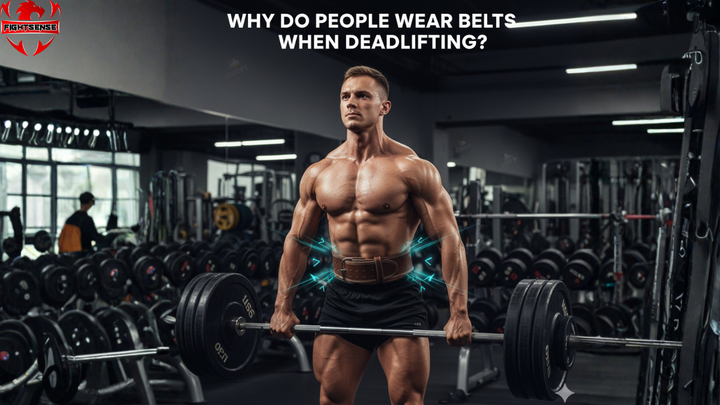
Why Do People Wear Belt When Deadlifting (Complete Guide)
10th Nov 2025
Why Do People Wear Belt When Deadlifting? Among compound exercises, deadlifting is the best since it increases confidence, strength, and muscle. However, you may be wondering why people wear belt when deadlifting if you've ever seen lifters tightening hefty belts prior to a strong pull. So, what role does a belt play in deadlifting?"
This comprehensive tutorial covers every aspect of lifting belts, including their function and how to use them properly. It also contains my own experience with the Fightsense Belt, which revolutionized my training.
Keynotes:
- Lifting belts protect the spine and improve stability.
- In order to transfer power efficiently, they increase intra-abdominal pressure.
- For best outcomes, bracing and technique must be done correctly.
- Instead of depending on belts, build your core strength organically.
- Fightsense belts provide dependable power support, comfort, and longevity.
What Is a Deadlift Belt?
A supportive leather or nylon strap that is fastened securely around your waist is called a deadlift belt. Its function during heavy weight lifting is straightforward: to protect your lower back and support your core.
Lifting Belt Types:
Lifting weights Belts: same width throughout; perfect for squats and deadlifts.
Belts for weightlifting: slightly tapered front for increased comfort and flexibility.
Both varieties aim to strike a balance between mobility and support.
Why Deadlifters Wear Belt:
Belts are primarily worn while deadlifting in order to improve core stability and lessen spinal strain. During a lift, pressing your abs against the belt raises internal pressure, giving your spine a stronger base.
Top Benefits:
- Stronger core engagement
- Better posture and spinal alignment
- Reduced risk of injury
- Increased power and performance
- Greater lifting confidence
So, belts aren’t a sign of weakness — they’re a tool for strength and safety.
How Does a Belt Help Deadlift?
How can a belt aid in deadlifting, you ask?
The intra-abdominal pressure (IAP) is the scientific basis.
This internal pressure acts as an internal brace to support your spine as you take a deep breath and push your abs outward against the belt.By preventing back rounding, this additional rigidity aids in maintaining good posture and effectively transferring force to the barbell.
To put it briefly, a belt makes lifting heavier, safer, and more form-efficient.
My First Experience With the Fightsense Belt:
Prior to utilizing the Fightsense Weightlifting Belt, I frequently experienced back pain from big deadlifts. My confidence would falter at maximum lifts, and I was unable to sustain complete core tension.
Everything changed the first time I used the Fightsense Belt. The high-quality leather provided ideal core bracing and felt both comfortable and supportive. My lifts got stronger and smoother, and my spine felt safe.
I now wouldn't hit any heavy pull without the Fightsense Belt, which offers the comfort, stability, and durability that every lifter requires.
When to Use and When Not to Use a Belt
Use a Belt When:
- You’re lifting 80–90% of your 1-rep max.
- Performing compound lifts (deadlifts, squats).
- Competing in strength or powerlifting events.
Avoid a Belt When:
- Doing warm-up or lightweight sets.
- Training core or isolation exercises.
- You’re still learning basic lifting form.
Balance is key — the belt supports you, but it shouldn’t replace your core strength.
Common Belt Mistakes to Avoid
Even if you know why people wear belt when deadlifting, avoid these common mistakes:
- breathing restrictions due to wearing it too tight.
- wearing it loosely and without any support.
- putting it on the waist too high or too low.
- Save it for big sets and use it on every lift.
How to Wear and Brace With a Belt Properly:
- The belt should be positioned slightly over your hip bone.
- Tighten it until the belt and your stomach are separated by two fingers.
- Before the lift, inhale deeply.
- Don't suck in; instead, push your abs outward against the belt.
- For the duration of the lift, keep your core braced and apply that pressure.
The belt works really well because of this bracing method.
Choosing the Right Belt for Deadlifts:
When purchasing your first belt, take into account the following factors:
- Material: Nylon (soft, flexible) or Leather (stiff, supporting).
- 4 inches is the typical width for most lifters.
- Type of Closure: Velcro, prong, or lever, depending on personal taste.
Long-lasting performance and safety are guaranteed with a high-quality belt like Fightsense, which is also safe for those with back issues.
FAQs:
1. For what reason do individuals wear belt when deadlifting?
to enhance safety, posture, and stability when performing heavy lifting.
2. How can a belt aid in deadlifting?
by raising intra-abdominal pressure in order to keep the core and spine stable.
3. Is a belt necessary for novices?
Not first; instead, concentrate on mastering form and technique.
4. Can wearing a belt weaken your core?
Use belts sparingly and in conjunction with core-strengthening activities.
5. What is the ideal belt thickness or size?
For deadlifts, a 4-inch belt that is 10 or 13 mm thick is ideal.
6. What is the ideal belt tightness?
loose enough to allow for deep breathing but tight enough to apply pressure.
7. Can squats and deadlifts be performed with the same belt?
Yes, although for increased mobility during deadlifts, some people prefer narrower belts.
8. When is it inappropriate for me to wear a belt?
During ab-focused exercises, accessory lifts, or warm-ups.
9. What is the lifespan of a leather belt such as Fightsense?
Because it is designed to withstand heavy use, it can easily last years with the right care.
Final Thoughts:
So, why wear a belt when deadlifting? It provides core stability, spinal support, and boosts power. A belt helps you brace, maintain posture, and lift confidently. Remember, it’s a tool, not a replacement for proper technique and core strength. A reliable belt like the Fightsense Weightlifting Belt is a smart investment for serious lifters.
Thank You / Closing Paragraph (JCGH Paragraph):
Thank you for reading this guide on why do people wear belt when deadlifting and how they help. Whether beginner or advanced, train smart, lift safely, and stay consistent — every rep and belt tighten brings you closer to your goals!
Disclaimer:
This article is for informational purposes only. Consult a fitness coach or healthcare professional before heavy lifting, as improper use can cause injury.