
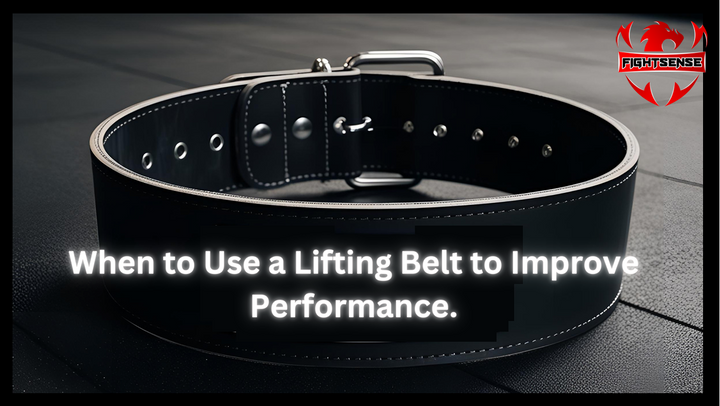
When to Use a Lifting Belt to Improve Performance
18th Mar 2025
You’re not alone if you’ve ever wondered when to use a lifting belt at the gym. Many lifters question if they need one and when it’s appropriate to wear it.
Knowing when to use a lifting belt can help protect your back, improve form, and boost strength gains. This guide covers what a lifting belt is, how to use it, its benefits, and when to include it in your workout routine.
Key Highlights
-
Discover when you should support your lower back with a lifting belt.
-
Analyze the benefits and drawbacks of donning a lifting belt.
-
Look at correct belt placement and application techniques.
-
Find out who should and shouldn't be using a lifting belt.
What Is a Lifting Belt?
A lifting belt is a supporting piece of gym equipment meant to brace the core and spine during large lifts. Usually composed of leather or nylon, it wraps around your waist and offers outside pressure to support intra-abdominal pressure maintenance.
When to Use a Lifting Belt in the Gym
The main concern is: When should one really put on that belt? These are the main times when wearing a lifting belt makes sense.
1. During either a maximal or near-maximal lift
- Deadlifts, heavy squats, or overhead presses over eighty percent of your one-rep maximum.
- When large weights call for additional stability of the spine.
2. For Strength Gains: Lifting
- Programs in powerlifting and strength training emphasizing maximum effort lifts.
- Helps keep form while lifting really large weights.
3. Should Past Lower Back Problems Exist
- Provides much more protection when the lower back is weak.
- But see a professional before depending on a belt.
4. Regarding Advanced Lifters
- Those who already have solid core muscles and know bracing techniques.
- Before donning a belt, beginners should concentrate on building core strength.
Who Should Not Use a Lifting Belt?
Beginners who are still learning how to do things right
If you depend too much on a belt at first, it can stop your core muscles from developing properly.
Lifters who have heart problems
Raising the pressure inside the abdomen may raise blood pressure. Talk to a doctor beforehand.
During training that is functional or dynamic
CrossFit, HIIT, and bodyweight training are examples of workouts that may not benefit from a belt and may even limit natural mobility.
How to Pick the Best Lifting Belt: The material is important. Leather belts are better for heavy lifting since they are stiffer. Nylon belts are more flexible and good for general support.
A conventional 4-inch width evenly supports the core. For powerlifting, thicker belts (10mm–13mm) are better.
There are three types of buckles: lever, prong, and Velcro. Each one has a distinct level of tightness and ease of usage, based on what you require for training.
Where and How to Use a Lifting Belt Properly
Where Should I Wear It?
-
Around your midsection, cover your lower back and abdomen.
-
Above your hip bones but below your ribcage.
How To Make Use Of It
-
Before you tighten the belt, brace your core.
-
Fasten it tight enough to support but free enough to breathe.
-
Use it just for designated hard lifts; it is not for whole workouts.
Advantages of Using a Lifting Belt
-
Raises intra-abdominal pressure, therefore stabilizing the spine.
-
Lowers the likelihood of lower back problems with big lifts.
-
Enhances lifting performance, thereby enabling you to raise greater weight.
-
Under heavy load, promotes improved body mechanics and form.
Mistakes to Avoid When Using a Lifting Belt
-
There is nothing supporting loose belts. Too tight can limit mobility and respiration.
-
Applying it to every kind of activity.
-
Lesser lifts and isolated drills don't call for it.
-
Ignoring basic bracing methods.
-
Before tightening the belt, always first work your core muscles.
-
Skipping the warm-ups.
-
A belt cannot substitute the requirement of a suitable warm-up.
The Science Behind Intra-Abdominal Pressure (IAP) and Lifting Belts
A lifting belt doesn't support your body; it helps your body make one. When you brace your core and push against the belt, it makes the pressure inside your abdomen (IAP) go up. This pressure inside your body keeps your spine stable, like a cushion packed with air that protects your lower back.
Why this is important:
- IAP makes lifting easier on your spine.
- Helps your core send force to your arms and legs more effectively.
- Important for keeping your posture when doing complicated exercises.
To get the most out of IAP, you need to do more than just tighten your belt. You also need to actively brace your core. Even the best belt won't help if you don't brace it right.
Lifting Belt vs. Core Training: What Should Come First?
A lifting belt can help you lift heavy things, but it can't replace a strong core. Using a belt too soon will actually slow down your long-term growth.
First, work on constructing your base:
- Before utilising a belt, beginners should learn how to do planks, bird dogs, and bodyweight squats.
- Add core workouts to your routine 2–3 times a week to go along with using the belt.
- Use the belt as an extra layer of support, not your main one.
Training to build your own muscular "belt" will help you make greater progress and lower your chance of injury, even when you're not wearing a belt.
Lifting Belt Myths You Should Stop Believing
Gym-goers are confused by a number of false beliefs regarding lifting belts. Let's address the most prevalent ones:
- Myth 1: Belts Make You Weaker: Wearing belts weakens you In actuality, belts improve your capacity to brace during large lifts rather than replacing your core.
- Myth 2: Only Powerlifters Need Belts: Belts Are Only Necessary for Powerlifters Although powerlifters gain the most from them, bodybuilders and other lifters can also safely use belts to achieve maximum lifts.
- Myth 3: Belts Prevent All Injuries: While a belt lowers the risk, it cannot take the place of core training, warm-ups, or appropriate form.
- Myth 4: Belts Should Be Worn During Every Workout: This is untrue; they are only appropriate for exercises that require heavy compound lifts.
Lifters can use belts effectively and avoid over-relying on them by dispelling these fallacies.
How to Break In and Maintain Your Lifting Belt
If you take good care of your lifting belt, it can last for many years. Here's how to maintain its best condition:
- Breaking In: At first, leather belts may feel rigid. Over time, they get softer with regular usage, gentle bending, and even the application of leather conditioner.
- Cleaning: After every workout, wipe away the chalk and perspiration. Avoid soaking leather; lightly hand wash and let dry nylon.
- Storage: Store it somewhere dry and cool. Don't expose it to the sun or a wet gym bag for an extended period of time.
- Check for Wear: To provide optimal support and safety, periodically examine the material, stitching, and buckle.
Your lifting belt will remain dependable, comfortable, and supportive for every strenuous workout if it is properly maintained.
When to Use a Lifting Belt in the Gym
When performing big compound movements, such as overhead presses, deadlifts, or squats, if you're lifting 80% or more of your one-rep maximum, it makes sense to wear a lifting belt. It helps preserve appropriate form during strength-focused training sessions and offers the spinal support required for stability under extreme stress.
Who Should Not Use a Lifting Belt
Using a belt too soon will hinder core development for beginners who are still learning proper form. Additionally, belts may raise blood pressure or limit natural mobility, so those with heart issues or those doing dynamic workouts like CrossFit or HIIT should avoid them.
Shop Now !
Conclusion
In your strength training, knowing when to wear a lifting belt might alter everything. It protects your back, gives necessary support during large lifts, and may improve performance. Recall, though, it's not a magic bullet.
Maximizing this gym item depends mostly on good technique, core strength, and knowledge of when a belt is suitable.
Disclaimer
This page serves only for informative needs. Before changing your exercise program or utilizing a lifting belt, always speak with a qualified fitness professional or healthcare provider.
FAQ:
-
Shoulder innovators wear a lifting belt?
No, before thinking about a belt, novices should concentrate on developing core strength and mastering correct lifting techniques.
-
Could I use a lifting belt for every exercise?
Not at all. Only big compound lifts like squats, deadlifts, and overhead presses should a lifting belt be advised for. Neither isolated exercises nor cardio call for it.
-
The lifting belt should be tightened just how tightly?
It should be just right to give support without limiting your breathing.
-
Using a lifting belt will help me to raise greater weight.
Indeed, because of better core stability and intra-abdominal pressure, many lifters can manage heavier weight when wearing a belt.