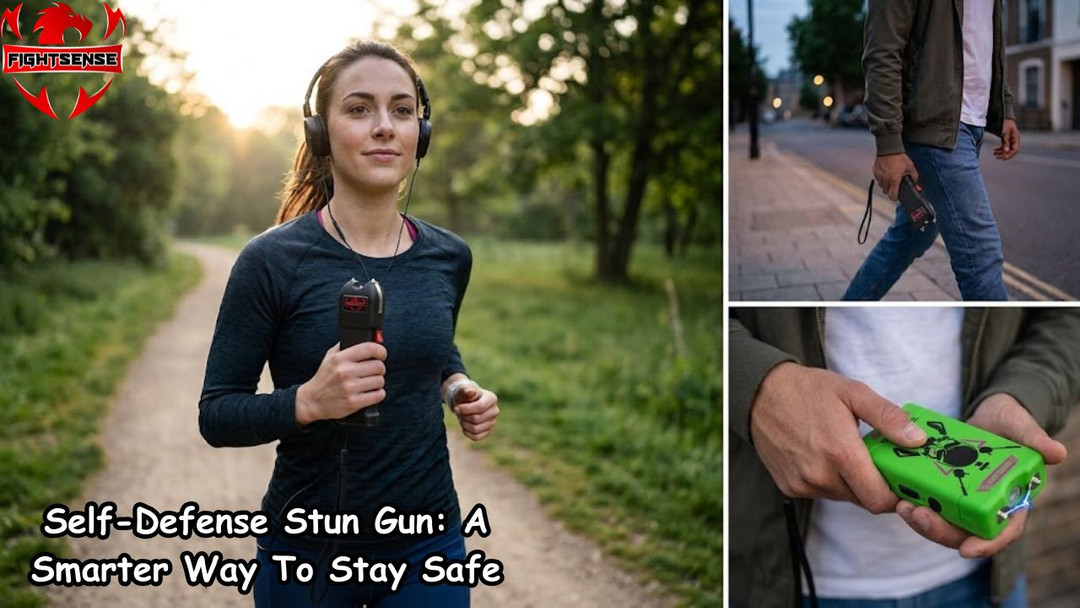
Self-Defense Stun Gun: A Smarter Way To Stay Safe
Whether you are jogging early in the morning, walking home after a late workout, or simply running everyday errands, personal safety deserves thoughtful planning. A self-defense stun gun can be one option people consider as part of a broader personal safety plan.
At FightSense, we focus on practical personal safety products designed to fit into everyday routines. The goal is not to replace awareness or responsible decision-making, but to give individuals another option to consider when planning how they want to stay prepared.
Why Personal Safety Belongs in Your Fitness Routine
Fitness helps build strength, endurance, and confidence, but being prepared also means thinking about your surroundings.
Outdoor runners, cyclists, commuters, and people who exercise during early or late hours may sometimes find themselves in less populated areas. Simple habits such as staying aware of your surroundings, keeping your phone accessible, sharing your route with someone you trust, and avoiding unnecessary isolated areas can all contribute to better personal safety.
Some people also choose to carry a personal safety device, such as a Less-lethal electrical device, where permitted by law.
The important point is that a safety device should complement good awareness and avoidance habits rather than replace them.
How a Self-Defense Electroshock Device Works
A stun gun is a handheld electrical self-defense device designed to deliver an electrical discharge when its electrodes make contact with a person.
The electrical discharge can cause pain and involuntary muscle reactions. However, the effects can vary depending on several factors, including the individual, the device, the duration and location of contact, and other circumstances.
For this reason, a personal safety device should never be viewed as a guaranteed method of stopping an attacker.
Many self-defense devices also produce a visible electrical arc and a loud sound when activated. These features may draw attention or discourage someone from approaching, but no device can guarantee how another person will react.
For additional information about how electrical self-defense devices work, see our guide to high-voltage electroshock devices.
Stun Gun vs. TASER: Understanding the Difference
Although the terms are sometimes used interchangeably, stun guns and TASER-type devices are not the same thing.
|
Feature |
Self-Defense Stun Gun |
TASER-Type Device |
|
How it works |
Electrodes generally need to make contact with the subject |
Uses probes/electrodes designed to make contact from a distance |
|
Effective distance |
Primarily close-contact |
Designed for use from a distance, depending on the specific model |
|
Portability |
Often compact and easy to carry |
Models vary in size and design |
|
Power source |
Typically rechargeable or battery-powered |
Depends on the specific device |
|
Best suited for |
People looking for a compact electrical self-defense option |
Users seeking a device designed for greater distance, where legally available |
The exact specifications, operating distance, and legal requirements can differ significantly between products. Always check the manufacturer's information for the specific model you are considering.
Choosing the Right FightSense Stun Gun
Choosing a personal safety device is about finding a design that fits your routine and understanding how to operate it responsibly.
When comparing a FightSense Electroshock device, consider factors such as:
- Size and portability: A compact design may be easier to carry during walks, workouts, or daily activities.
- Grip and handling: Look for a design that feels secure and comfortable in your hand.
- Controls: Make sure you understand the safety mechanism and activation controls before carrying the device.
- Charging: Check the product instructions for the correct charging method and recommended charging schedule.
- Additional features: Some models may include features such as an LED flashlight, rechargeable battery, safety switch, or wrist strap.
- Storage: Keep the device stored safely and in accordance with applicable laws and product instructions.
How to Carry and Handle a Self-Defense Stun Gun Responsibly
Using any self-defense device responsibly starts before an emergency occurs.
1. Keep It Accessible
If you legally choose to carry a personal safety device, keep it somewhere accessible rather than buried beneath other items in a bag.
2. Understand the Controls
Read the manufacturer's instructions and become familiar with the safety switch, activation button, charging port, and other controls before carrying the device.
3. Prioritize Avoidance and De-escalation
Whenever possible, create distance from a threatening situation and move toward a populated or secure location. Verbal de-escalation and leaving the area may be safer options than physical confrontation.
4. Follow the Product Instructions
Different Less-lethal electrical devices can have different designs and operating procedures. Follow the instructions supplied with your particular model rather than relying on assumptions about how every electroshock device works.
5. Treat the Device as a Safety Tool, Not a Guarantee
An electroshock device cannot guarantee that a person will stop, retreat, or respond in a particular way. If a situation becomes dangerous, prioritize getting away and contacting emergency services or law enforcement when appropriate.
FAQs:
Q: Is an electrical self-defense device legal to carry?
The answer depends on where you live and where you intend to carry it. Laws can vary by state and local jurisdiction, so check the current regulations that apply to you before purchasing or carrying an electrical self-defense device.
Q: Can an electroshock device cause serious injury?
Although these devices are generally marketed as less-lethal self-defense products, they can still cause injury. Risks may depend on the individual, circumstances, and manner of use. Never treat an electroshock device as completely risk-free.
Q: Can an electrical self-defense device be used through clothing?
Performance can vary depending on the device, clothing, contact, and other circumstances. Do not assume that an electrical defense tool will work through every type or thickness of clothing.
Q: How often should a FightSense personal safety device be charged?
Charging requirements can differ between models. Follow the charging instructions provided with your specific FightSense product rather than using a general charging schedule for every personal safety device.
Q: Are electroshock devices completely non-lethal?
Electrical self-defense devices are generally classified and marketed as less-lethal self-defense products, but this does not mean they are risk-free. Electrical devices can cause injuries, particularly under certain circumstances. Use only as permitted by law and follow the manufacturer's safety instructions.
Q: Can I take an electrical self-defense device on an airplane?
Do not assume that an electrical defense device can be carried on an aircraft or transported in checked baggage. Airline, airport, and government regulations may restrict these products, and rules can vary depending on the country and carrier. Always check the current requirements with the relevant airline and aviation authorities before traveling.
Final Thoughts:
Personal safety starts with awareness, preparation, and responsible choices. A self-defense stun gun can be one part of your safety plan, but it should not be considered a guarantee of protection. Always understand your local laws, follow the manufacturer’s instructions, and choose a device that fits your needs.
Disclaimer:
This article is for general informational purposes only, and stun gun laws may vary by state or local jurisdiction, so always check the current laws before purchasing, carrying, or using one.