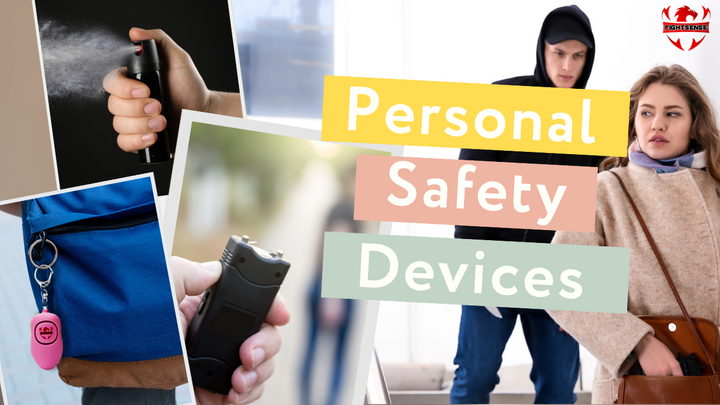
Personal Safety Devices are essential tools designed to protect individuals from potential harm, offering confidence, rapid response, and a strong sense of security. These devices include pepper spray, personal alarms, stun guns, self-defense keychains, and whistles — all aimed at deterring or preventing attacks.
The most effective gadgets provide immediate protection and peace of mind, such as pepper spray to incapacitate threats, loud alarms to draw attention, and wearable security devices for discreet yet reliable safety.
Together, these tools empower users with both physical defense and psychological reassurance, enhancing safety in everyday situations.
Importance of Carrying Personal Safety Devices
Personal safety is one of the most fundamental needs of every human. Domestic violence remains a critical issue in the United States, affecting millions of individuals each year and impacting various aspects of their lives. there are some alarming statistics on violence and violent crime according to The National Coalition Against Domestic Violence (NCADV) as of July 21, 2024:
- Approximately 24 people per minute fall victim to rape, physical violence, or stalking by an intimate partner, totaling over 12 million people annually.
- The statistics reveal that 29% of women and 10% of men experience these forms of abuse, with severe physical violence affecting 1 in 4 women and 1 in 7 men.
- Psychological aggression also significantly impacts nearly half of all women and men. The profound repercussions of such abuse, including increased risks of PTSD, depression, and suicidal thoughts, highlight the essential need for personal safety.
Additionally, domestic violence's impact on workplace productivity and the heightened risk of homicide when firearms are involved further underscores the critical need for comprehensive support and intervention strategies. Ensuring personal safety is not just a matter of physical protection but also crucial for mental and emotional well-being.
Personal Safety Devices:
Pepper Spray
A non-lethal self-defense tool that releases a spray containing oleoresin capsicum, which causes temporary blindness, difficulty breathing, and intense burning sensations in the eyes and skin.
Pros:
• Easy to Carry: Compact and portable, fitting conveniently in a bag or pocket.
• Effective: Causes significant discomfort and incapacitation to an attacker.
• Non-lethal: Designed to disable temporarily without causing permanent harm.
Cons:
• Requires Close Range: Must be used within a few feet of the attacker to be effective.
• Wind Sensitivity: Wind can blow the spray back towards the user.
• Potential for Misuse: If not used correctly, it can affect the user or bystanders.
A handheld device that delivers a high-voltage electric shock to an attacker, causing intense pain and temporary muscle paralysis.
Stun Gun
Pros:
• Immediate Incapacitation: Quickly disables an attacker by causing pain and muscle contractions.
• Easy to Use: Simple to operate with a straightforward activation process.
Cons:
• Close Proximity Required: Must be used within arm’s reach to be effective.
• Legal Restrictions: Use and possession may be restricted or prohibited in some areas.
Personal Alarm
A small, portable device that emits a loud, attention-grabbing sound when activated, helping deter attackers and alert others nearby.
Pros:
• Easy to Carry: Compact and fits easily in a pocket or purse.
• Non-lethal: No risk of physical harm to the user or the attacker.
• Effective in Drawing Attention: Loud noise can attract help and scare off attackers.
Cons:
• Limited Deterrent: May not be effective against determined attackers who are not easily frightened.
• Relies on Presence of Others: Effectiveness depends on people being nearby to hear the alarm.
Tactical Flashlight
A high-intensity flashlight designed for self-defense, often featuring a strobe function that can disorient and temporarily blind an attacker.
Pros:
• Dual-Purpose: Provides illumination while also serving as a self-defense tool.
• Disorienting Effect: The strobe light can confuse and distract an attacker.
• Non-lethal: Safe to use without causing permanent harm.
Cons:
• Close Range Needed: Most effective at short distances.
• Varied Effectiveness: Impact may differ depending on the attacker’s response.
Keychain Weapon
A small, lightweight self-defense tool that attaches to a keychain and is used to strike pressure points or sensitive areas on an attacker.
Pros:
• Discreet: Easily carried as part of your keychain, making it unobtrusive.
• Easy to Carry: Small and convenient to have on hand.
• Effective with Training: Very effective when used correctly with proper technique.
Cons:
• Requires Training: Effective use demands an understanding of pressure points and self-defense techniques.
• Close-Range Use: Best used in close quarters and may require physical contact with the attacker.
By understanding and choosing the right personal safety devices—and learning how to use them safely—individuals can enhance their security and be better prepared to protect themselves in various situations.
Conclusion
In a world where personal safety cannot be taken for granted, carrying the right self-defense tools can make a life-changing difference. Personal Safety Devices empower you to react quickly, deter threats, and protect yourself with confidence — whether you're walking alone, commuting, or navigating daily routines.
By choosing the right device, understanding how it works, and staying aware of your surroundings, you take control of your safety and peace of mind. Remember, preparation is protection — and your well-being is worth prioritizing every day.
Stay alert. Stay equipped. Stay safe.
FAQs
1. Are personal safety devices legal everywhere?
Laws vary by country and state. Always check local regulations before carrying.
2. Do personal alarms work at night?
Yes — loud alarms draw attention anytime, day or night.
3. How long does pepper spray last?
Most sprays expire within 2–4 years. Check the date regularly.
4. Can I carry a stun gun while traveling?
Not always — some states and airlines prohibit them. Verify rules before travel.
5. Do I need training to use these devices?
Basic training helps, especially for tools like stun guns and kubotans.