
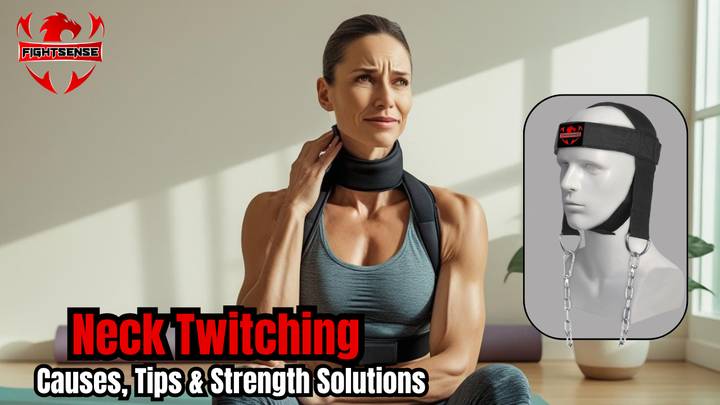
Neck Twitching: Causes, Tips & Strength Solutions
19th Jun 2025
If you’ve ever felt your neck suddenly twitch or spasm, you’re not alone. Neck twitching is often caused by stress, poor posture, or muscle fatigue. While usually harmless, frequent twitching can signal tension or strain.
Understanding its causes and simple ways to relieve it can help you restore comfort, relax your muscles, and prevent future episodes naturally.
Keynotes
- It's typical for necks to twitch, and it usually has to do with tired muscles or bad posture.
- The Fightsense neck harness safely strengthens stabilizer muscles.
- To stop twitching, you need to drink enough water, eat enough food, and take breaks.
- Regular training and care bring back control and keep it from happening again.
Why Is My Neck Muscle Twitching?
Twitching of neck often comes from small muscle fibers firing involuntarily due to stress, fatigue, or imbalances in the body. Below are the most common causes of neck muscles twitching, explained clearly:
1. Muscle Fatigue from Poor Posture or Repetitive Motion
- If you sit with your head inclined forward for a long time, your neck muscles may hurt.
- Over time, this makes you feel tired and gives you twitches that you can't stop.
- Doing the same things over and over, like working out, can also make your muscles tired.
2. Nerve Irritation or Misfiring Signals
- Nerves in your neck can get pinched or hurt, especially near the cervical spine.
- This provides mixed signals to the muscles, which makes them contract even when the person doesn't want them to.
- This is generally caused by modest abnormalities with the discs or improper sleeping patterns.
- An imbalance of electrolytes
3. Electrolyte Imbalance
- Muscles may not work right if you don't have enough calcium, potassium, or magnesium.
- These minerals tell muscles when to tighten and when to relax.
- If you don't drink enough water, your muscles may spasm, cramp, or twitch if you don't drink enough.
4. Stress and Anxiety
- When you're worried about anything, your nerve system works too hard, especially in your neck and shoulders.
- This stress can make muscles spasm without hurting them.
- A lot of people twitch when they're nervous or after a long, stressful day.
5. Lack of Rest or Overtraining
- If the stabilizer muscles in the neck don't get enough rest, they stay bloated and agitated.
- When you work out too much without taking a break, you can have microtears, which can make you twitch when you're not working out.
- Not getting enough sleep makes the nervous system more active, which makes twitching more likely.
Tip:
To reduce jerking as much as you can, work on your posture, drink a lot of water, consume foods that are high in minerals, and use the Fightsense neck harness to train your neck properly.
This helps you establish strength and balance in your deep muscles, which stops twitching on its own over time.
What Causes Neck Muscle Twitching?
Here are the primary triggers for neck muscles twitching:
- Tech neck can happen if you spend a lot of time on your phone or computer.
- Pillows that don't support you and throw off your muscle balance
- Dehydration makes muscles less strong.
- If you don't eat enough calories or drink too much coffee
- Muscles in the neck that are too weak to stay steady
The Fightsense neck harness makes muscles stronger and more regulated, which inhibits them from twitching.
How the Fightsense Neck Harness Helps
The Fightsense neck harness is designed for precision resistance training of neck muscles:
- Targeted stimulation of deep stabilizer muscles
- Evened out muscle tension and took care of twitch causes
- Getting stronger slowly without going too far
- Help with your posture when you work or work out
- Regular exercise helps with both jerks and stiffness.
Two to three times a week is a reasonable amount of time to use it to stop your neck from twitching and to keep it healthy in the long run.
Best Exercises to Reduce Neck Twitching
These 5 exercises reduce twitching of neck and improve muscular control:
1. Neck Flexion with Resistance
- Make sure the Fightsense neck harness is safe.
- Gently tuck your chin while pushing back against the pressure.
- Do three sets of 12 repetitions.
2. Neck Extension Control
- Pull your head back slowly against the harness.
- 3 sets of 10 reps of even tension are needed.
3. Lateral Neck Raises
- Use resistance to lift your head to the side.
- Fifteen reps on each side can help with neck muscles twitching
4. Isometric Neck Holds
- For 10 seconds, press your head against your hand in each direction.
- Good for keeping neuromuscular control stable
5. Neck Mobility Circles
- Slowly turn your head to the left and right.
- Keeps the nerve pathways fluid and receptive.
Use these exercises to gain control, stop twitching, and avoid problems in the future.
Lifestyle Tips to Beat Neck Twitching
Don't allow your neck twitch ruin your day! Here's how to lower it naturally:
- Drink 2–3 liters of water with electrolytes every day to stay hydrated.
- Use pillows that support your spine to keep it in the right position.
- Every 45 minutes, take a break from the screen
- Eat foods high in magnesium, such bananas, almonds, and leafy greens.
- Use breathing or gentle yoga to deal with stress
These healthy practices, along with the Fightsense neck harness exercise, can stop neck muscles twitching for good.
Tips to Manage Neck Twitching
- Stay Hydrated: Drink enough water daily to maintain electrolyte balance.
- Stretch Regularly: Gentle neck stretches reduce tension and improve flexibility.
- Reduce Stress: Breathing exercises, meditation, and relaxation techniques help minimize twitching.
- Limit Stimulants: Cutting down on caffeine and energy drinks may reduce spasms.
- Improve Posture: Proper sitting and sleeping positions prevent muscle strain.
- Use Heat or Cold Therapy: Applying warm compresses or ice packs may relieve discomfort.
Strength Solutions for Neck Twitching
Strengthening the neck muscles helps prevent repeated twitching.
Some effective solutions include:
- Neck Resistance Training – Using resistance bands or neck harnesses to build strength.
- Isometric Exercises – Pressing your head gently against your palm without moving improves stability.
- Neck Extensions & Flexions – Controlled forward, backward, and side movements strengthen supporting muscles.
- Core Engagement – A strong core reduces pressure on the cervical spine, easing twitching.
- Professional Equipment – Tools like the FightSense neck harness provide targeted strengthening.
When to See a Doctor
While most cases of twitching of neck are harmless, medical advice may be necessary if:
- Twitching persists for several weeks
- It’s accompanied by pain, weakness, or numbness
- You experience severe headaches or dizziness
- Muscle spasms spread to other areas of the body
Conclusion
Neck twitching might seem minor, but it’s your body’s way of asking for better care. The combination of posture correction, hydration, relaxation, and targeted neck strengthening can make a huge difference.
With FightSense neck training tools, you can build resilience, restore comfort, and take full control of your neck health, naturally and effectively.
Disclaimer
This content is for informational purposes only and not a substitute for medical advice. Always consult your healthcare provider before starting any exercise or treatment plan.
FAQs
Q1: Is twitching of neck a sign of something serious?
Usually not. Most neck twitching comes from muscle fatigue, stress, or minor nerve irritation.
Q2: Can poor posture cause twitching of neck?
Yes. Constantly hunching or looking down strains the muscles, leading to twitches.
Q3: How can I stop twitching of neck fast?
Try gentle stretching, hydration, and a warm compress. If it persists, see a doctor.
Q4: Can neck exercises help prevent twitching?
Absolutely! Strengthening the muscles with FightSense neck training gear reduces spasms and improves control.
Q5: Does anxiety make neck twitching worse?
Yes, emotional stress increases muscle tension, which can trigger or worsen twitching.