
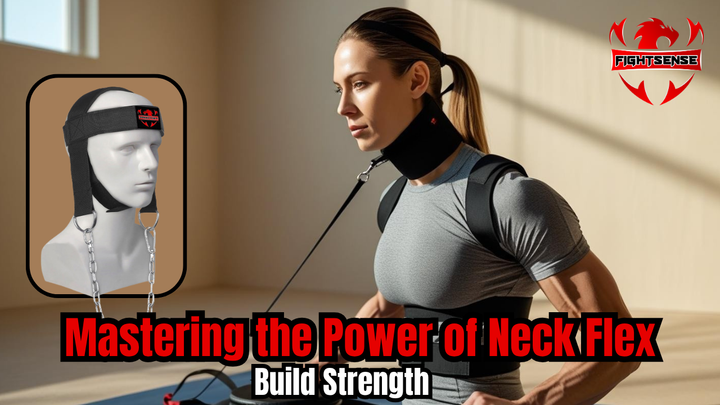
Mastering the Power of Neck Flex: Build Strength
25th Jun 2025
Your neck does more than support your head, it plays a critical role in balance, posture, and athletic power. Yet, it’s often the most ignored muscle group in training routines. Mastering neck flex exercises can drastically improve your overall stability and prevent common issues like stiffness or strain.
In this guide, we’ll explore what neck training is, its benefits, safe methods, and how FightSense tools can help you build real, functional strength.
Keynotes
- Neck workouts target underused cervical muscles for enhanced stability.
- The Fightsense neck harness delivers you safe, controlled pressure as you work out.
- Being able to tell which muscles bend the neck can help you be more accurate and do better.
- Stretching your neck can help you stay balanced, get stronger, and lessen your risk of getting whiplash.
- The best method to make sure that neck growth lasts is to train regularly.
Understanding What Muscles Flex the Neck
You should know which muscles bend the neck before you start working out.
This area of muscles helps move the head and maintain the neck spine stable:
- Sternocleidomastoid (SCM): The sternocleidomastoid muscle is what SCM stands for. This muscle is the most noticeable when you bend your neck. It helps the neck move forward and around.
- Longus Colli & Capitis: These deep neck flexors keep the vertebrae in place and are needed for regulated movement.
- Scalenes: These muscles assist you breathe by elevating your ribs and bending them to the side.
You can be sure that your practice is balanced and effective because neck exercises work these specific muscle groups. You may safely and effectively work on these muscles with the Fightsense neck harness.
Top Neck Exercises to Build Power and Mobility
Adding a variety of neck bend exercises to your workout can help you grow several muscles and keep you from getting hurt.
These are the greatest exercises for working out all of the primary muscles that bend the neck.
1. Chin-to-Chest Resistance Flexion
- Keep the Fightsense neck harness in place.
- Keep your back straight and sit up straight.
- Slowly drop your chin toward your chest.
- Start over from the beginning and do this 12 times with proper form.
2. Isometric Flex Neck Press
- Put on the harness and press your face against something soft or your hand.
- Push forward on the head without moving it.
- Do it three times for 10 to 15 seconds each time.
3. Dynamic Flexion with Weighted Harness
- Put a little weight on the Fightsense neck harness.
- Do full-range neck’s flex movements.
- For 10 to 12 reps, move slowly and on purpose.
4. Supine Neck Flex Activation
- With your knees bent, lie flat on your back.
- Lift your head off the ground and tuck your chin in a little.
- Hold for 5 seconds, lower, and do 3 sets of 10.
5. Neck Flex and Rotate Combo
- Start with your neck bent.
- Slowly turn your head to the left and right.
- Use both the muscles that flex and the muscles that rotate at the same time.
These movements are the most important part of any good neck’s flex routine. Using the Fightsense neck harness makes sure that the right muscles are worked out while lowering the chance of injury.
Benefits of Neck Flex Training
Incorporating neck movements into your workouts offers long-term strength and health benefits:
| Benefit | Description |
|---|---|
| Improved Posture | Strong neck flexors prevent slouching and forward-head posture. |
| Injury Prevention | Reinforces muscles that stabilize the head during impact or sudden movement. |
| Enhanced Balance | A strong neck contributes to better coordination and body control. |
| Reduced Pain | Regular neck exercise can ease chronic tension and stiffness. |
| Athletic Advantage | Builds resistance and endurance critical for fighters and athletes. |
Neck Workout Plan: Build Your Routine
Building an organized neck workout plan makes sure you make progress, don't overtrain, and get your body in balance.
Here is a sample weekly neck flex routine:
Day 1: Strength Focus
- Chin to Chest 3 sets of 12 repetitions for resistance
- Isometric Press: 3 sets of 10 to 15 seconds each
Day 3: Endurance & Control
- Dynamic Weighted Flexion: 10 repetitions in 3 sets
- Supine Flex Holds: 3 sets of 15 seconds each
Day 5: Functional Flexibility
- Flex and Rotate Combo: 3 sets of 8 reps on each side
- Stretching and cooling down lightly
Being consistent is the most important thing. Neck exercise two to three times a week with days off in between gives your muscles time to heal and helps you get the most out of your workouts.
Always utilize the Fightsense neck harness to make your neck’s flex exercises harder.
Benefits of Neck Flex Workouts with Fightsense Neck Harness
With the Fightsense neck harness, regular neck’s flex workouts become top training sessions.
Here's why it's highly effective:
- Precision Targeting: Makes sure the right muscle fibers are activated.
- Adjustable Resistance: Lets you make improvement over time.
- Movement Control: Reduces the chance of overextending or becoming hurt.
- All-Directional Training: It's easy to flex in any direction.
- Comfort-Focused: Made with padding and the capacity to change to fit the user's needs.
The Fightsense neck harness makes flex neck workouts faster, safer, and more effective, whether you're doing them for performance, therapy, or looks.
Safety Tips for Neck Training
- Warm up with light stretches before resistance work.
- Keep your spine neutral and avoid jerky movements.
- Start with bodyweight and progress gradually.
- Allow rest days between heavy neck sessions.
- Stop immediately if you feel sharp pain or dizziness.
Lifestyle Tips to Support Neck
Neck training is only part of the solution. For long-lasting results:
- Adjust your monitor and desk height for proper posture.
- Use a supportive pillow to keep your neck neutral while sleeping.
- Take frequent breaks from phones and laptops.
- Stay hydrated and eat nutrient-rich foods to support muscle recovery.
Tracking Your Neck Flex Progress
To stay motivated, track your results by:
- Taking weekly posture photos (side profile).
- Measuring how close your chin gets to your chest pain-free.
- Logging sets, reps, and resistance weight.
- Recording how your neck feels after workouts, less tension means improvement.
Tips for Maximizing Your Flex Neck Routine
To get the most from your neck’s flex training, implement these smart habits:
- Always Warm Up: Warm up your neck muscles with simple motions.
- Track Your Progress: Keep track of your progress by adding more reps or resistance each week.
- Prioritize Technique: Quality over quantity.
- Stay Hydrated: This helps your muscles work at their best.
- Rest and Recover: Let your neck muscles grow.
Incorporate these tips consistently for enhanced outcomes.
Legal and Health Considerations
Neck training is safe when performed correctly, but always consult a healthcare or fitness professional if you have prior neck injuries, vertigo, or chronic pain.
FightSense products are designed for personal use and comply with general fitness safety standards. Avoid using any equipment not meant for cervical support.
Conclusion
The neck workout is more than just a small movement, it’s a powerful tool for improving health, strength, and confidence. By dedicating a few minutes each week to neck exercises, you can enhance posture, reduce pain, and build resilience in one of the most important yet neglected areas of the body.
Whether you’re an athlete, office worker, or anyone seeking better neck health, FightSense encourages you to start small, stay consistent, and experience the benefits of mastering neck flex.
Disclaimer
This blog is only for educational purposes. Before starting a new workout program, please talk to a doctor or fitness expert.
FAQs
Q1. What muscles are targeted during neck training?
Neck routines mainly target the deep cervical flexors, sternocleidomastoid, and scalene muscles.
Q2. How often should I do neck exercises?
Perform them 2–3 times a week with rest days in between to allow recovery.
Q3. Can beginners perform neck routines safely?
Yes, start with bodyweight movements and light resistance using FightSense tools for safety.
Q4. Is neck training beneficial for fighters and athletes?
Absolutely. It improves impact tolerance and neck strength essential for combat sports and heavy lifting.
Q5. How long before I notice results?
Within 3–4 weeks of consistent training, you’ll notice better posture, less stiffness, and improved head control.