
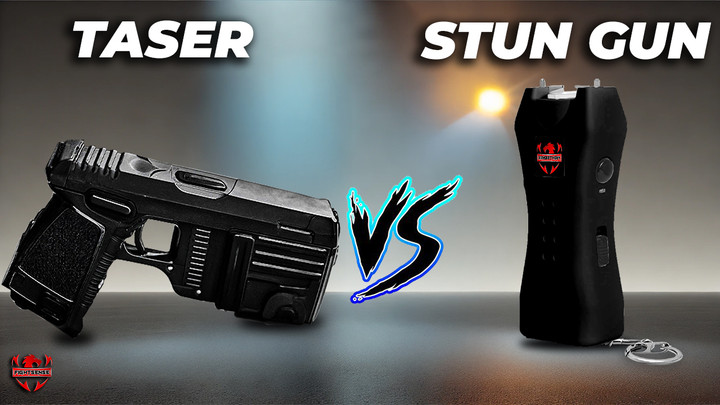
Stun Gun vs Taser: Differences and Which Is Right for You
25th Feb 2025
Regarding self-defense, stun guns and tasers are two popular options. However, many wonder, "Is a stun gun the same as a taser?" While both devices are designed to incapacitate an attacker, they have essential differences. This guide will break down the key distinctions, explore their effectiveness, and help you decide which device is right for your needs.
Key Highlights:
-
A stun gun requires direct contact with the target, while a taser can be used from a distance.
-
Stun guns are compact and easy to carry, making them popular for women seeking self-defense.
-
Tasers and stun guns provide practical self-defense but differ in usage and effectiveness.
-
Stun guns in NY are legal but must be carried in compliance with state and local laws.
Stun Gun: A Close-Range Self-Defense Weapon:
A stun gun is a handheld, non-lethal self-defense device that delivers a high-voltage electrical shock directly into an attacker’s body. The shock disrupts the nervous and muscular systems, causing intense pain, muscle spasms, and temporary loss of control, which helps immobilize the target for a short time.
Unlike a Taser, a stun gun requires direct physical contact to work, making it effective for close-range situations. It is commonly used for personal protection, and when used properly, it is designed to cause temporary effects without permanent injury.
Taser: A Long-Range Self-Defense Device:
A taser is a non-lethal electroshock weapon that incapacitates an attacker by firing small barbed probes attached to wires, delivering an electrical current from a distance. This current disrupts the body’s neuromuscular system, causing involuntary muscle contractions and temporary loss of control, which immobilizes the target.
Unlike a stun gun, a taser can be used from several feet away—typically up to 15 feet or more—allowing the user to keep a safe distance. Tasers are commonly used by law enforcement and civilians for personal protection, with effectiveness lasting long enough to escape from a dangerous situation.
Legal Considerations for Stun Guns:
Stun guns are legal for self-defense in many regions, but their possession and use often come with specific restrictions. Laws typically allow individuals to own stun guns for lawful self-defense, while prohibiting their use in certain locations such as schools, courthouses, and government buildings.
Because regulations can vary by state or locality and may change over time, it is important to stay informed about current laws and local ordinances before carrying or using a stun gun.
Stun Gun vs Taser: Key Differences:
-
Method of Delivery: A stun gun requires direct contact with the attacker, while a taser uses projectiles to deliver the shock from a distance.
-
Range: Stun guns are close-contact devices requiring you to be near your attacker, whereas tasers can incapacitate someone from up to 15 feet away.
-
Effectiveness: Both devices temporarily incapacitate an attacker, but a Taser is generally considered more effective for stopping an attacker quickly due to the range and the spread of the electrical current.
-
Usage: A stun gun is often considered a good self-defense tool for women because it’s compact and easy to use at close range. On the other hand, tasers and stun guns both offer different advantages depending on the user's situation and comfort level.
Stun Gun vs Taser for Women:
When it comes to stun guns vs tasers for women, the decision largely depends on the user's comfort level and personal preference. A stun gun is smaller, lighter, and easier to carry, making it a convenient choice for women who always want to keep a self-defense weapon. It also offers the advantage of being simple to use at close range without needing to aim.
On the other hand, a Taser can be a better option for women who want the ability to keep some distance between themselves and an attacker. Tasers and stun guns both have their advantages, but when considering self-defense for women, the stun gun may be preferable for those looking for a quick and easy solution that’s discreet and portable.
Taser vs Stun Gun: Which is Right for You?
Choosing between a Taser vs stun gun ultimately comes down to your needs and circumstances. A stun gun might be your best option if you're looking for a device to carry easily and use at close range.
However, if you prefer the ability to maintain distance between yourself and an attacker, a taser could provide that advantage. Both devices are effective for self-defense, but understanding their differences is crucial for selecting the one that suits you best.
FAQs:
1. What is a stun gun?
A stun gun is a handheld self-defense device that delivers a high-voltage shock to temporarily incapacitate an attacker by causing muscle spasms.
2. What is the difference between a stun gun and a taser?
A stun gun requires direct contact with the attacker, while a taser uses projectiles to deliver a shock from a distance.
3. Is a stun gun effective for self-defense?
A stun gun is effective for self-defense, especially in close-range situations where you must disable an attacker quickly.
4. Are stun guns legal in New York?
Yes, stun guns are legal in New York, but they cannot be carried in certain restricted areas like government buildings or schools.
5. Which is better, a Taser or a stun gun for women?
It depends on personal preference. A stun gun is smaller and easier to carry, while a taser allows for distance between you and an attacker. Both are effective, but the best choice depends on your comfort and needs.
Conclusion:
In conclusion, while both the stun gun and taser are designed to incapacitate attackers, they function in different ways. A stun gun is a close-range device requiring direct contact, while a taser uses projectiles and can be used from a distance. When deciding between the two, consider your comfort level, the situation at hand, and local laws regarding the legality of each device. Both are excellent tools for self-defense, but understanding their differences will help you decide which one works best for you.
Disclaimer:
This blog provides general information on stun guns and tasers. It is not intended as legal advice. Always check local laws regarding the possession and use of stun guns or tasers in your area to ensure compliance.