
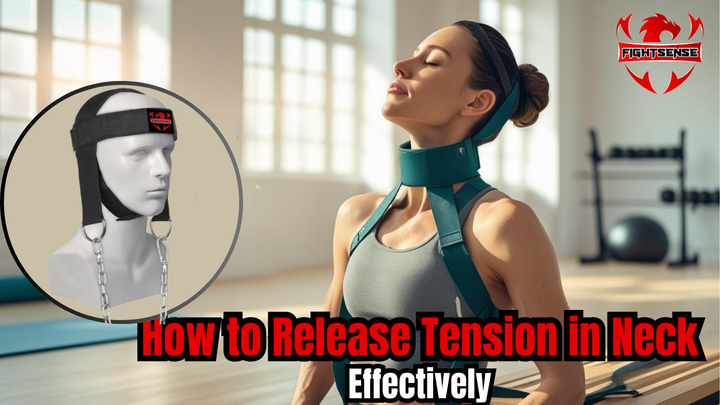
How to Release Tension in Neck Effectively
26th May 2025
Spending long hours hunched over devices or slumped at your desk often leads to that tight, stiff feeling in your neck.
If you’re wondering how to release tension in neck, there’s good news, with simple exercises, better habits, and some recovery tools, you can relieve discomfort and prevent it from coming back. This guide offers actionable steps you can start using today for lasting relief.
Keynotes
- The Fightsense neck harness helps naturally in how to release tension in neck
- You have to keep hydrated, correct your posture, and relax if you want to recuperate.
- Stretching and rubbing muscles is a terrific approach to unwind them.
- Ergonomic desks help to prevent tension from developing.
- Your sleeping posture and activities before bed determine your neck condition.
What Causes Neck Tension
- Prolonged forward head posture and rounded shoulders (looking down at screens, smartphones).
- Muscle overuse or holding static positions for long periods (driving, desk work).
- Stress, anxiety, and poor sleep which increase muscle tightness.
- Dehydration or poor circulation reducing muscle relaxation.
- Unsupportive pillow or poor sleep position that strains the neck during rest.
Understand How to Release Muscle Tension in Neck
Bad posture, anxiety, or inadequate movement can all lead to tight muscles in the neck. Avoiding long-term discomfort depends on learning how to unwind neck muscles.
- Regular stretching sessions
- Correct posture during screen time
- Hydration and nutrition to support muscle health
- Using Fightsense neck harness for structured support
Learning how to release tension in neck early can save you from chronic pain later.
Best Ways to Release Neck Muscles Safely
Your neck supports your head and connects to your spine. It's vital to understand how to release neck muscles to avoid strain.
- Use gentle, circular motions to relax tight areas.
- Use warm compresses to relax.
- Perform yoga poses targeted at the shoulders and neck.
- The Fightsense neck harness ensures your safe movement and aids in training.
Regular application of these techniques will help you become more flexible and ease pain.
Fightsense Neck Harness: Your Muscle Tension Solution
Through resistance-based training, the Fightsense neck harness is supposed to assist you in releasing stress in your neck. Regular use of it increases your strength and keeps your muscles in their proper alignment.
- Facilitates isometric motions for neck discomfort
- Facilitates spine alignment and posture.
- Perfect for working out at home and light to carry
- It guides you in designing workouts to release neck muscular tension.
The strap guides you towards safe and practical means of achieving your objectives.
How to Release Tension in Neck During Work Hours
If you’re at your desk wondering how to release neck muscles, these quick fixes will help reduce tension without disrupting your workflow:
- Short breaks every thirty minutes.
- Invest in a chair and workspace fit for your body.
- Neck tilts and light backwards stretches
- Breathing deeply helps you to relax your upper back.
- Wearable for a brief while at home following work, Fightsense neck harness
These adjustments help to greatly release the accumulating pressure.
How to Release Muscle Tension in Neck While Sleeping
Sleeping positions can either heal or harm. If you want to know how to release tension in neck while you rest, consider the following:
- Keep your spine straight as you sleep using a neck pillow.
- Sleep on your back to prevent your neck from turning.
- Stretch slightly before bed.
- Use the Fightsense neck harness for strengthening drills before bed.
Sleeping in the proper posture is crucial for healing of neck muscles.
Safety Tips & What to Avoid
- Move gently, avoid jerky stretches or pushing through sharp pain.
- Don’t neglect rest, overworking tight muscles worsens tension.
- If you have underlying issues (pinched nerve, disc problems, chronic pain), exercise/stretch under professional guidance.
- Avoid sleeping in positions that twist the neck or allow it to drop off the pillow edge.
Stretching Techniques to Release Neck Muscles
Stretching is the most direct approach to learn how to release tension in neck effectively:
- Chin to your chest and hold for fifteen seconds.
- Three sets in each direction, head tilt from side to side.
- Roll your shoulders and inhale deeply.
- Resistive training using the Fightsense neck harness
Use these daily motions to maintain a healthy neck.
Release Tension in Neck with Heat and Massage
Heat treatment and massages can instantly help you feel better and teach you how to correctly release neck muscles:
- Warm towels or heat pads will assist blood flow.
- Massage oils with menthol or peppermint help exhausted muscles feel better.
- Combining massage with Fightsense neck harness exercises produces the maximum alleviation.
Regular use of these relaxing techniques has the finest effects.
Daily Habits That Help You Learn How to Release Tension in Neck
Changing everyday routines is crucial for learning how to release tension in neck long-term. Practice these habits:
- Hold your phone up near your face.
- Clench your mouth and the muscles in your neck tighten.
- Don't spend too much time still.
- Train using the Fightsense neck harness on a regular basis.
Stopping the problem before it starts is usually preferable than addressing it later on.
How to Release Muscle Tension in Neck After Exercise
Post-workout recovery is a great time to apply techniques for how to release muscle tension in neck.
Add these tips:
- Movements to cool down shoulder and upper back
- Maintaining hydration helps your muscles release toxins.
- Use the Fightsense neck harness with gentle pressure following instruction.
Good recovery techniques enable faster healing and help you avoid soreness following exercise.
Conclusion
Learning how to release tension in neck effectively is less about one big solution and more about consistent small habits.
By combining gentle stretches, posture awareness, ergonomic setup, and mindful recovery, you can reduce tightness, improve flexibility, and enjoy greater comfort. Stick with it, your neck will thank you.
Disclaimer
This blog is aimed to offer just information. You should always consult your doctor before beginning a fresh course of therapy or instruction.
FAQs
-
How quickly will I feel relief?
Many people feel some ease of tightness within minutes after stretching or heat; more lasting relief comes with regular practice over several days. -
Can I do these exercises daily?
Yes, gentle stretches and posture fixes are safe daily; more intense or resistance-based work should have rest days. -
Will these methods fix severe or chronic tension?
They help a lot, but severe or long, standing tension may require professional treatment (like physiotherapy or chiropractic care). -
Is it better to use heat or cold?
Cold helps if there’s recent strain or swelling; heat is better for relaxing muscles and increasing blood flow after the acute phase. -
What pillow is best to reduce neck tension?
A pillow that keeps your neck in a neutral alignment (not too high or flat), supports the natural curve of your neck, and matches your sleep position (back/side) works best.