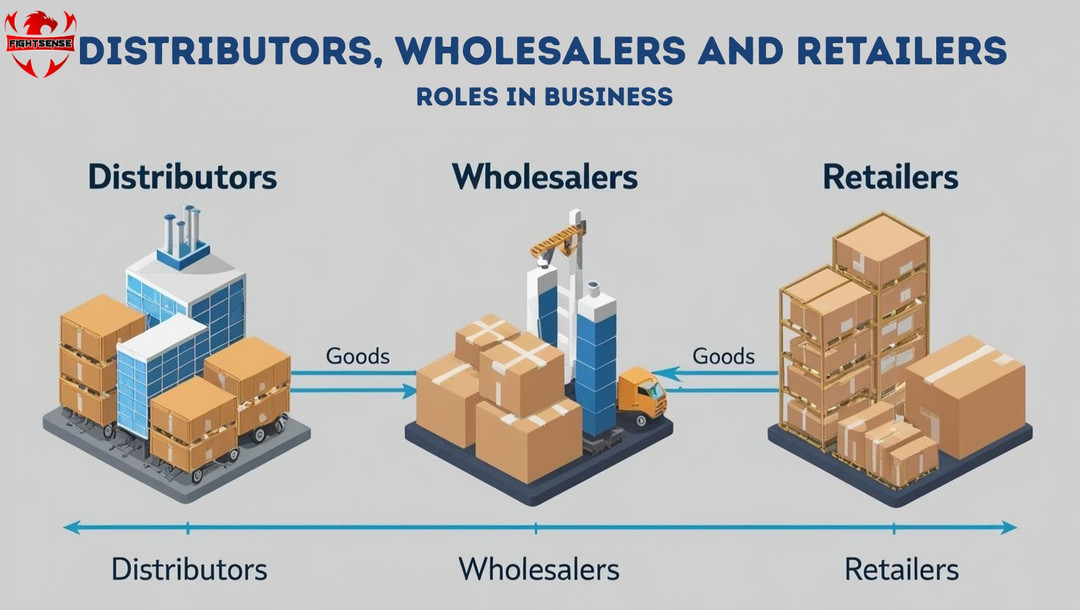
Distributors Wholesalers and Retailers Roles in Business
How do things make their way to store shelves or websites that sell them? Distributors wholesalers and retailers are all part of the supply chain that is responsible for the production.
The process by which commodities are transferred from manufacturers to consumers can be better understood if you have a solid understanding of their functions.
Key Takeaways:
-
The supply chain relies on three distinct pillars: distributors, wholesalers, and retailers.
-
Distributors buy in massive quantities directly from manufacturers and manage deep logistics.
-
Wholesalers purchase in bulk and offer smaller, tiered quantities to retailers at discounted rates.
-
Retailers act as the final link, selling products directly to the end consumer either online or in-store.
-
Knowing how these roles intersect helps businesses optimize procurement, lower costs, and scale efficiently.
Have you ever wondered how a product makes its way from a factory floor onto a physical store shelf or an e-commerce website? Behind every consumer purchase lies a carefully coordinated supply chain.
Principal Distinctions: The Supply Chain Trio
While these terms are sometimes used interchangeably, each player performs a unique, vital function in getting products into buyers' hands:
-
Distributors maintain close partnerships with manufacturers, purchasing massive quantities of goods and handling complex logistics, warehousing, and storage.
-
Wholesalers buy in bulk and supply retailers with both large and small quantities at reduced prices, acting as an intermediary step before consumer sales.
-
Retailers are storefronts—whether brick-and-mortar or online shops—where everyday customers buy products directly.
Wholesaler, Distributor and Retailer Difference?
Although each of these phrases is a component of the retail ecosystem, their functions are separate from one another, and they help to grow the business. Take a glance at distributors wholesalers and retailers to see how each one functions:
1. Distributors are considered to be the middlemen
What do distributors do? Wholesalers and retailers are the customers that wholesale distributors go after after purchasing products in large quantities from producers.
The timely delivery of huge volumes is ensured by their management of logistics, warehousing, and large volumes.
By way of illustration, we are dependent on distributors in order to supply fitness centers and sports retailers with high-quality fitness products.
2. Wholesalers are sellers of goods in bulk
Wholesalers purchase goods in bulk from manufacturers or wholesalers and then sell them to retailers in smaller quantities, charging a markup for the difference.
Additionally, they do not provide services like as logistics or warehousing, in contrast to distributors near me.
You can purchase bulk items at lower prices when you buy from Amazon wholesale distributors, for instance. This enables wholesalers to pass on the savings to retailers to save money.
3. The final stop for customers is the retail establishment
In either traditional brick-and-mortar storefronts or via the internet, retailers sell their wares to end users directly.
In order to make things available for purchase, they first purchase them from wholesalers or distributors, then mark up the products' prices, items like pen stun guns.
For instance, if you purchased our gym product, it was most likely from a shop that obtained it from a wholesaler or distributor. This made it simple for you to acquire the product for self-defense.
Why is it Significant to Have an Understanding of These Roles?
In wholesaler, retailer vs distributor play, businesses are able to improve their business decisions around sourcing, and consumers are able to better comprehend the value chain that lies behind their purchases.
Businesses that require items such as gym equipment and safety gear we offer a wide variety of products, which might benefit from the access that wholesale distributors can provide to quality products like stun guns at lower prices.
My Personal Experience in the Supply Chain
When I first started sourcing products for my business, navigating the responsibilities of distributors, wholesalers, and retailers felt overwhelming.
Partnering with Fightsense completely changed that dynamic. Their commitment to prompt delivery of fitness and safety items, like pepper spray, kept my inventory steady and my customers satisfied. My experience has proven time and again that collaborating with the right supply chain partners streamlines daily operations and secures far more cost-effective pricing than trying to cut corners alone.
Conclusion
Distributors wholesalers and retailers collaborate to ensure that products are effectively delivered to customers. Each has a distinct function, ranging from purchasing in bulk to making final sales.
Knowing how things reach you can be helpful. This is true whether you are purchasing gym equipment from Fightsense or sourcing from wholesale wholesalers on Amazon.
Frequently Asked Questions
1. What are the key differences between wholesalers and distributors?
Distributors typically maintain close, exclusive ties with manufacturers, selling large volumes to wholesalers or retailers while managing heavy logistics and warehousing. Wholesalers purchase in bulk and break those quantities down into smaller, tiered packages for retail shops.
2. How do Amazon wholesale distributors work?
They purchase large inventories directly from producers or manufacturers and supply those products to independent shop owners, brands, or third-party sellers operating on e-commerce platforms like Amazon.
3. Can I buy or sell directly from/to distributors?
Yes, businesses can buy from distributors to secure lower per-unit costs. However, most established distributors require formal business registration, a resale certificate, and adherence to minimum order quantities (MOQs).
4. Why are retailers so important in the supply chain?
Retailers serve as the final customer touchpoint. They handle direct marketing, consumer sales, and storefront presentation (both online and in physical shops), making products accessible to everyday buyers.
5. What role do safety and fitness gear distributors play?
In specialized niches like self-defense and athletic training, distributors source high-grade equipment—such as fitness gear and safety tools—ensuring that retail businesses maintain a steady, reliable stock without dealing with multiple factories.
6. How does buying from a wholesaler impact my profit margins?
Buying in bulk from wholesalers lowers your cost of goods sold (COGS). This reduction allows you to price your products competitively for consumers while preserving healthy profit margins for your business.
7. Do wholesalers and distributors deal directly with regular consumers?
Generally, no. Traditional wholesalers and distributors operate strictly on a Business-to-Business (B2B) model, selling exclusively to retailers, other wholesalers, or commercial buyers rather than individual end-users.
8. How can choosing the right supplier help my e-commerce business grow?
Partnering with a reliable, established supplier ensures prompt delivery, consistent product quality, and stable inventory levels. This reliability protects your brand reputation and frees up your time to focus on marketing and customer acquisition.
Note: The sole objective of this blog is to provide information. Therefore, before making any decisions, it is important to conduct a study and get the advice of professionals.