
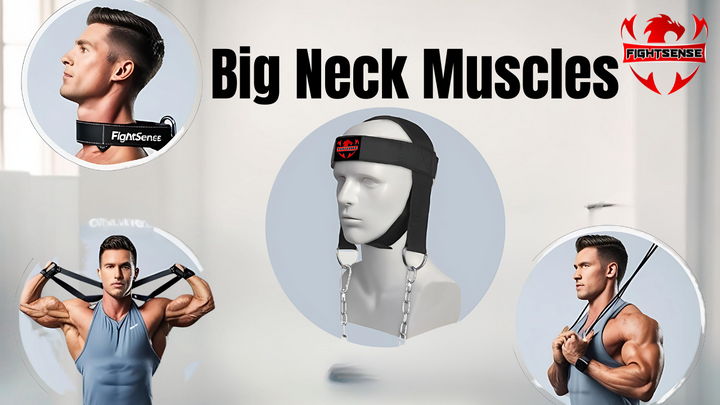
Big Neck Muscles: Strategies for Safe and Fast Growth
5th May 2025
Building strong, defined neck muscles can improve posture, enhance upper‑body strength, and even make workouts safer. If you want noticeable gains without risking strain or injury, focusing on big neck muscles through smart, balanced training is key.
This guide walks you through safe exercises, proper form, and recovery tips to help your neck get stronger while avoiding common mistakes that lead to discomfort or injury.
Keynotes
- Big muscles prevent injury while running and engaging in sports.
- Working with progressive resistance calls for consistent behavior, which is quite crucial.
- Using muscles is safer with the Fightsense neck harness and other instruments like it.
- Neck development depends much on rest and adequate balance.
- Strong shoulders and upper back help to accentuate a strong neck.
Why Strong Neck Muscles Matter
Your neck supports your head, supports spinal alignment, and plays a big role in overall stability. Strong neck muscles help:
- Improve posture and reduce forward‑head slouch
- Support shoulder and upper-back workouts with better stability
- Reduce risk of neck and spine strain during lifts or contact sports
- Enhance neck appearance and muscular definition
- Improve neck endurance for daily activities
With consistent training, you build a neck that’s not only strong it’s functional and resilient.
Why Big Neck Muscles Good for Athletes and Lifters
Not only should athletes focus on developing their big neck muscles, but everyone who takes their health, safety, and posture very seriously should do the same.
Your head is raised by the muscles in your neck, which also cushion your upper body and support it.
Knowing how to develop more muscular neck strength results in:
- In physical sports, head stabilization
- Position and relationship all around.
- Shock resistance during mobility
- Strong in the same manner are shoulders and upper traps.
- Physical self-confidence concerning your appearance and behavior
If you want to truly strengthen your upper body, you absolutely must develop big neck muscles.
Anatomy First: Understanding How to Get Big Neck Muscles
Before beginning any exercise, one should be aware of how to develop huge neck muscle. The principal muscle groups are as follows:
- Sternocleidomastoid (rotates and flexes the head)
- Trapezius (upper back and neck)
- Levator scapulae and scalenes (stabilize and elevate the shoulder and neck)
Using a Fightsense neck harness is one of the effective resistance tools and correct movement techniques available when working on these areas.
Top Exercises: How to Get Bigger Neck Muscles Effectively
To truly learn how to get bigger neck muscles, your workout must include a combination of weighted, bodyweight, and isometric movements.
Here’s a breakdown of the most effective ones:
1. Neck Flexion & Extension
Lie on your back or stomach wearing a weight plate or strap around your waist. For three sets of twelve, gently flex your head forward and backward.
2. Neck Lateral Flexion
Sit up straight and slide your head from side to side to work the side neck muscles. More support from a Fightsense neck harness will enable you to perform better.
3. Wrestler Bridges
A really difficult action best for thickening your neck generally. Start slowly then progressively increase weight over time.
4. Isometric Neck Holds
For thirty seconds, hold your head in several directions under pressure. These help your neck remain steady and thicken it with time.
5. Shrugs and Reverse Shrugs
Though they are crucial for developing large neck muscles, these work the traps; they do not really work the front of the neck.
How to Get Big Neck Muscles at Home
For those without access to gym neck exercise equipment, knowing how to get big neck muscles at home is just as important.
Here's how to do it:
- Resistance bands help with front, back, and side neck exercises.
- In isometric exercises, add resistance with your hand.
- Add activities meant to strengthen the neck to help with posture.
- Get a Fightsense neck harness. Perfect for working out at home and lightweight.
- Sets should be slow and under control; motions shouldn't be jerky.
This arrangement allows you to routinely train without using large gym equipment.
How to Get Bigger Neck Muscles with a Weekly Routine
You should remain consistent. Use this easy weekly schedule if you want fast development of neck muscles:
Week 1–2: Foundation
- 3 workouts per week
- 3 exercises/session
- 3 sets of 10 reps
- Focus: Light resistance and form
Week 3–4: Progression
- Advancement Four visits a week
- Increase the Fightsense neck harness's pressure.
- Add one isometric exercise.
- Focus on time under stress and range of motions.
Raise the volume and force gradually following the first month. Use correct form to avoid suffering and keep developing.
Fuel and Recover for Bigger Neck Muscles
Training is only half the equation in learning how to get big neck muscles. Your recovery and nutrition habits play a vital role in results:
- Sleep 7–9 hours every night.
- Eat foods heavy in protein for muscle repair.
- To prevent overtraining, let at least 48 hours separate neck exercises.
- Following your workout, conduct cool-downs and neck stretches.
- Try heat treatment or a mild massage following donning the Fightsense neck harness.
Long-term development and neck health depend on striking the proper balance between training and rest.
Using Fightsense Neck Harness for Maximum Growth
Whether you use the Fightsense neck harness at home or in the gym, your neck will get huge. It safely exercises the neck from many angles, letting you vary the degree of resistance, and aids in correct form.
Whether you are a warrior, an athlete, or just someone who enjoys working out, the strap guarantees that you maximize every exercise without injuring yourself.
Including it into your daily regimen will enable you to maintain the gains continuing and discover how to grow huge neck muscles faster.
Conclusion
Disclaimer
This post is aimed to provide you with just facts. Always speak with a registered medical professional or exercise specialist before beginning a new exercise program. Individual health, degree of experience, and degree of consistency affect the results.
FAQs
1. How often should I train neck muscles for growth?
About 2–3 times per week, with rest days , neck muscles recover like any other muscle group.
2. Will doing neck exercises give me a “man‑neck” fast?
With consistent, balanced work and good posture your neck can become stronger and more defined over weeks but growth takes time and overall muscle balance.
3. Can neck training cause injury?
If done incorrectly,heavy load, jerky motions, yes. But with control, proper form, and moderation, it’s safe and beneficial.
4. Should I only train neck or do full-body workouts too?
Complement neck training with upper-back, core, and posture work, this gives best support and safest growth.
5. Can these exercises help with neck pain or posture issues?
Yes, strengthening neck and upper-back muscles improves posture and can reduce tension and strain over time.